Wall-Lighting Ideas for a Dining Banquette or Breakfast Nook
A good breakfast nook should flatter toast at 7 a.m. and make a late supper feel deliberate. The wall light has to serve both without hovering awkwardly over anyone’s shoulder.
Breakfast nooks are small spaces with an unreasonable number of jobs. They host coffee, homework, hurried lunches and the occasional dinner that lasts long enough to justify opening another bottle. Their lighting is often inherited from the kitchen: bright ceiling spots that are excellent for chopping onions and rather less good at making a corner feel welcoming.
The better strategy is layered. Keep enough overhead light for practical tasks, then use wall lighting to define the dining zone and soften the transition into evening. The fitting should relate to the table and banquette, not to the geometric centre of the wall.
Why these corners are deceptively difficult
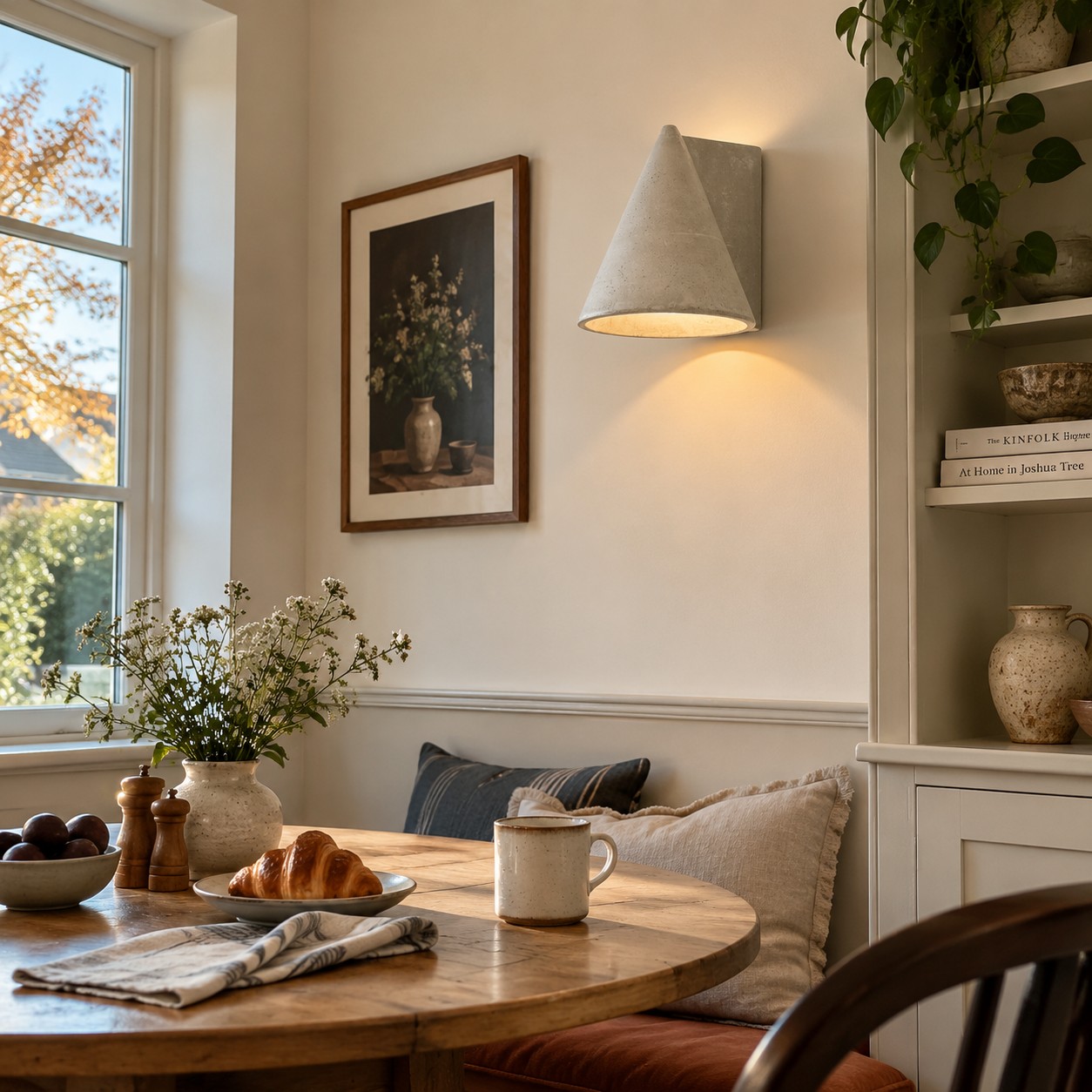
A pendant may block the view or conflict with a window. A table lamp sacrifices valuable surface space. A floor lamp has nowhere sensible to stand. Wall lights solve those problems, but introduce two others: glare at seated eye level and shadows cast by anyone leaning back.
Before choosing a position, sit in every seat. Check where a direct bulb would appear in your field of view and where heads would interrupt the beam. A shaded or indirect sconce is forgiving because it throws light onto the wall rather than across the table like an interrogation lamp.
Idea one: one sculptural light at the open end
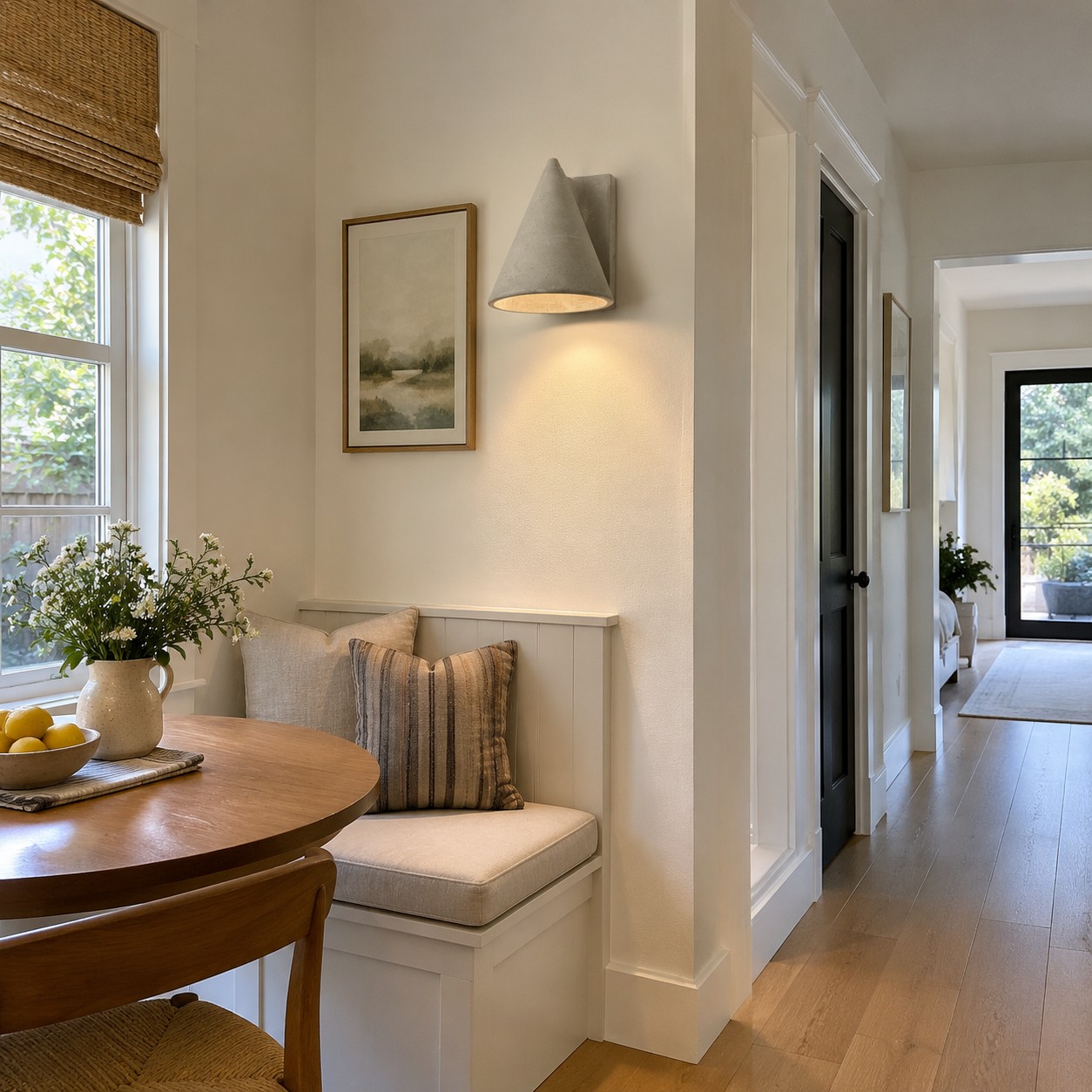
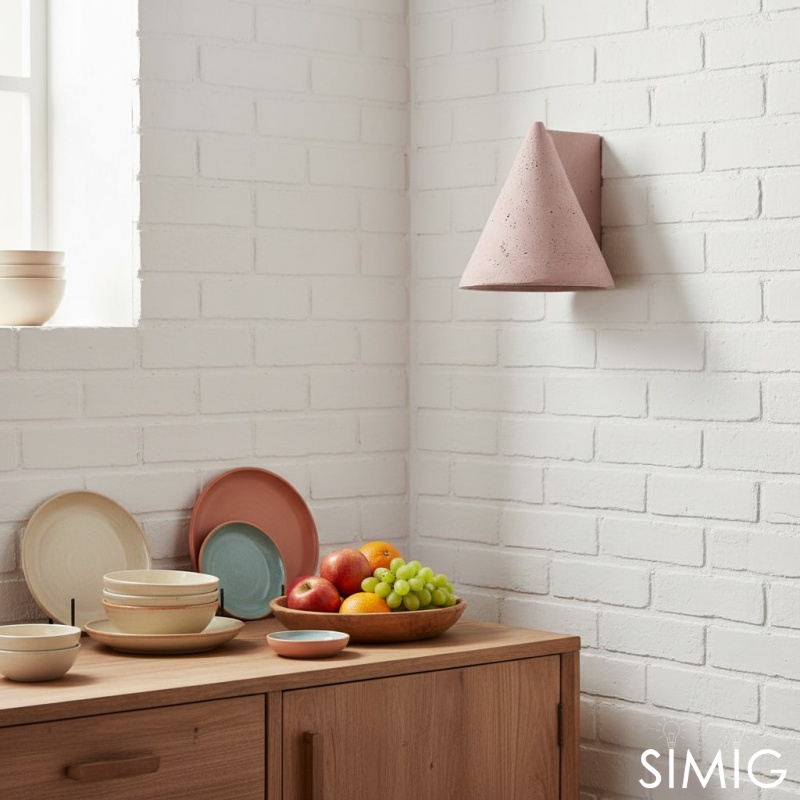
For an L-shaped banquette, place a single characterful sconce on the short wall at the open end. It becomes visible on approach and gives the seating arrangement a visual full stop. This works especially well when the long wall already holds a window, shelf or artwork.
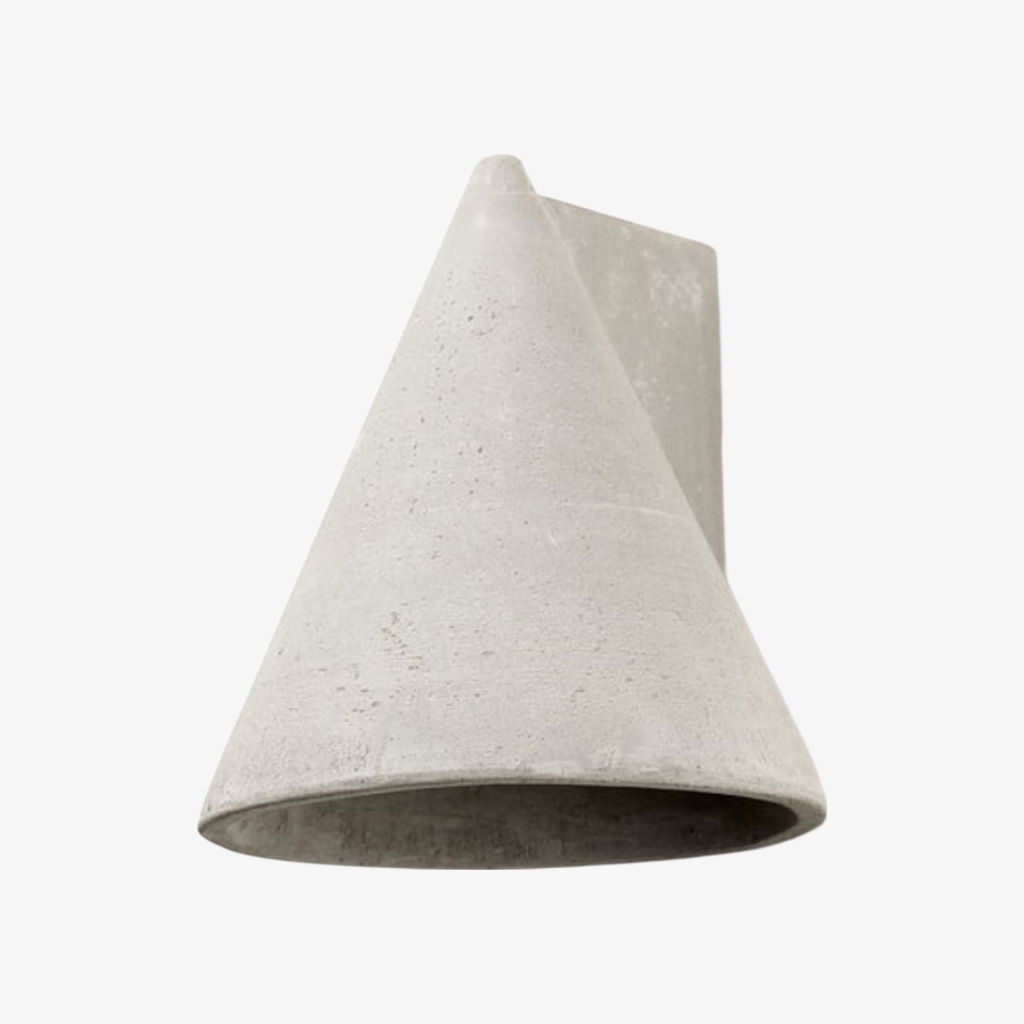
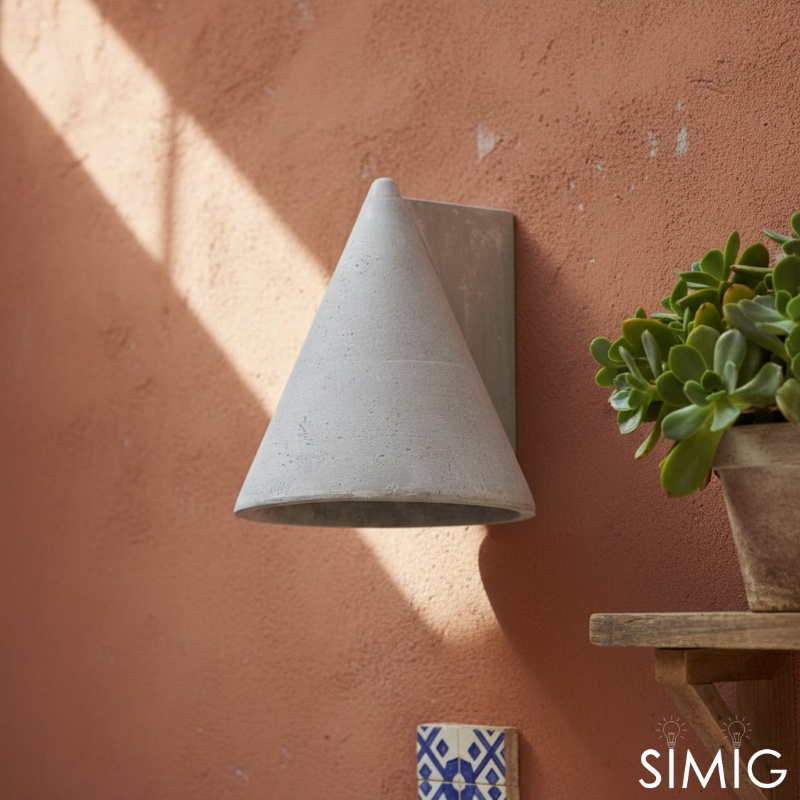
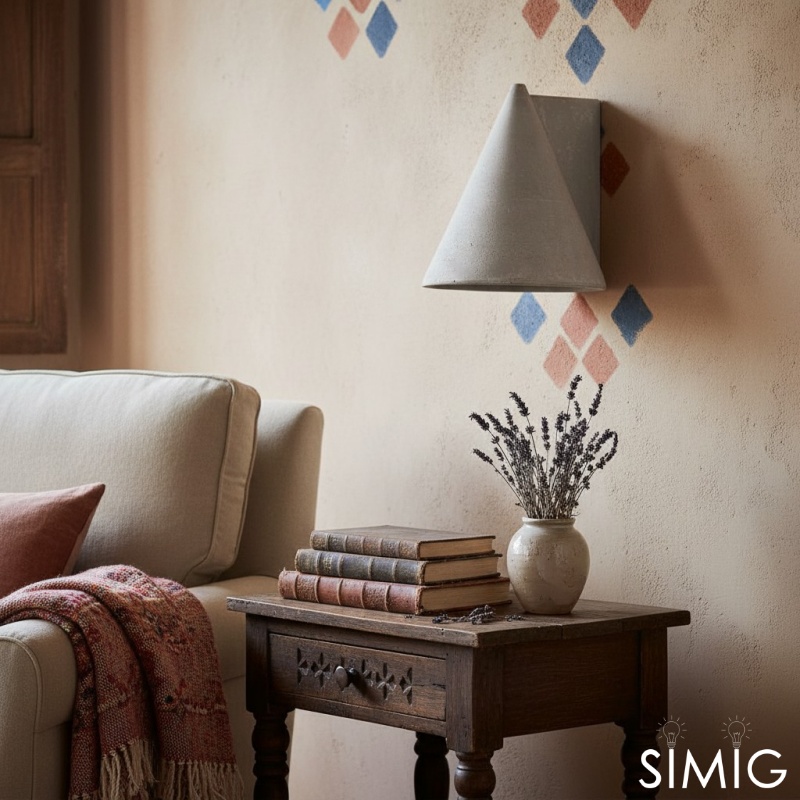
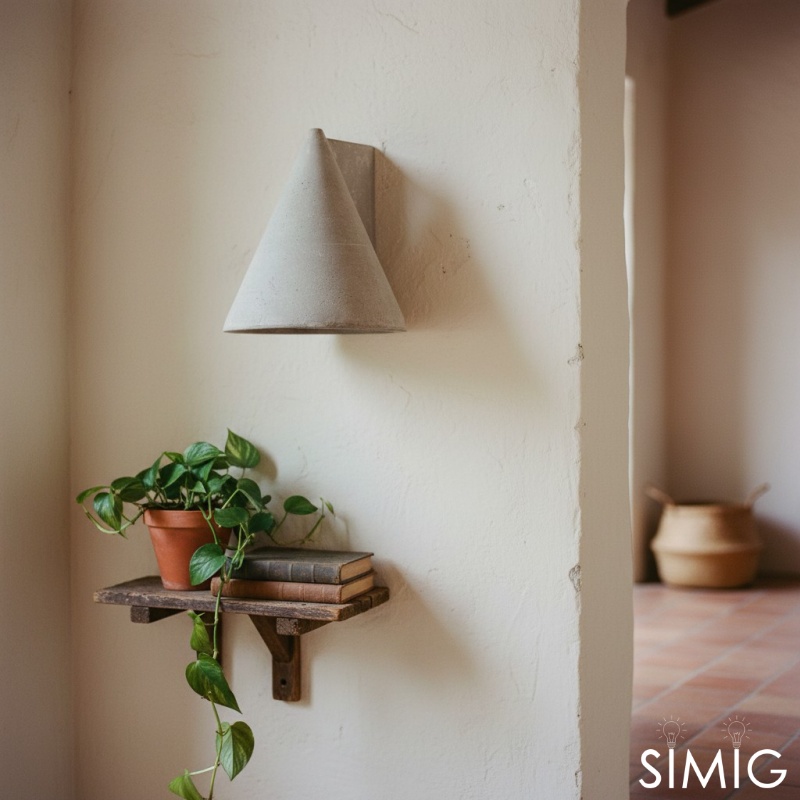
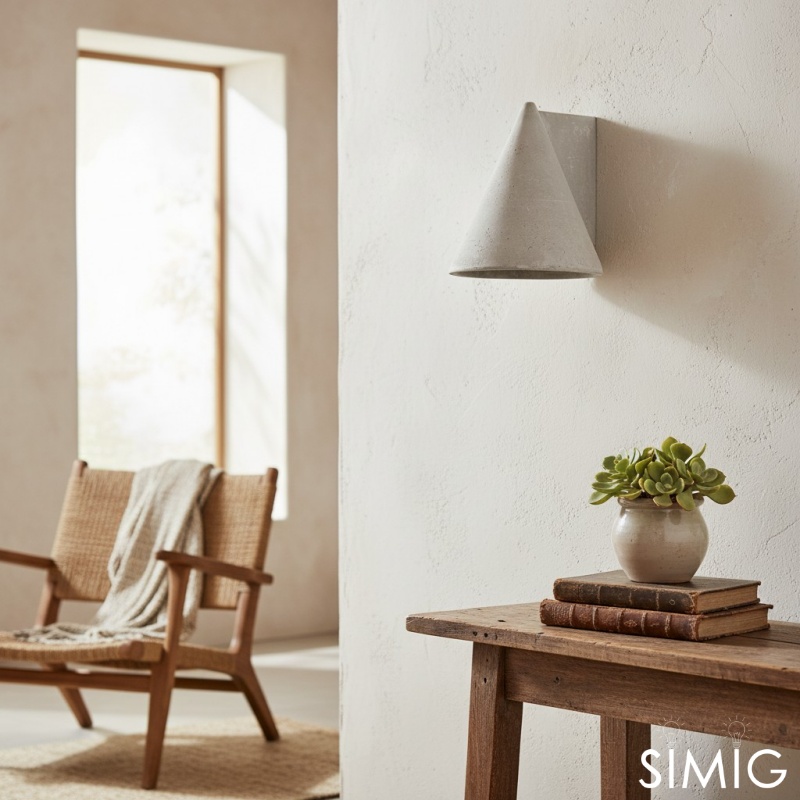
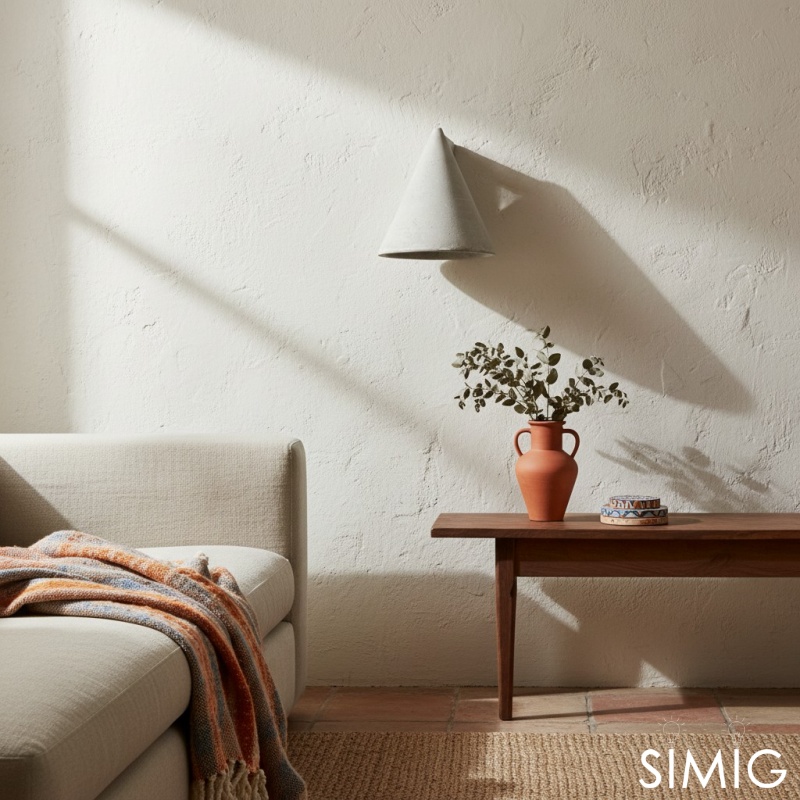
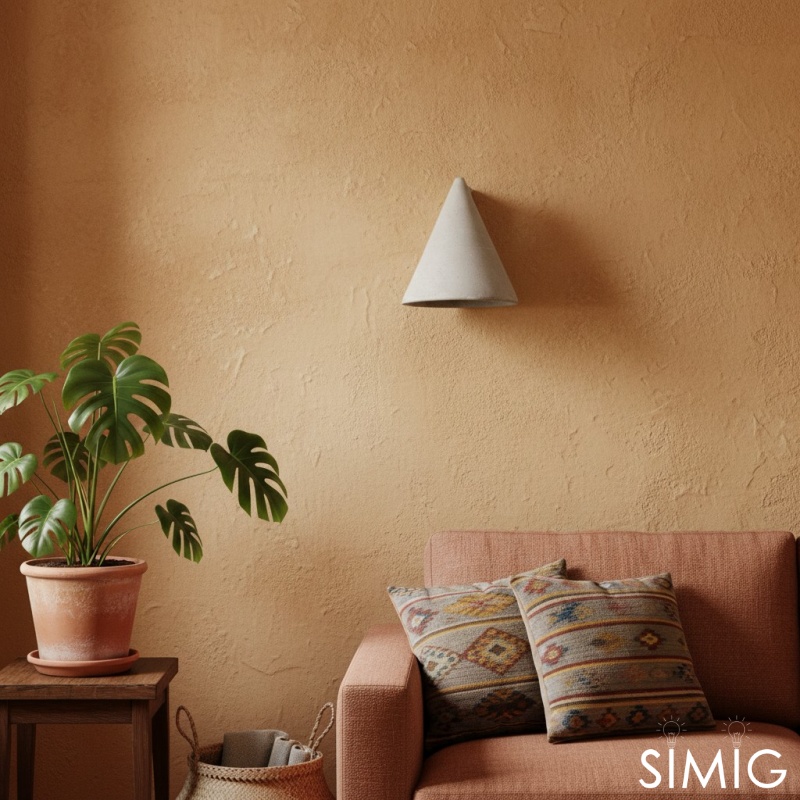
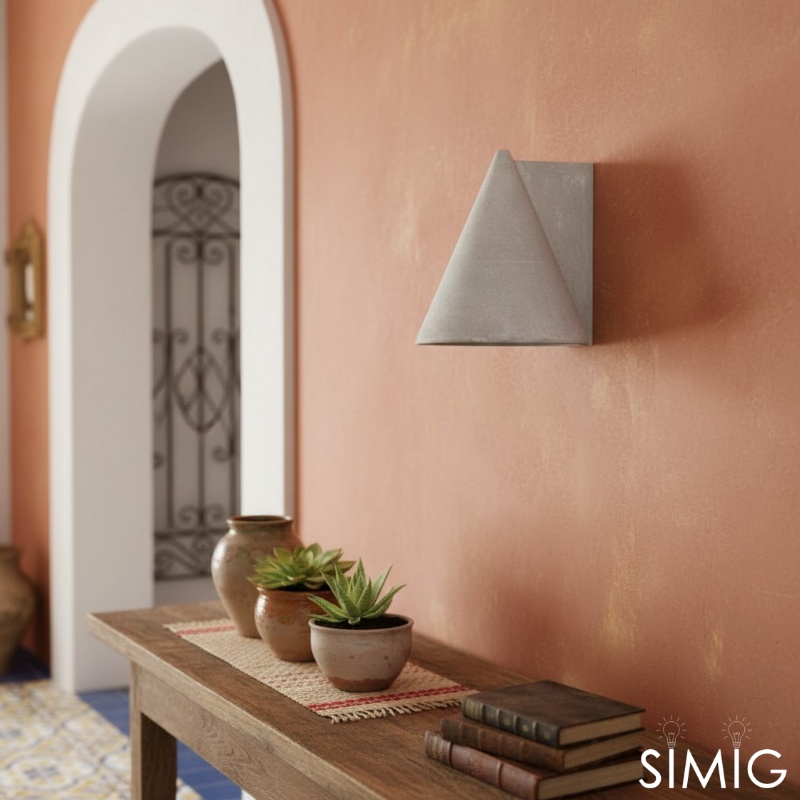
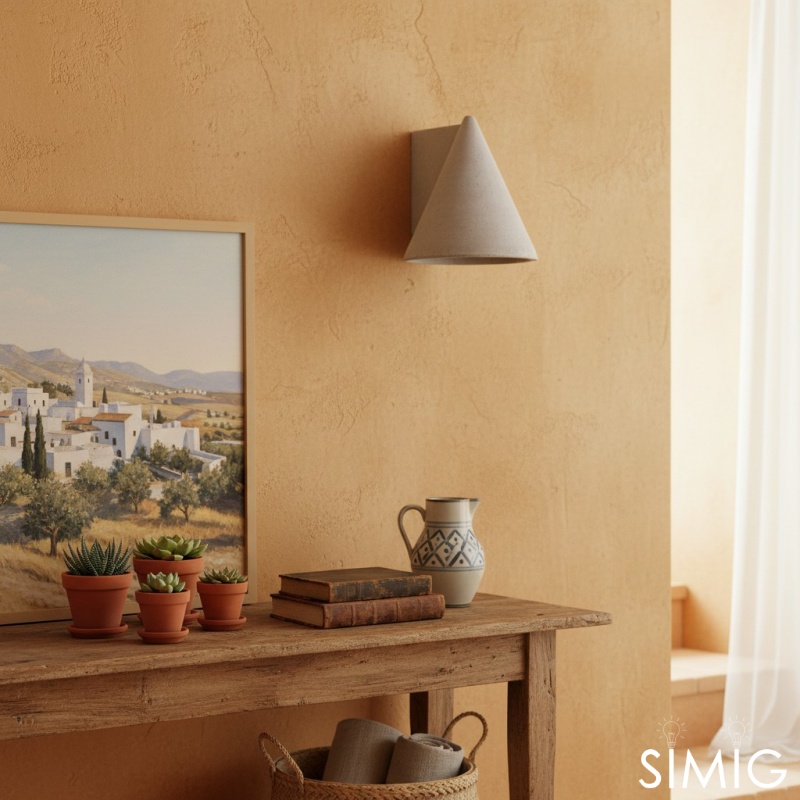
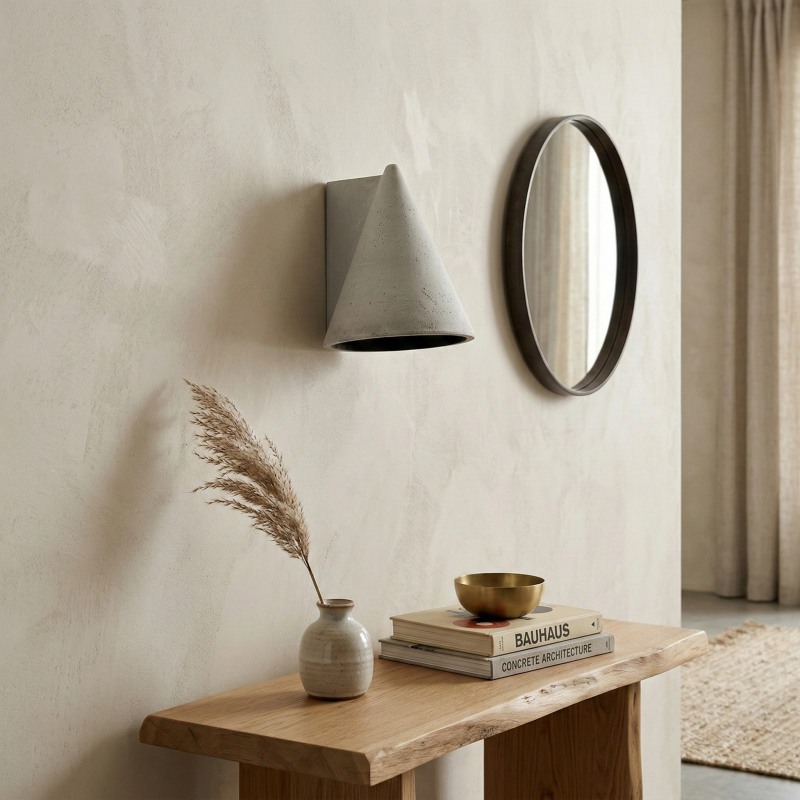
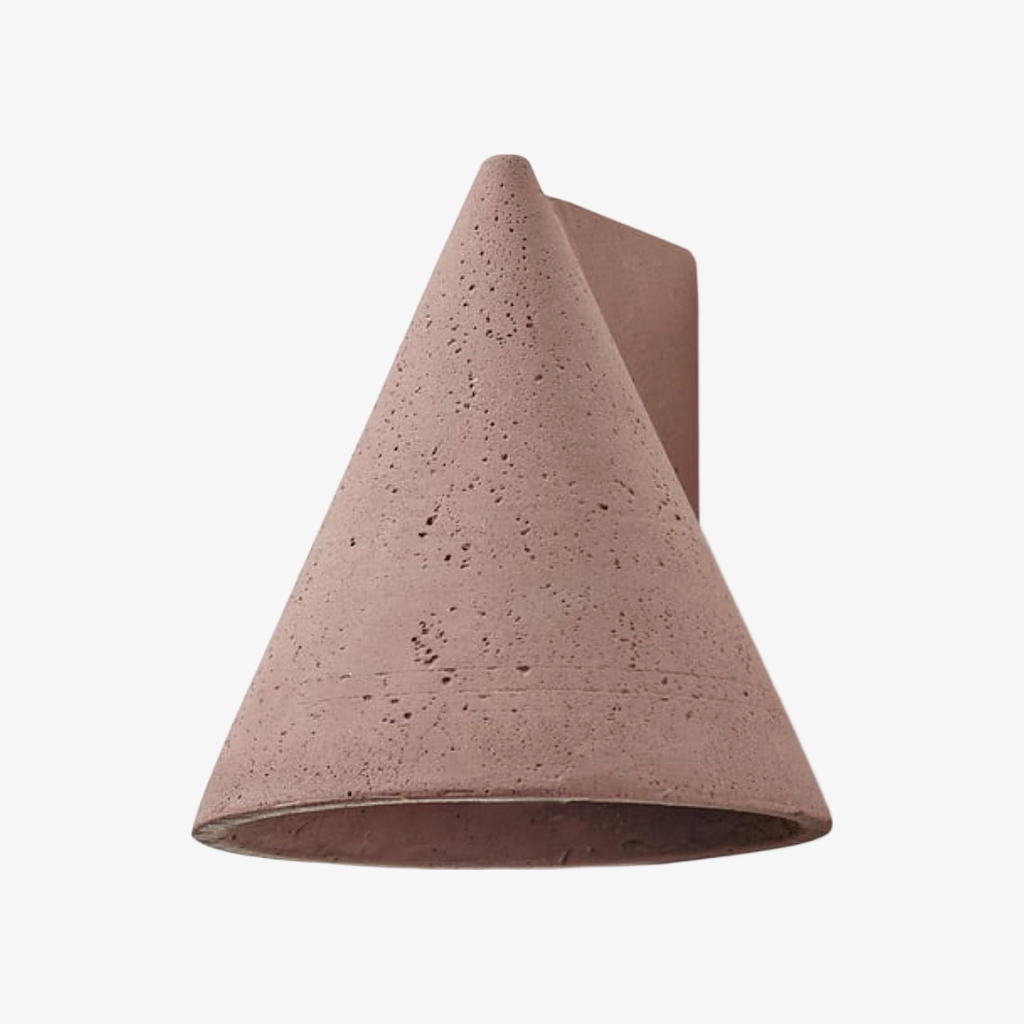
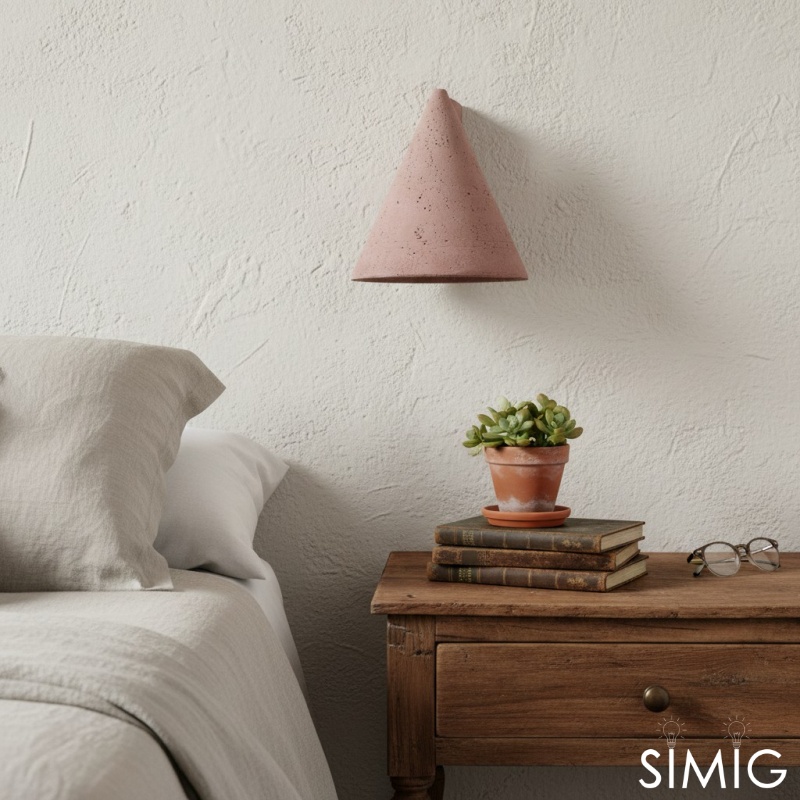
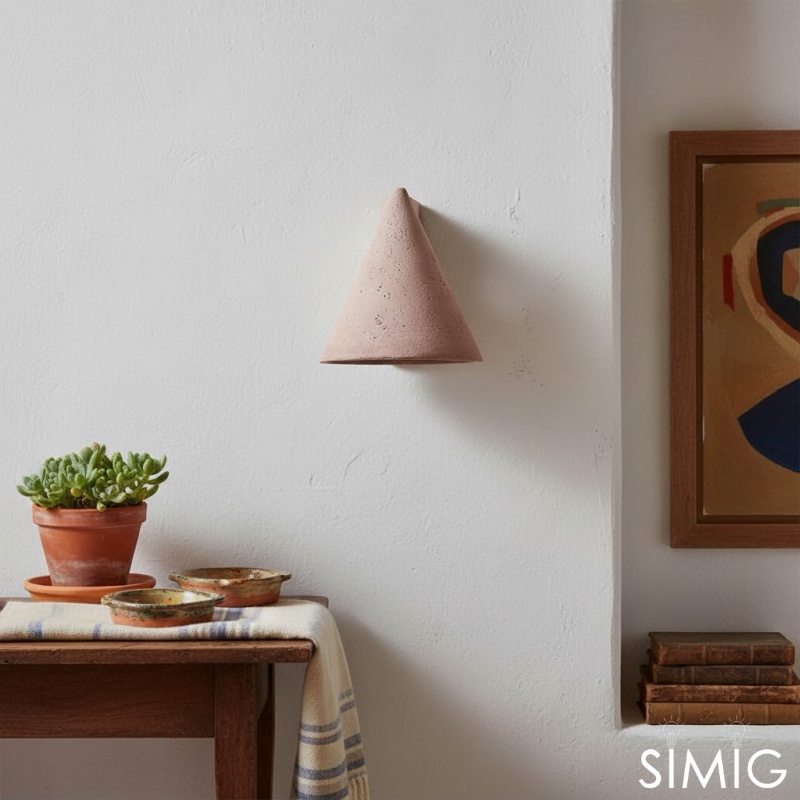
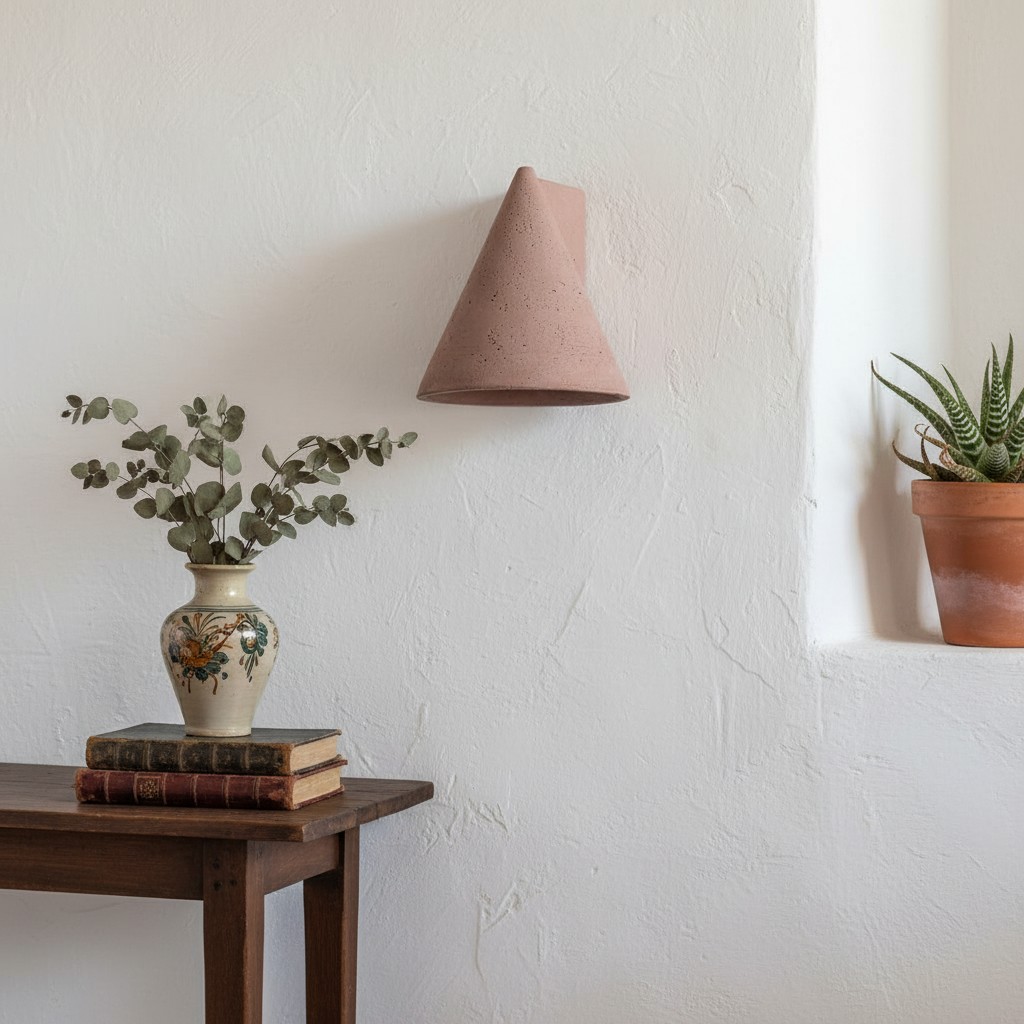
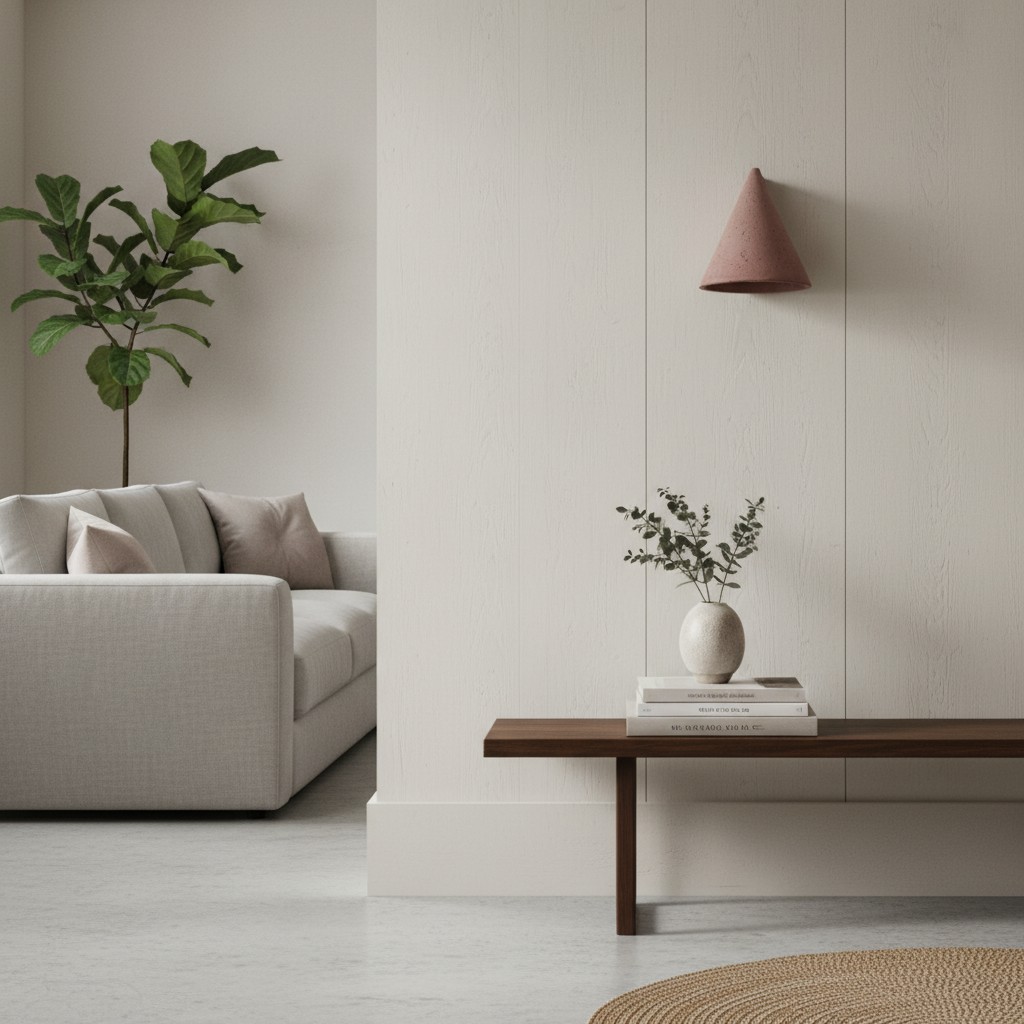
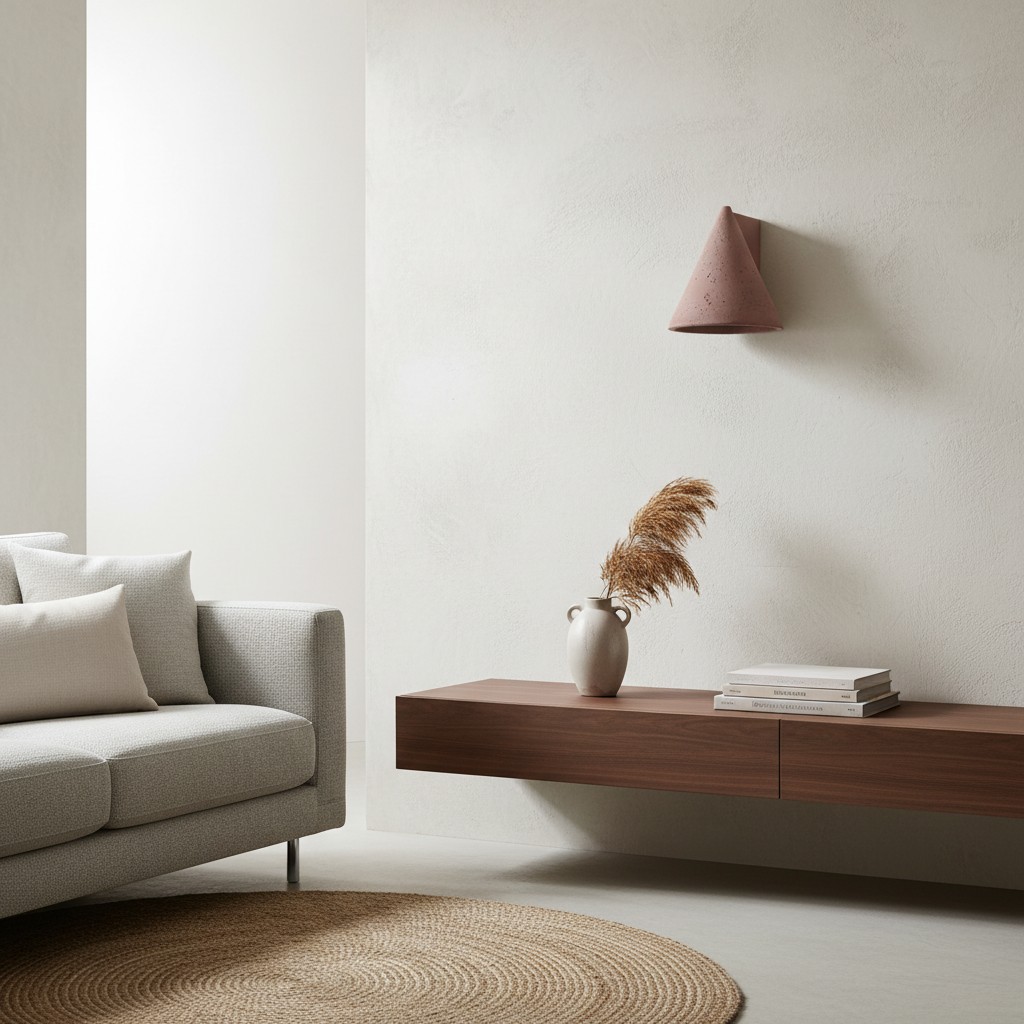
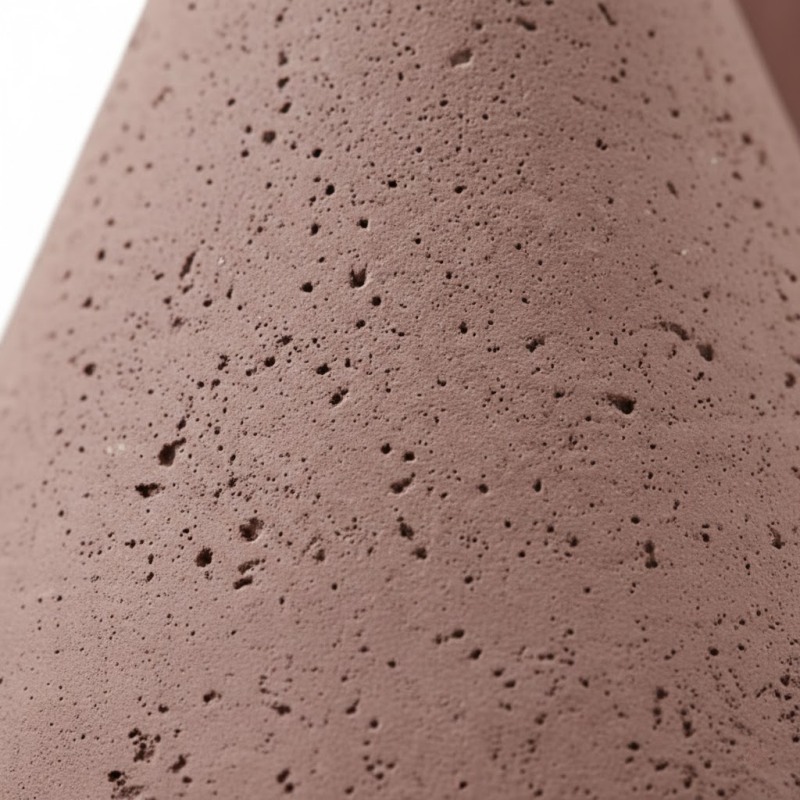
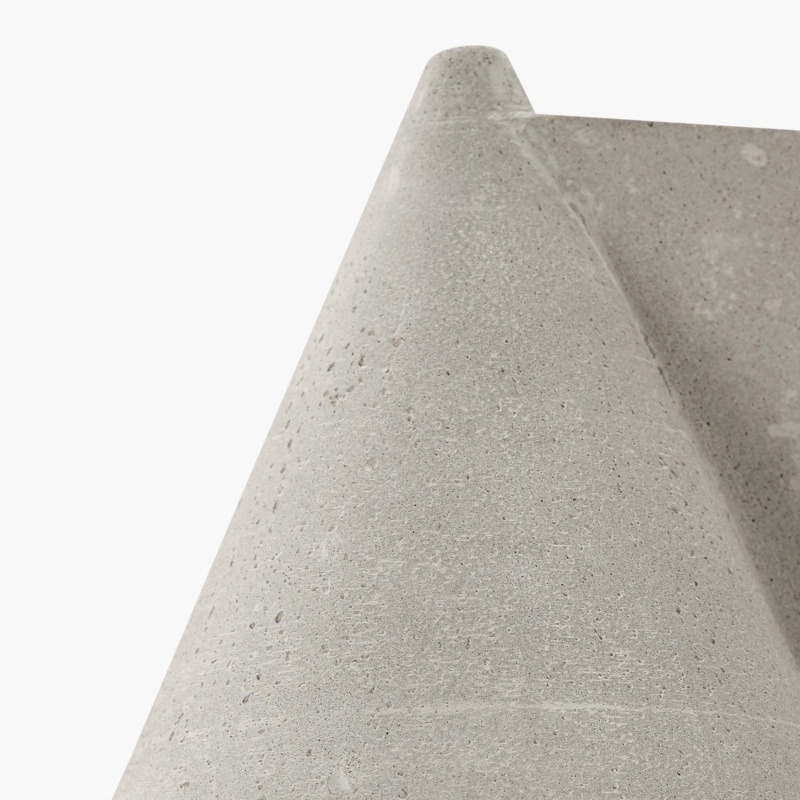
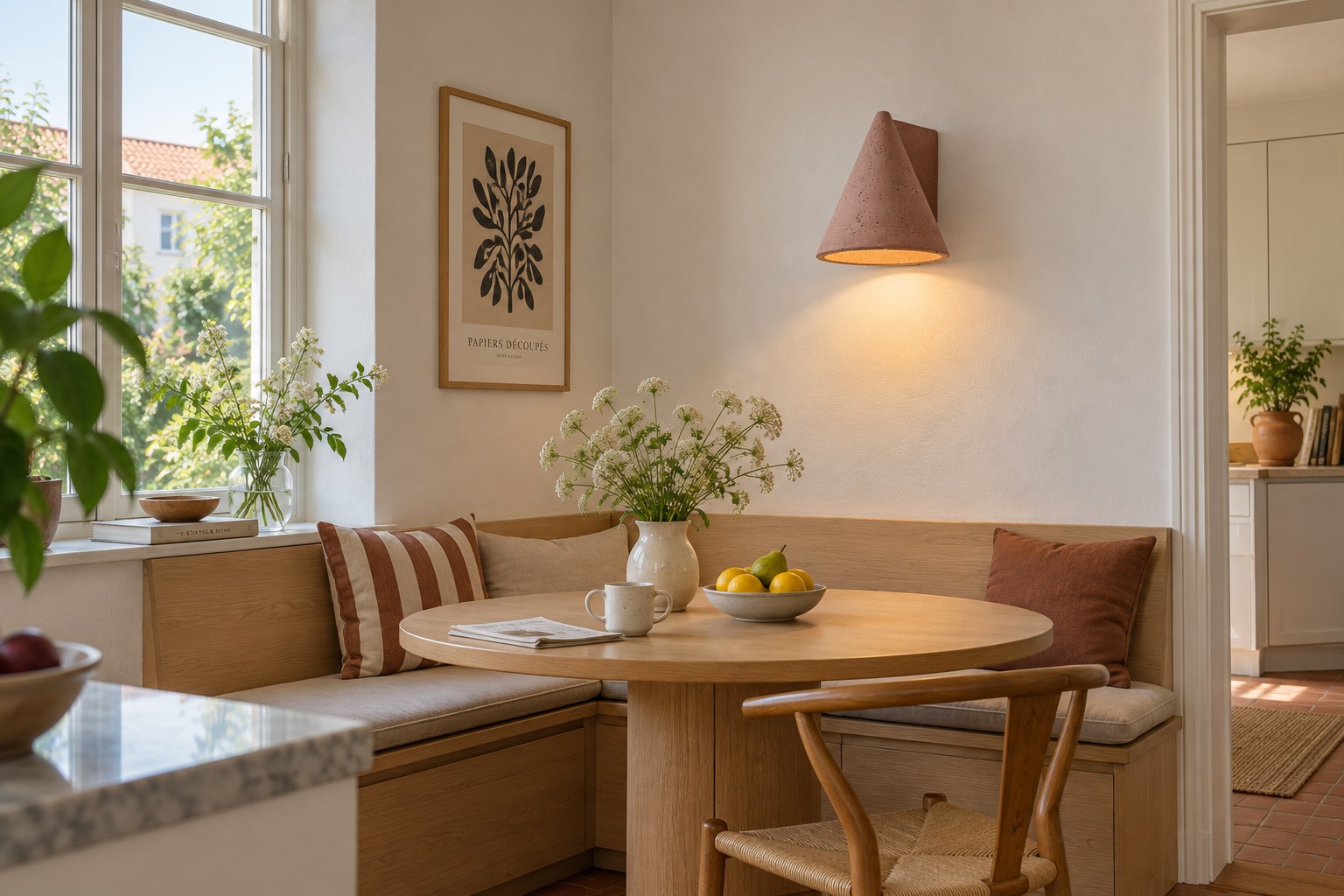
A compact piece such as the Concrellia Tapered Concrete Wall Lamp adds shape without narrowing the passage. Leave clear wall around its glow and align it loosely with the seated zone, not the ceiling. Grey concrete suits pale oak and cool stone; brick red brings welcome warmth to walnut or painted joinery.
Idea two: a balanced pair for a long bench
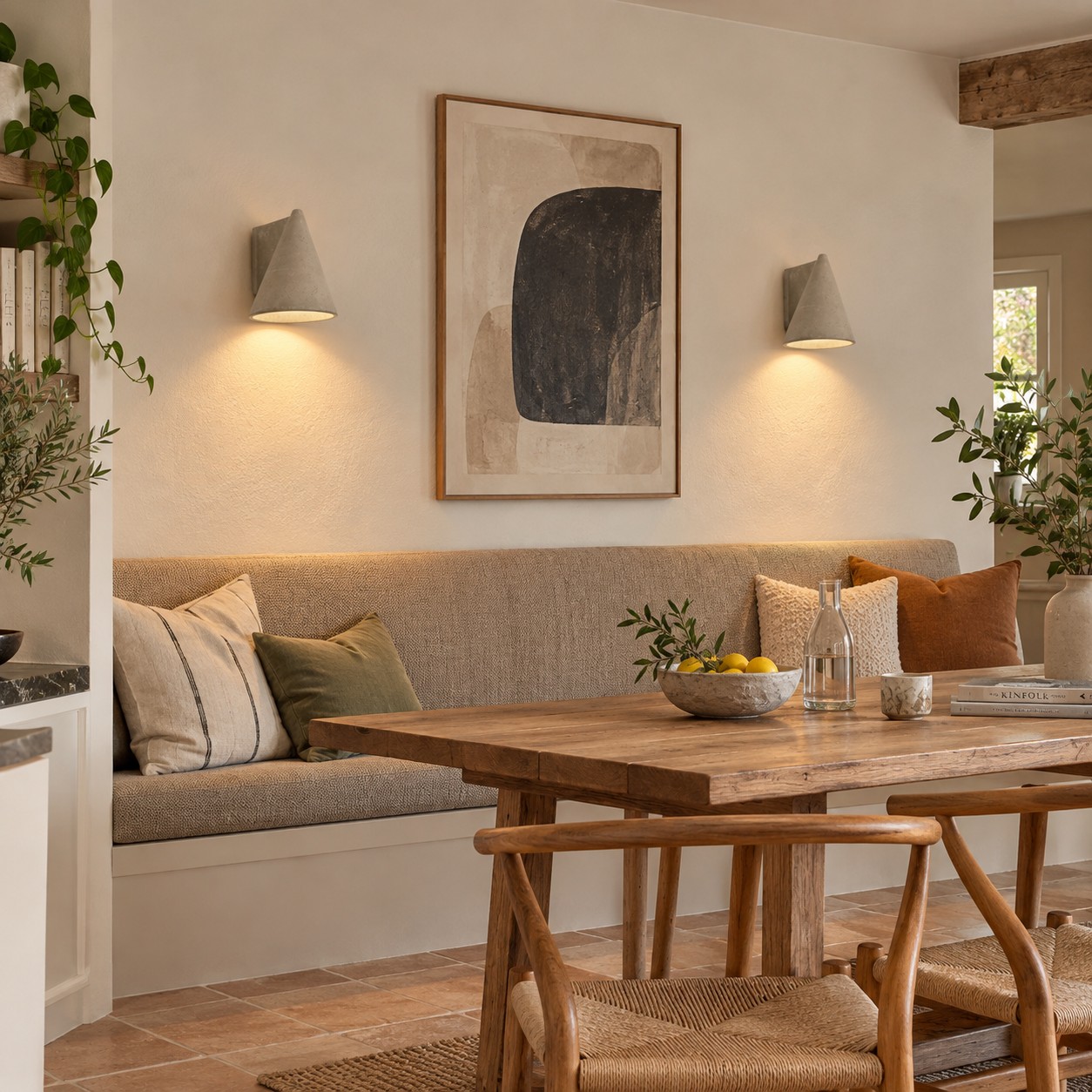
Two lights can frame a long banquette and make it feel architectural. Divide the usable seat length into thirds and test a light near each dividing point. This is a starting composition, not a law. Shift the pair if a window edge or artwork creates a stronger rhythm.
Use identical bulbs and dim them together. Tiny differences in colour temperature are remarkably obvious when two halos sit on the same wall. Keep the centre open rather than filling it automatically; the negative space lets the table and food remain the focus.
Idea three: let one light share the wall with art
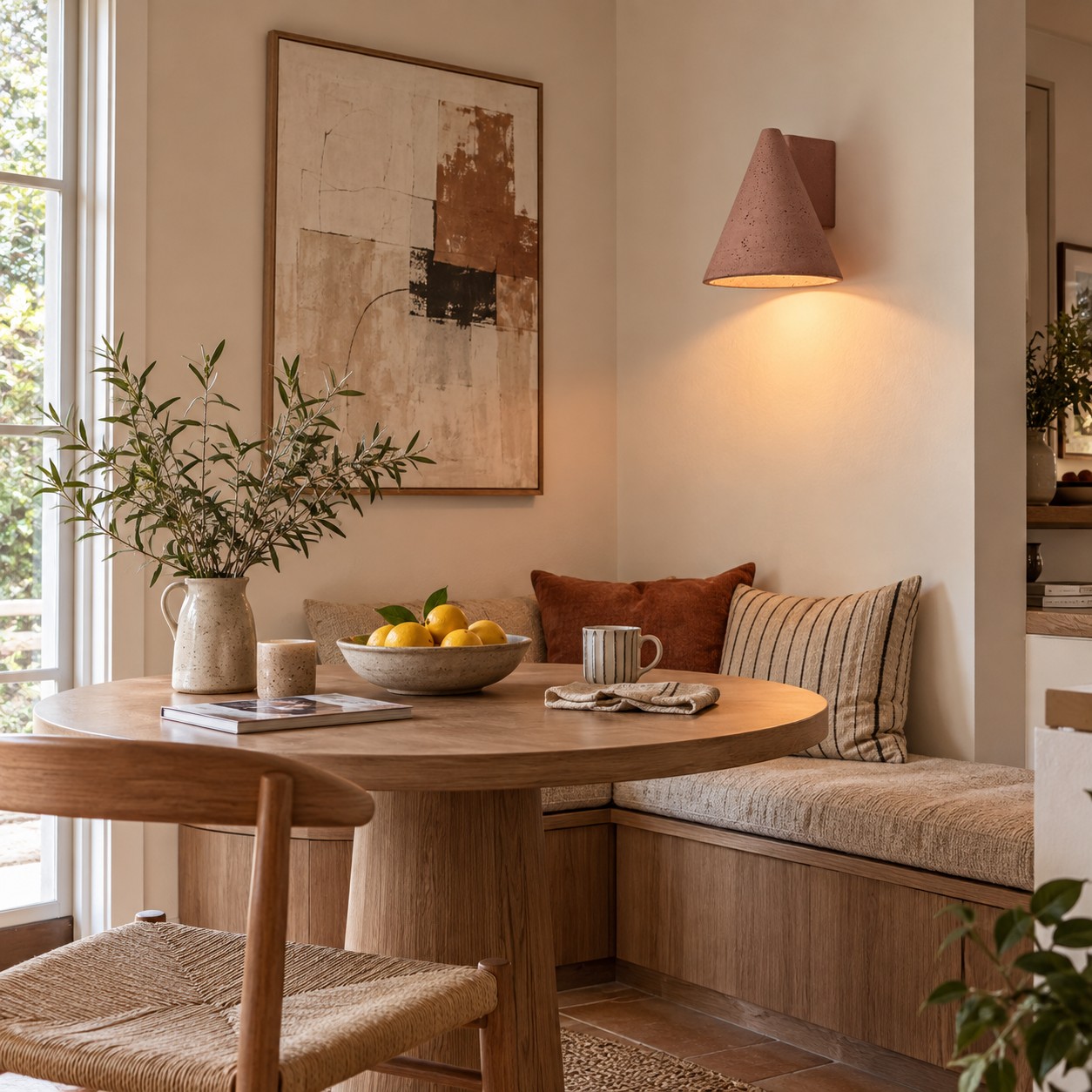
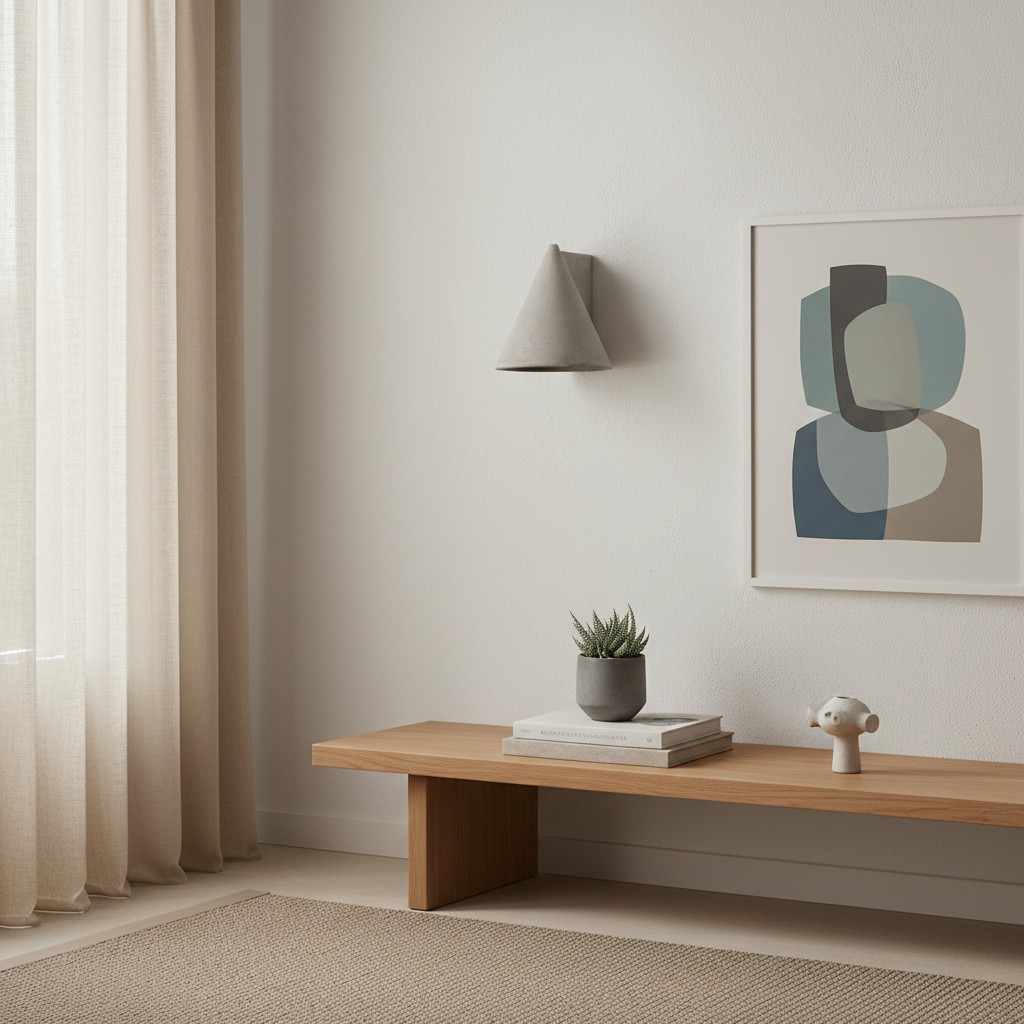
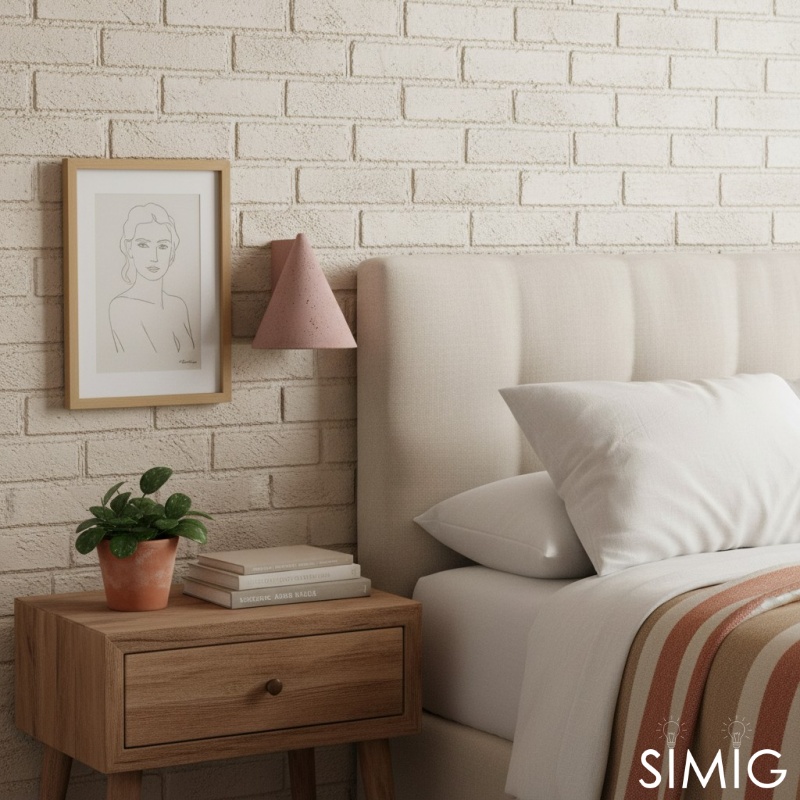
A wall light and artwork can coexist if one leads and the other supports. Place the sconce beside, not directly above, a medium-sized piece. Aligning the fixture with the artwork’s visual centre often feels calmer than matching its top edge.
Choose art without reflective glazing if possible, and angle any frame so it does not catch a bright flare. The goal is a composed wall, not a competition. If the art already has a loud palette, use the quieter grey finish. If the print is mostly neutral, brick red can supply the small note of colour the arrangement needs.
Idea four: use the corner as a pool of evening light
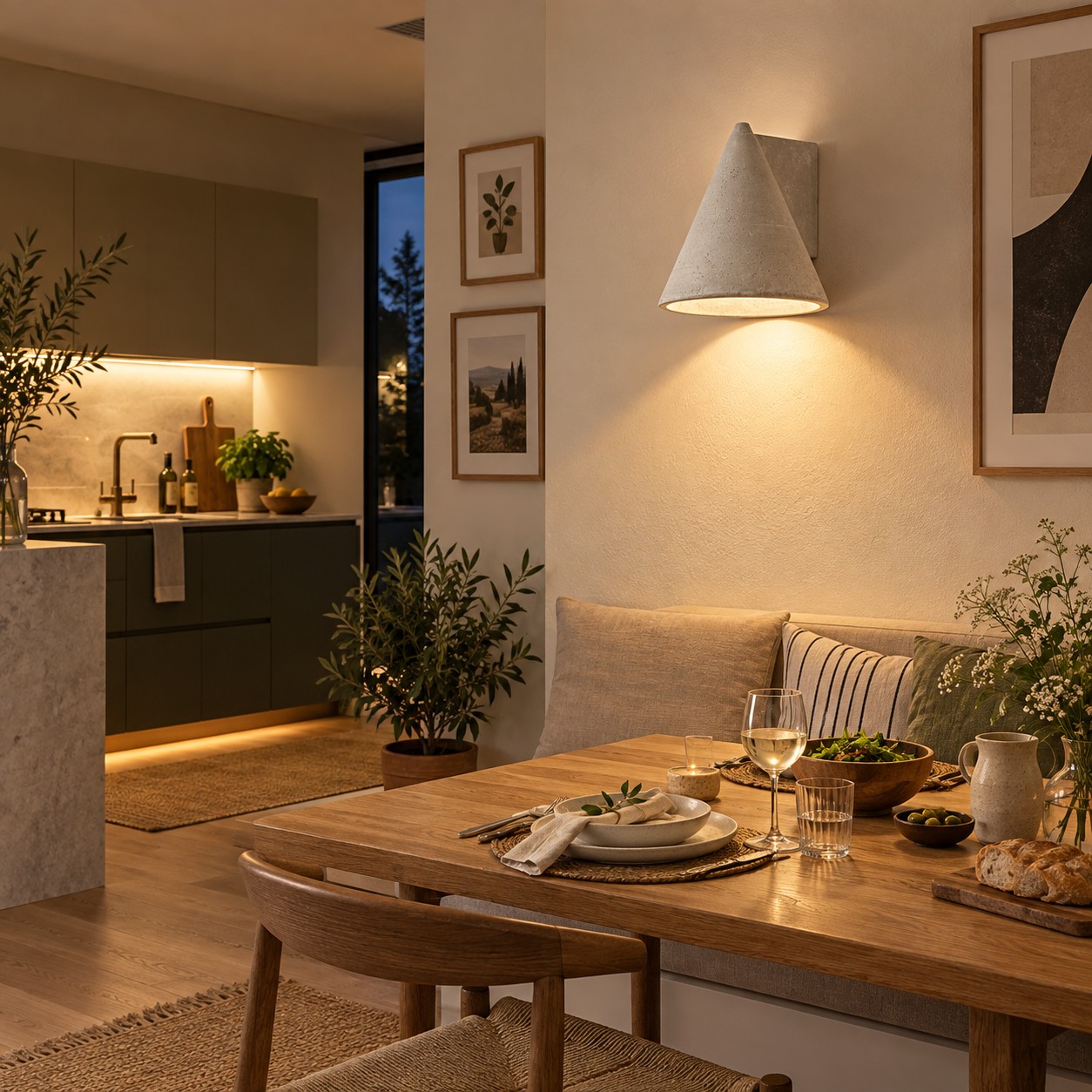
When the nook opens into a larger kitchen, the wall light can stay on after cooking is finished. That single change tells the room that the working day is over. A low glow over the banquette, paired with under-cabinet light or a distant table lamp, feels far more relaxed than a ceiling grid at full power.
This is the emotional logic explored in The Evening Reset: Creating a Calmer Home Without Turning on the Big Light. Light can signal a change of pace before anyone has cleared the last mug. Put the sconce on a dimmable circuit where compatible, and select a warm bulb rather than trying to soften a cool one with décor.
Idea five: turn a shallow recess into a destination
Some breakfast nooks are little more than a bench fitted into an alcove. Treat the recess as a room within the room. A light on the back or side wall makes its depth visible, while a darker paint or tactile plaster can reinforce the boundary.
Do not centre a protruding fixture where taller diners might lean back into it. Place it toward one side, above a fixed table edge, or use a pair outside the main head zone. Tape up a cardboard model with the actual projection before installation; a flat paper outline cannot warn you about bumped shoulders.
Idea six: connect an asymmetrical nook
Not every dining corner deserves symmetry. A round table, one curved bench and a window rarely line up neatly. In that case, let the wall light answer the heaviest object. Position it above the visually quieter end of the seat to balance the window or tall cabinet opposite.
The solid silhouette of a concrete wall sconce is useful here because it holds its own when switched off. This is ambient light, not a reading lamp, so combine it with a discreet ceiling or pendant source for cleaning, puzzles and other activities that expose the limits of romantic lighting.
Match the fitting to the room, not a trend board
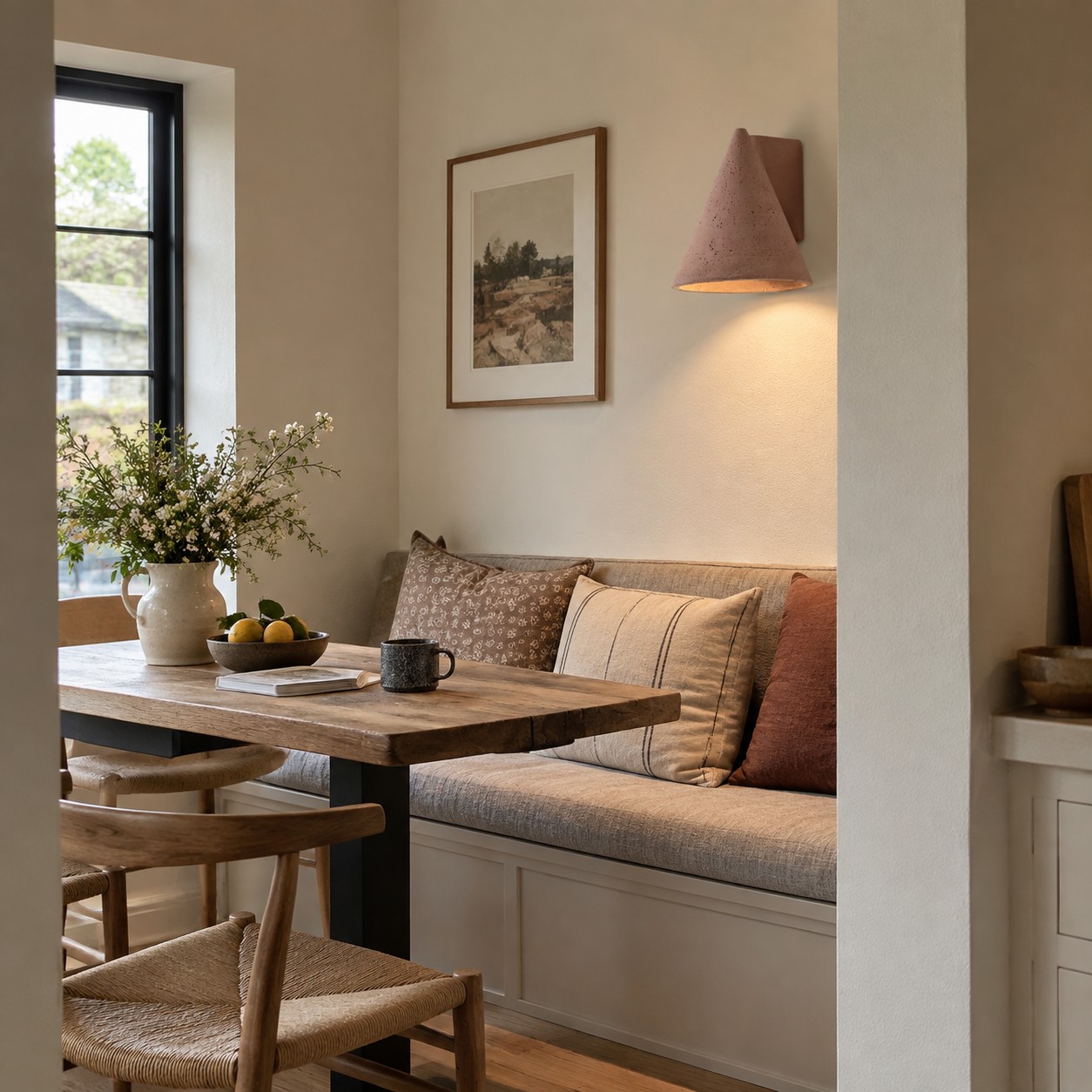
In Scandinavian-style spaces, pair grey concrete with pale timber and linen, but add one warmer note so the room does not become a catalogue of oatmeal. In rustic interiors, the brick-red option can bridge old timber and handmade ceramics without pretending to be vintage. In minimalist kitchens, a strong tapered form prevents the nook from feeling like leftover floor plan.
For a room that still feels vacant despite plenty of general illumination, read What to Do When a Room Has Light but Still Feels Visually Empty. The same principle applies here: the wall needs a clear point of attention, not indiscriminate brightness.
Mistakes that spoil dinner
- Mounting by standing eye level: always judge glare while seated.
- Ignoring projection: measure how far the fitting enters the seating zone.
- Using one switch for everything: separate ambient light from bright kitchen light where possible.
- Hanging too high: connect the light visually to the table and bench.
- Expecting mood light to handle tasks: keep a practical layer for homework and cleaning.
Frequently asked questions
How high should a breakfast-nook wall light be?
There is no universal height. Test it from seated eye level and relate it to the table, seat back and fixture projection.
Is one sconce enough for a banquette?
Usually for atmosphere. A long bench may suit a pair, while task lighting should come from another layer.
Can I put a wall light beside artwork?
Yes. Leave breathing room and avoid reflective glass that catches glare.
What bulb colour is best?
Warm white around 2700K generally makes timber, food and evening skin tones look comfortable.
A corner worth lingering in
The best breakfast-nook lighting is barely noticed as equipment. It makes the wall feel closer, the table feel separate from the kitchen and the end of the day arrive a little more gracefully. For a compact fixture with genuine daytime presence, view the Concrellia wall lamp, then test its scale with cardboard before committing to the drill.