What to Do When a Room Has Light but Still Feels Visually Empty
Brightness solves visibility. It does not automatically create atmosphere, depth, or a place for the eye to settle. That is why a perfectly well-lit room can still feel oddly vacant.
A room can have six spotlights, a generous window and enough lumens to locate a dropped earring, yet still feel as if someone moved out yesterday. The problem is rarely a shortage of light. It is a shortage of visual hierarchy: everything is equally visible, nothing is especially inviting, and the walls contribute little once the furniture has been arranged.
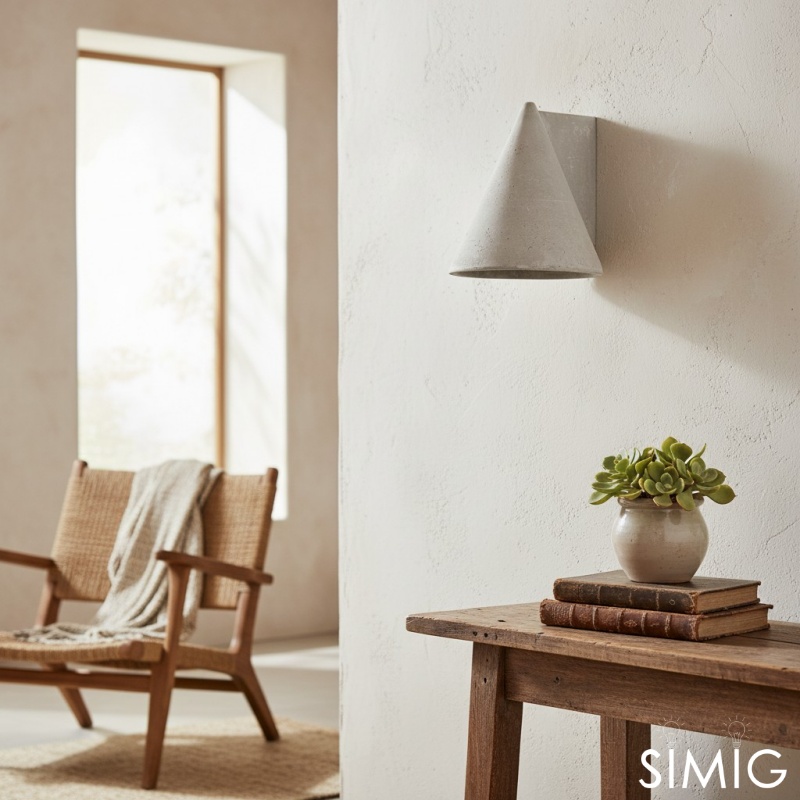
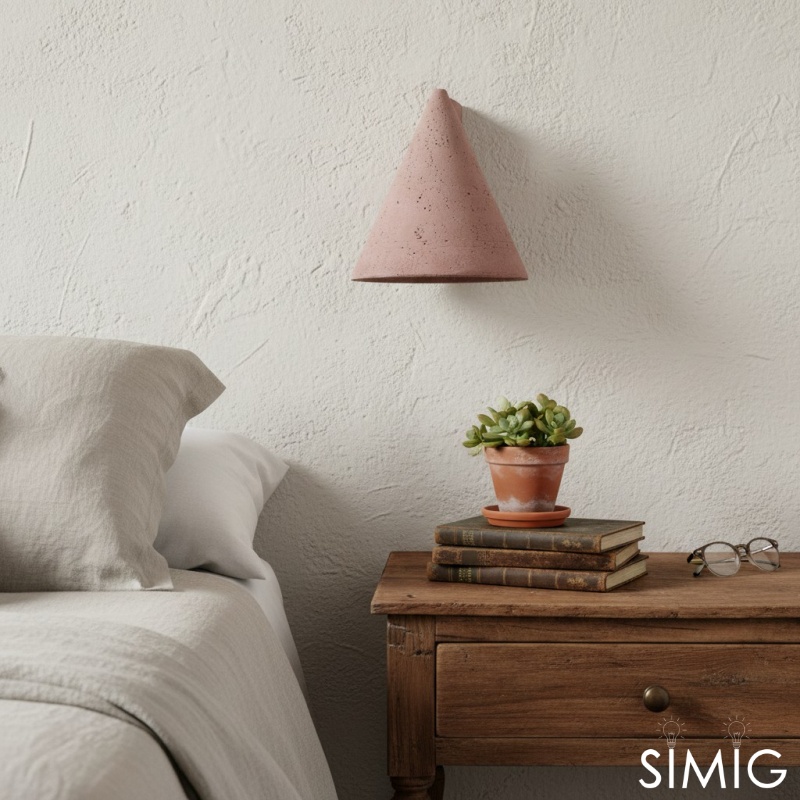
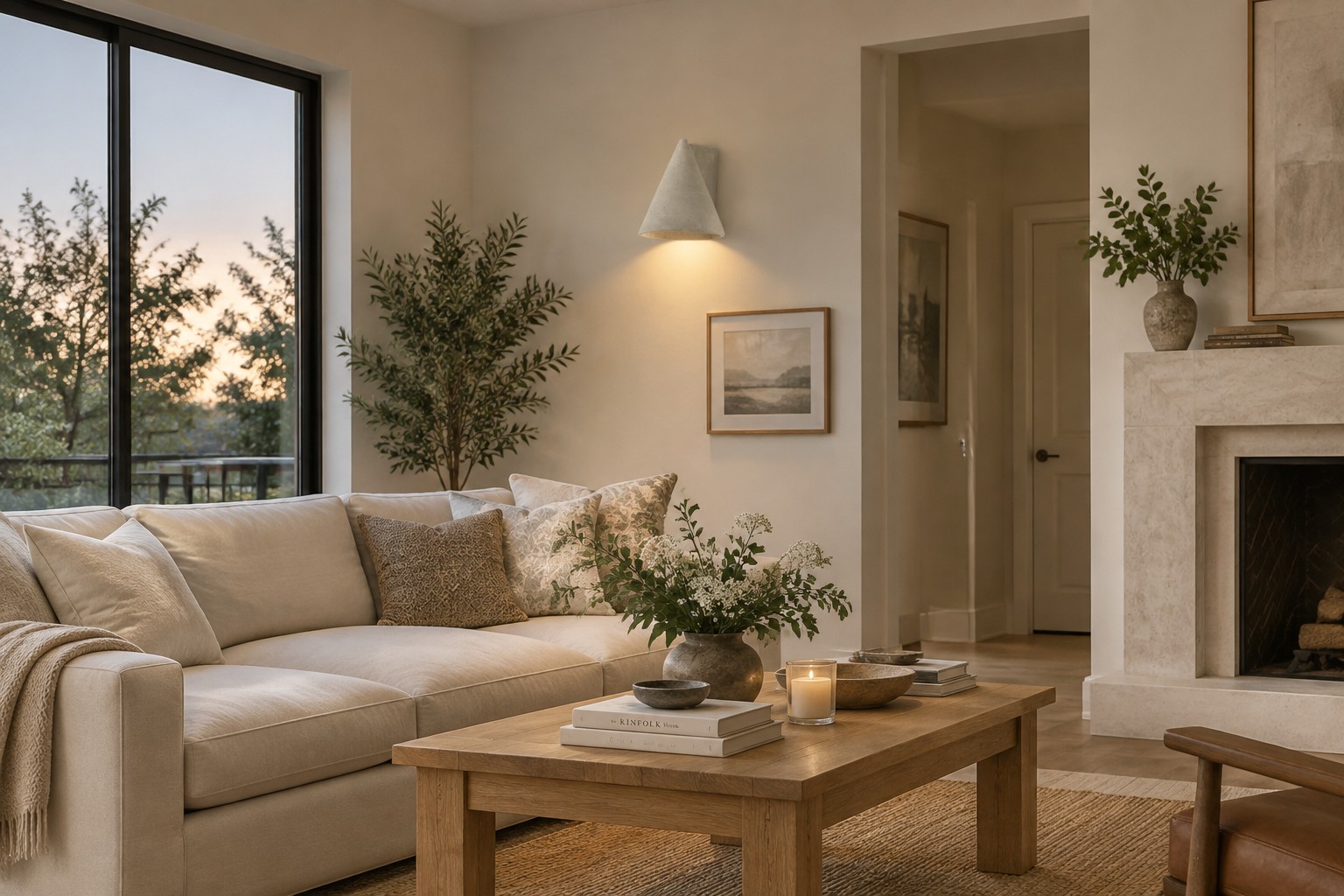
The quickest improvement is to stop treating brightness as the only goal. Keep the practical light, but add one lower, warmer source that gives the eye a destination. Ambient wall lighting is particularly effective because it illuminates the surface as well as the room. A compact sculptural sconce can create a visible pool of light, a shadow and an object to notice, all without claiming floor space.
Brightness is not the same as belonging
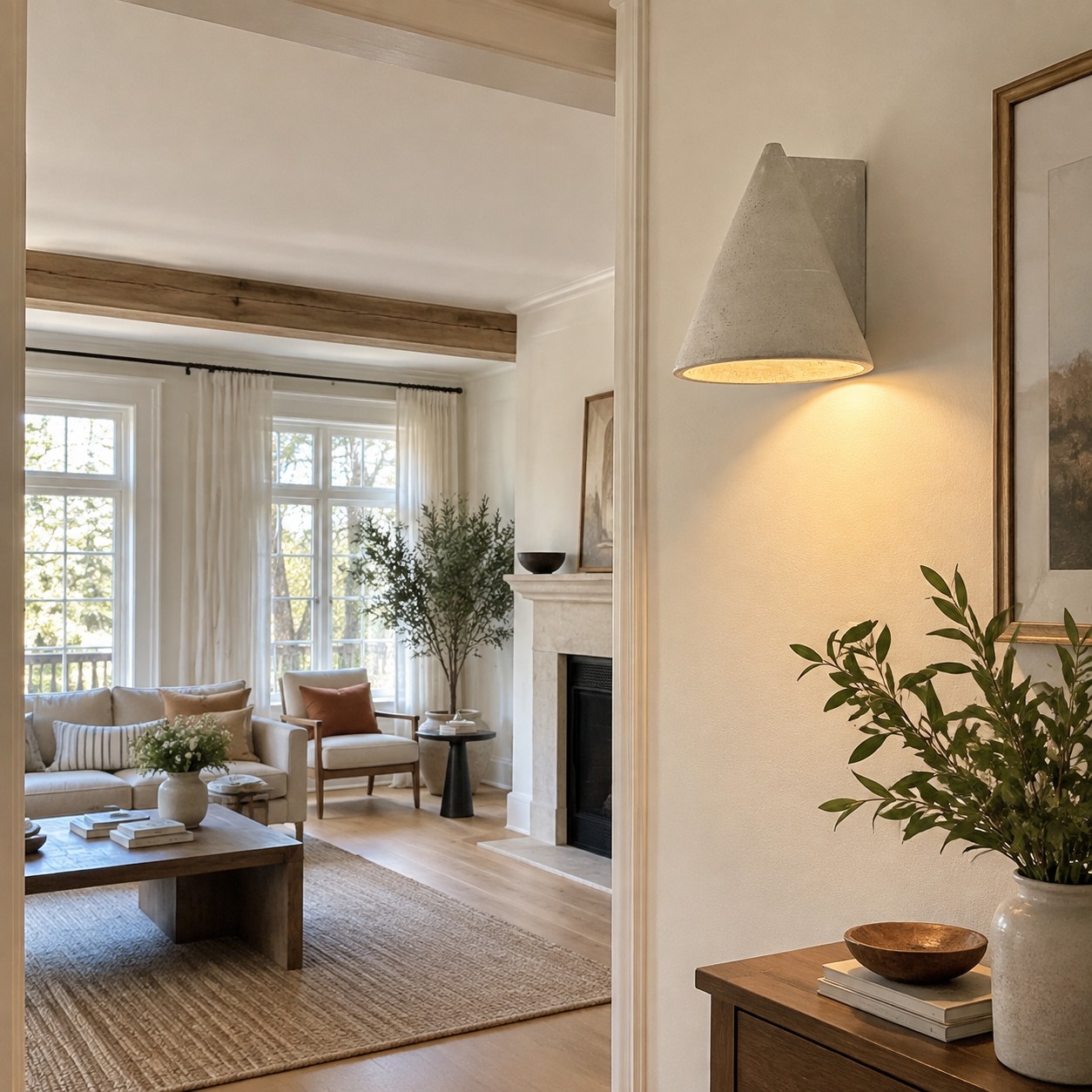
Overhead light tends to distribute attention evenly. That is useful when cleaning or unpacking groceries, but it can flatten a living room. Corners recede, pale walls merge into one continuous backdrop, and furniture appears to float in a bright box. The room is functional, though it has no punctuation.
Try the doorway test after sunset. Switch on the lights you normally use and pause at the entrance for five seconds. Where does your eye land? If the answer is “nowhere in particular,” the room needs an anchor rather than another high-output bulb. This is the practical idea behind The Wall-Light Test: Does Your Room Look Better in 5 Seconds?: a useful decorative light changes the composition immediately, not merely the meter reading.
Build three heights, not one bright ceiling
Rooms feel settled when light arrives at more than one level. Ceiling fittings provide general illumination. Table and floor lamps bring warmth near seated eye level. Wall lights bridge the gap, making the architecture participate. You do not need all three switched on at once; you need the choice.
Start with one wall visible from the main seat and the doorway. Add a sconce around the visual height of nearby furniture rather than pushing it toward the cornice. Then place a small lamp across the room, so the evening view has a foreground and a background. The result is depth, not dazzle.
Give the eye one confident stopping point
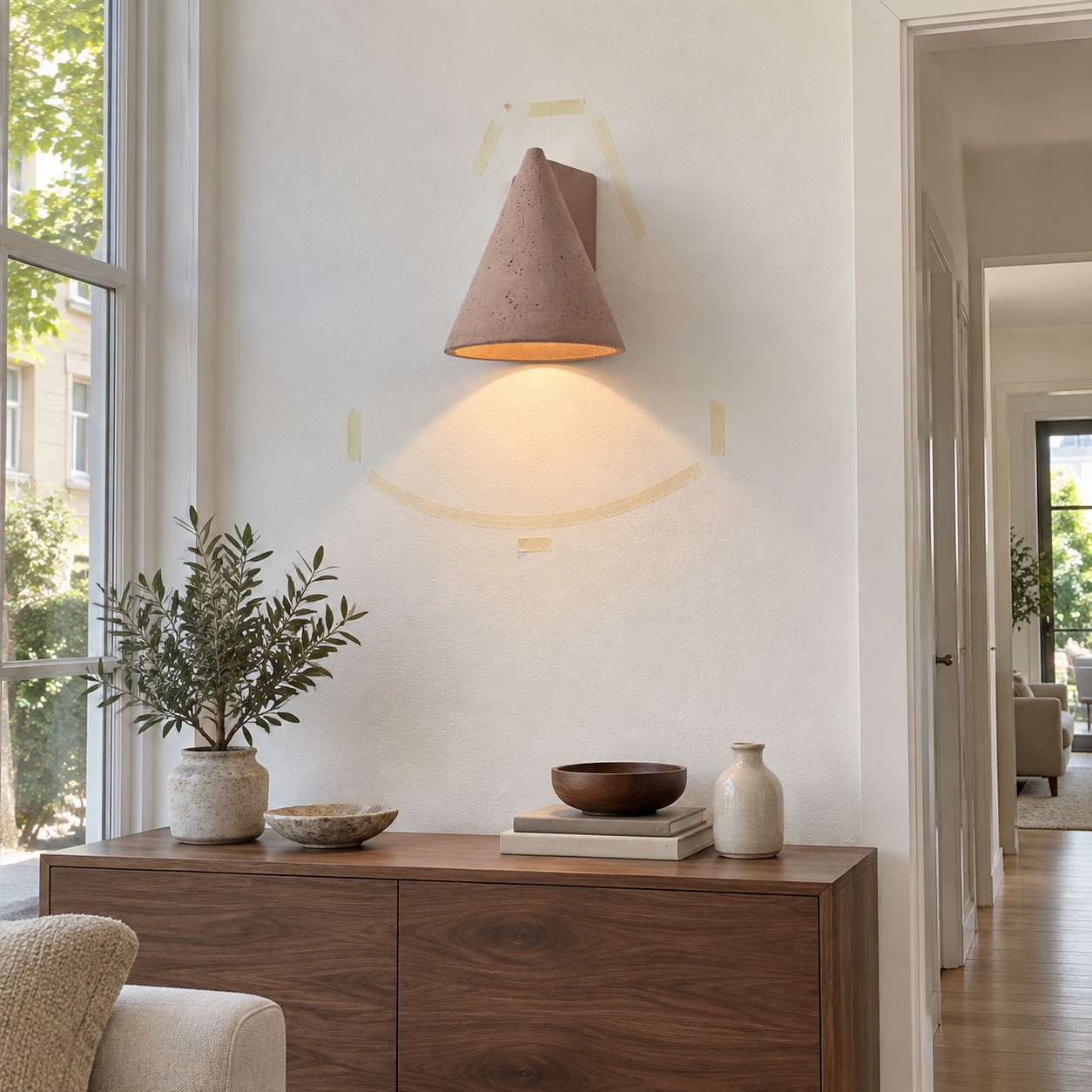
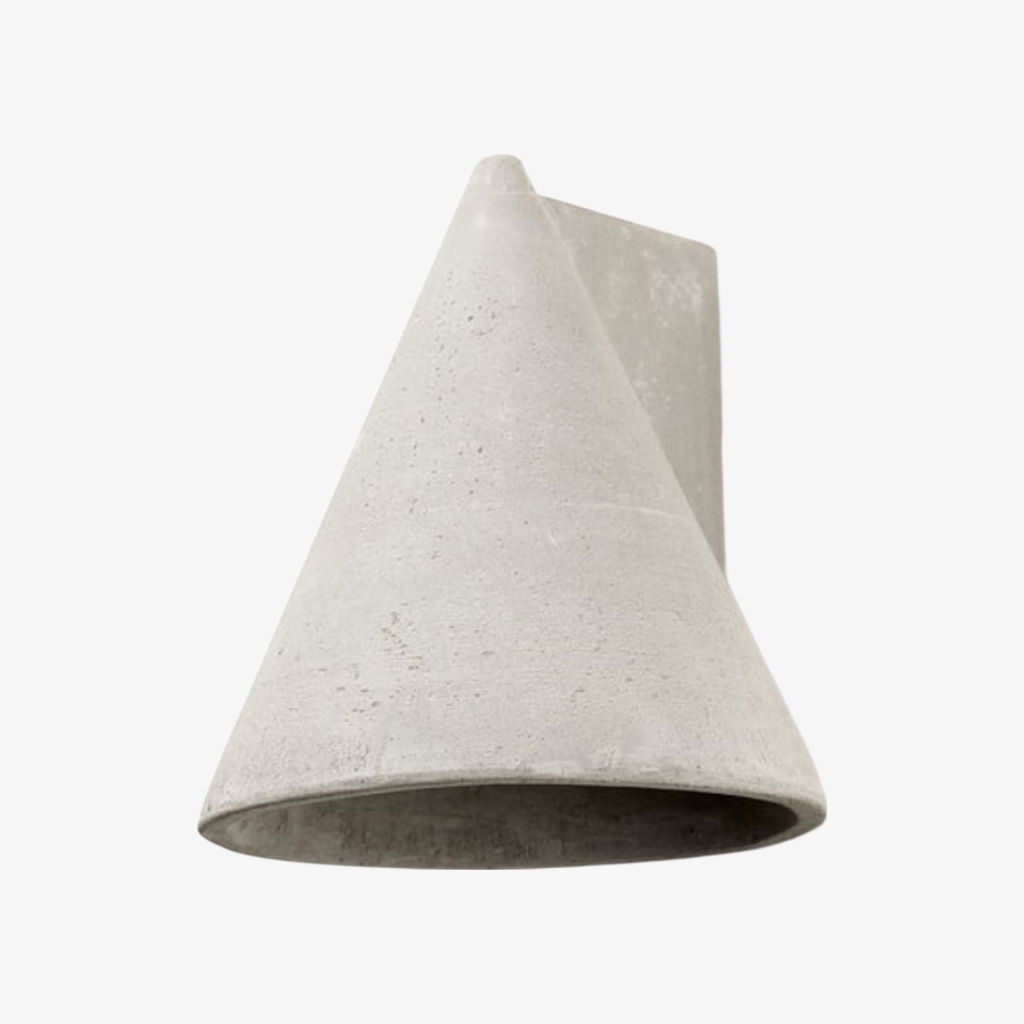
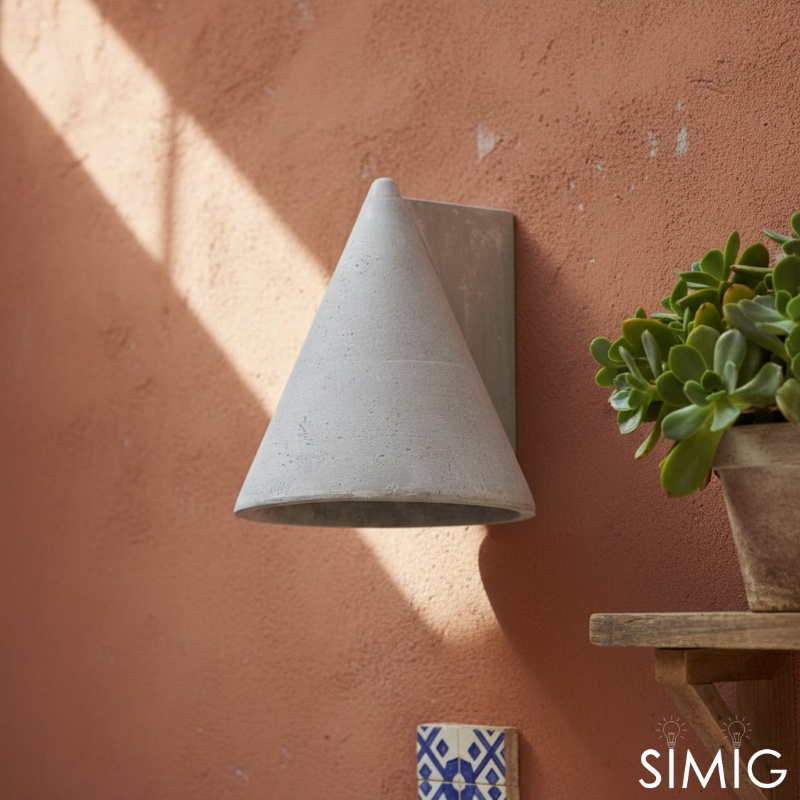
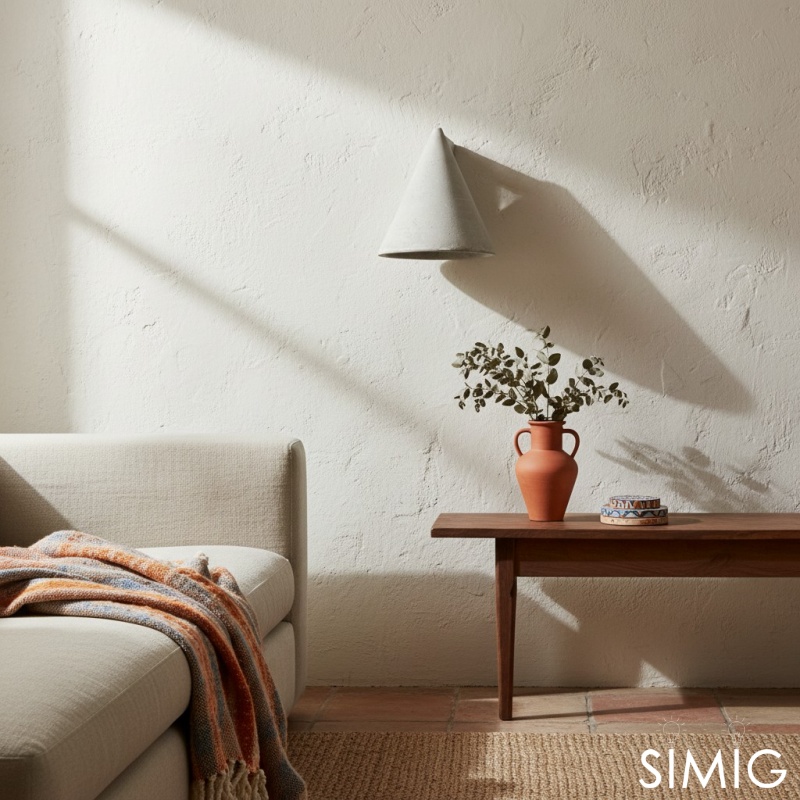
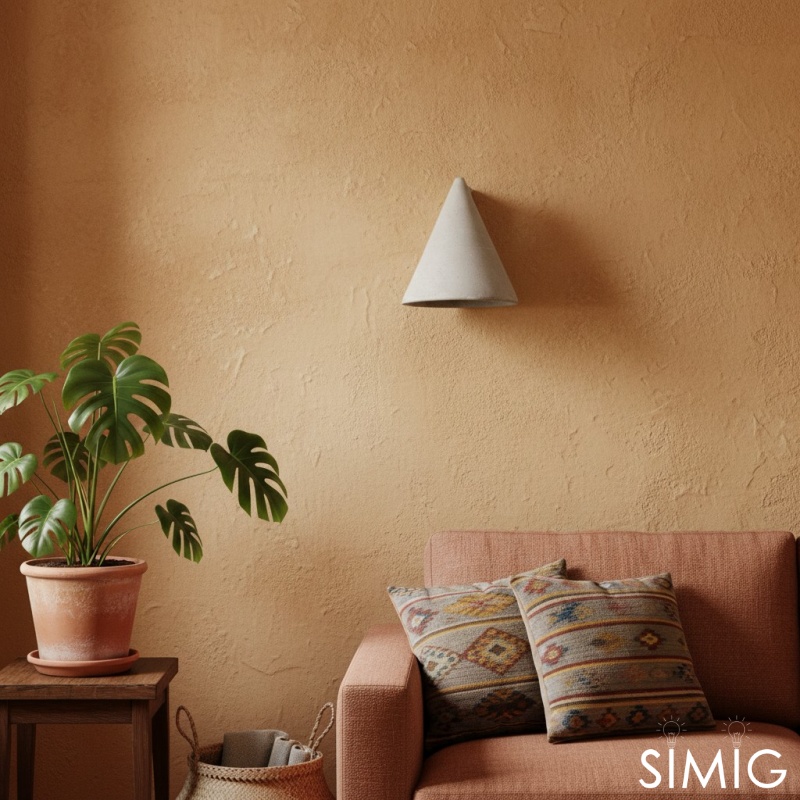
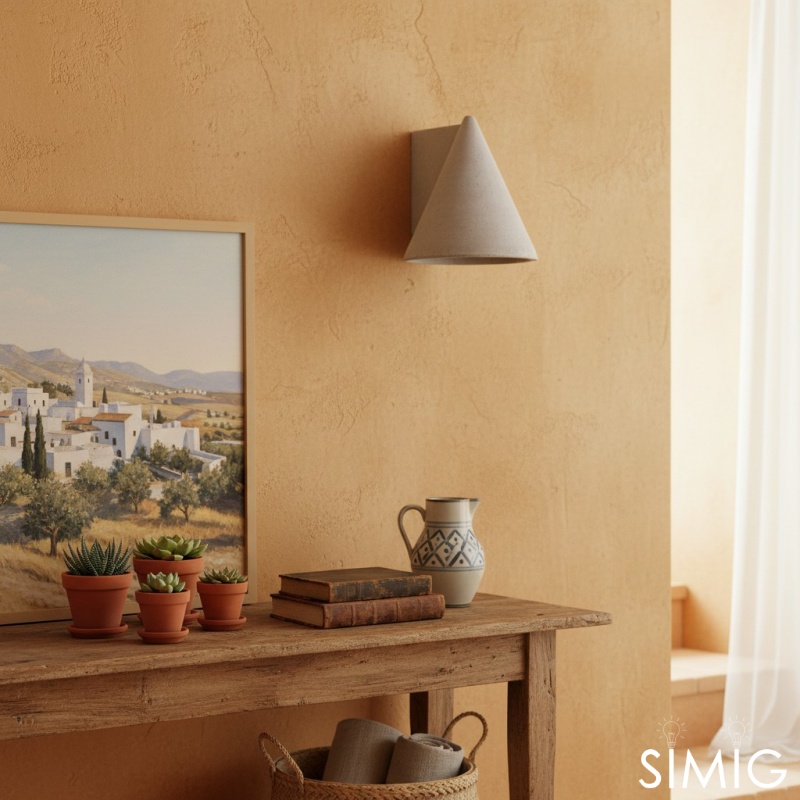
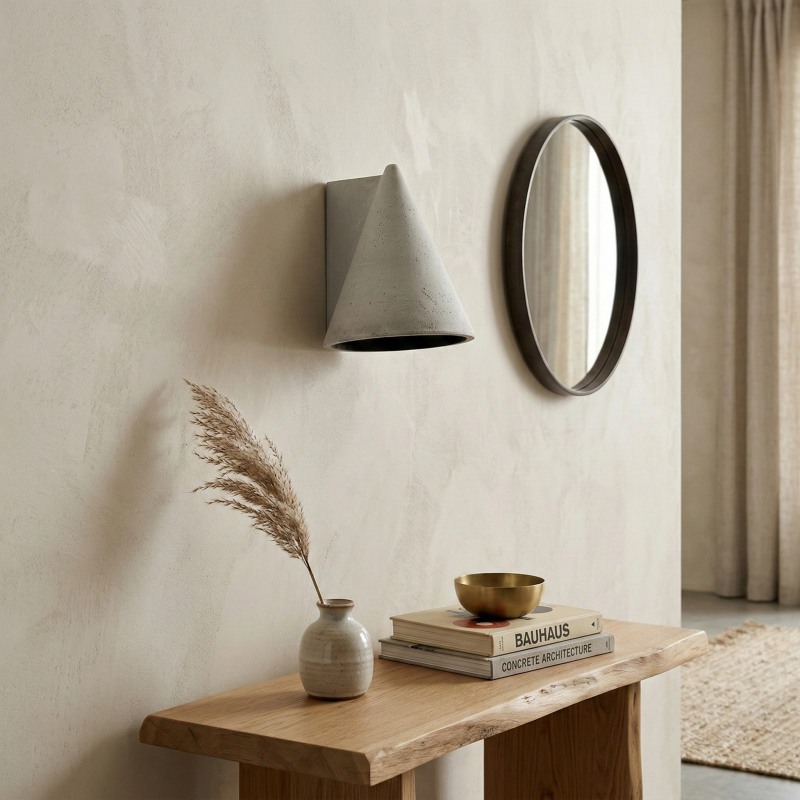
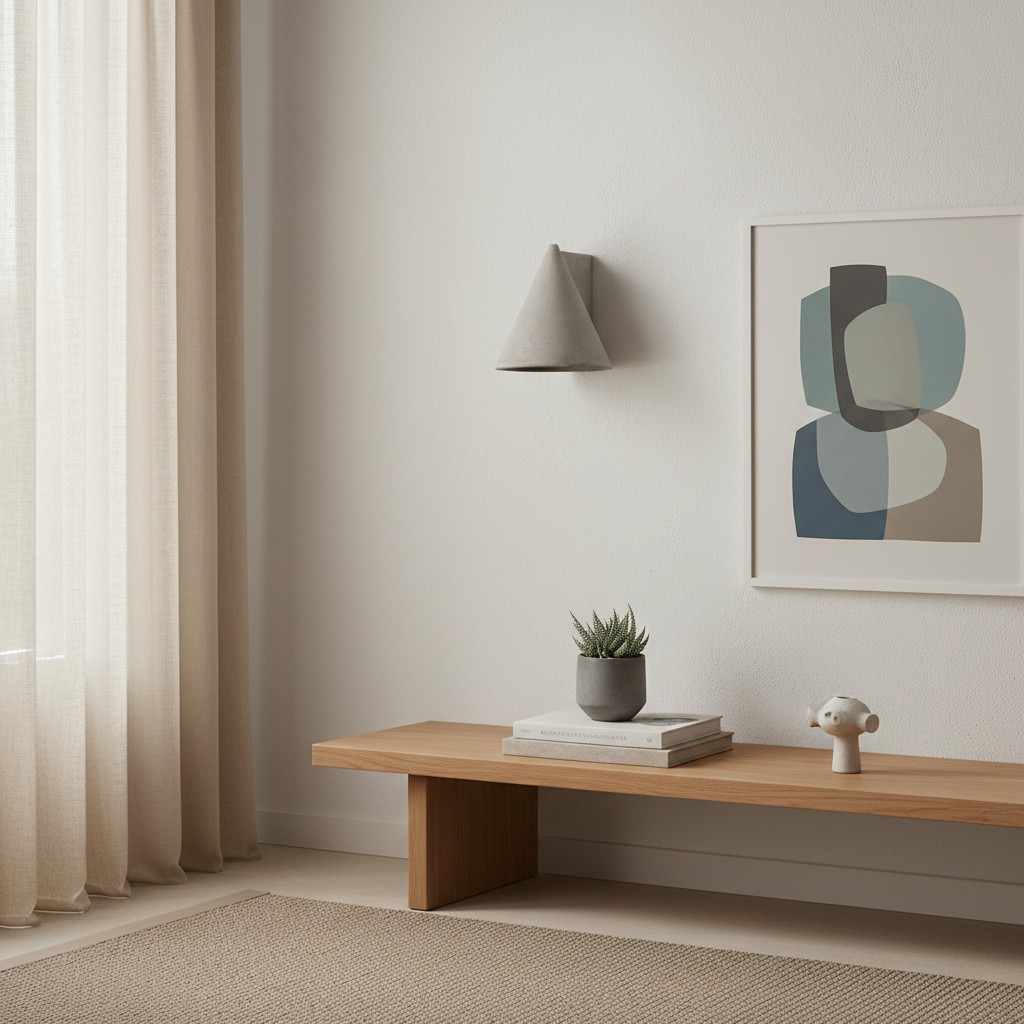
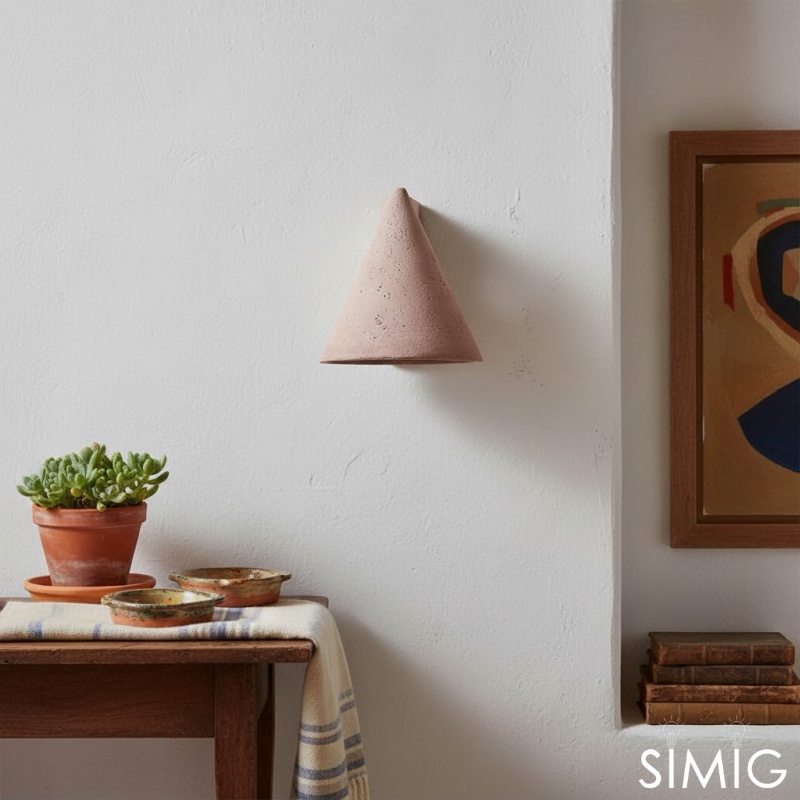
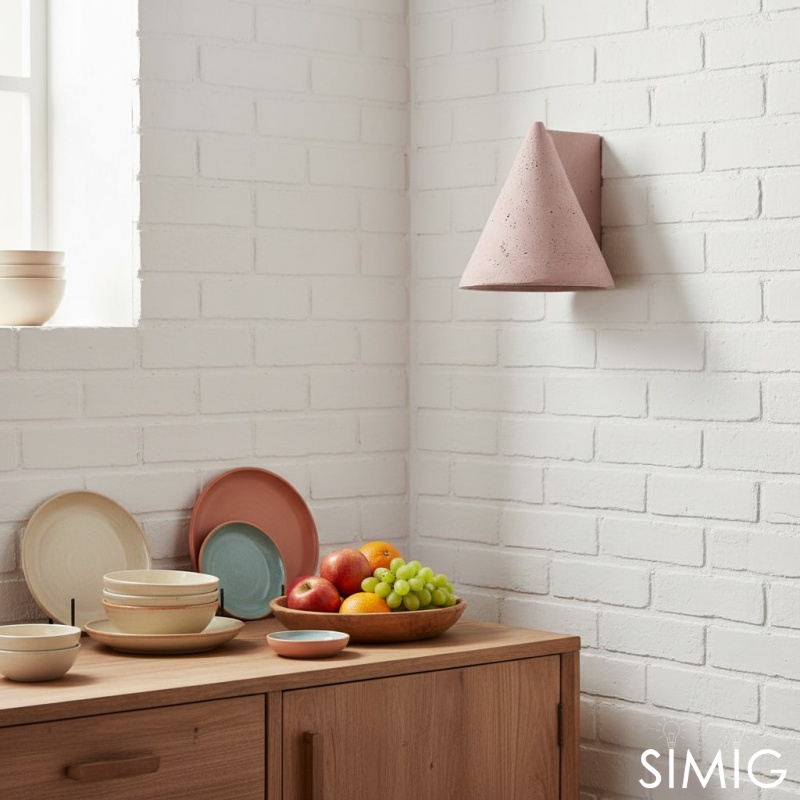
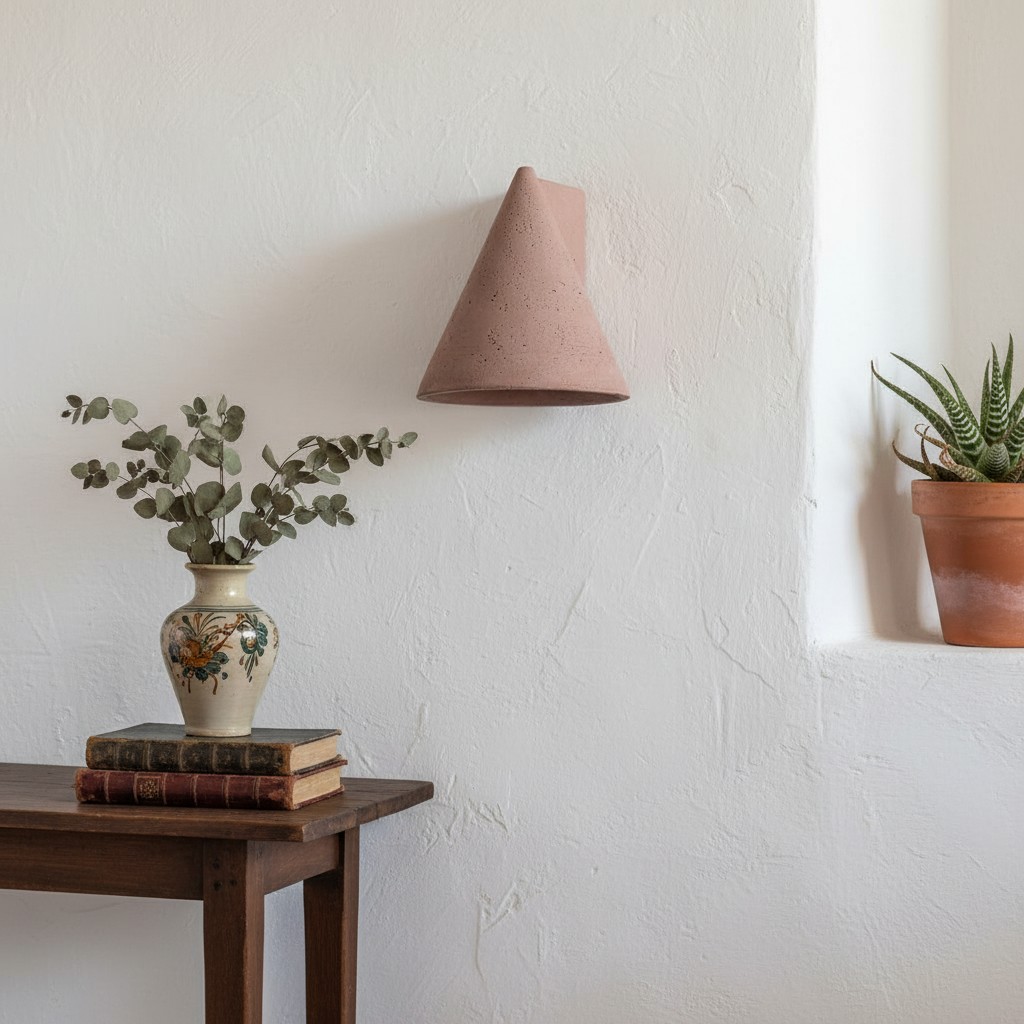
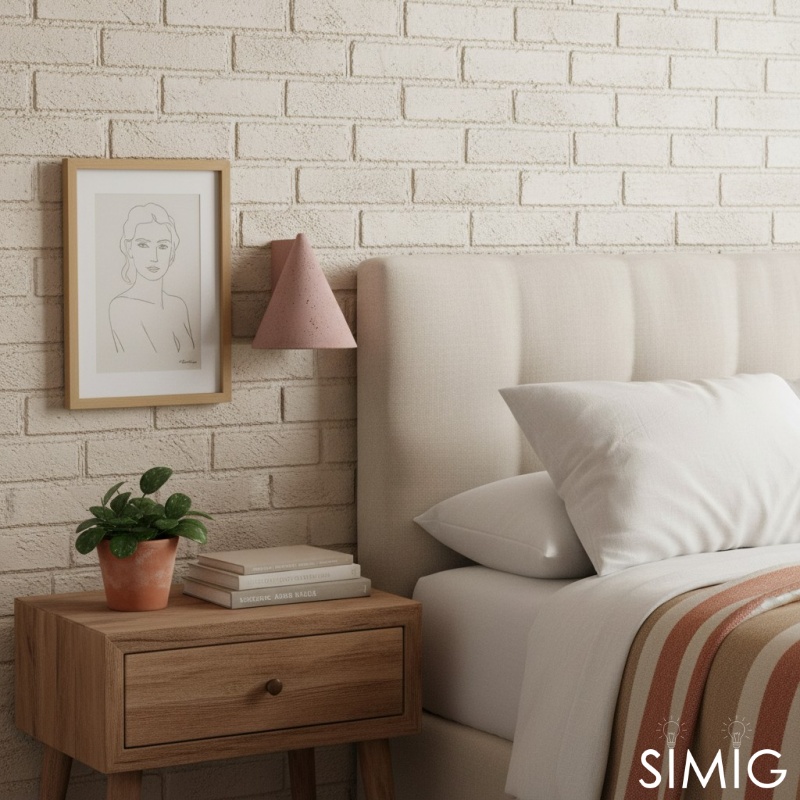
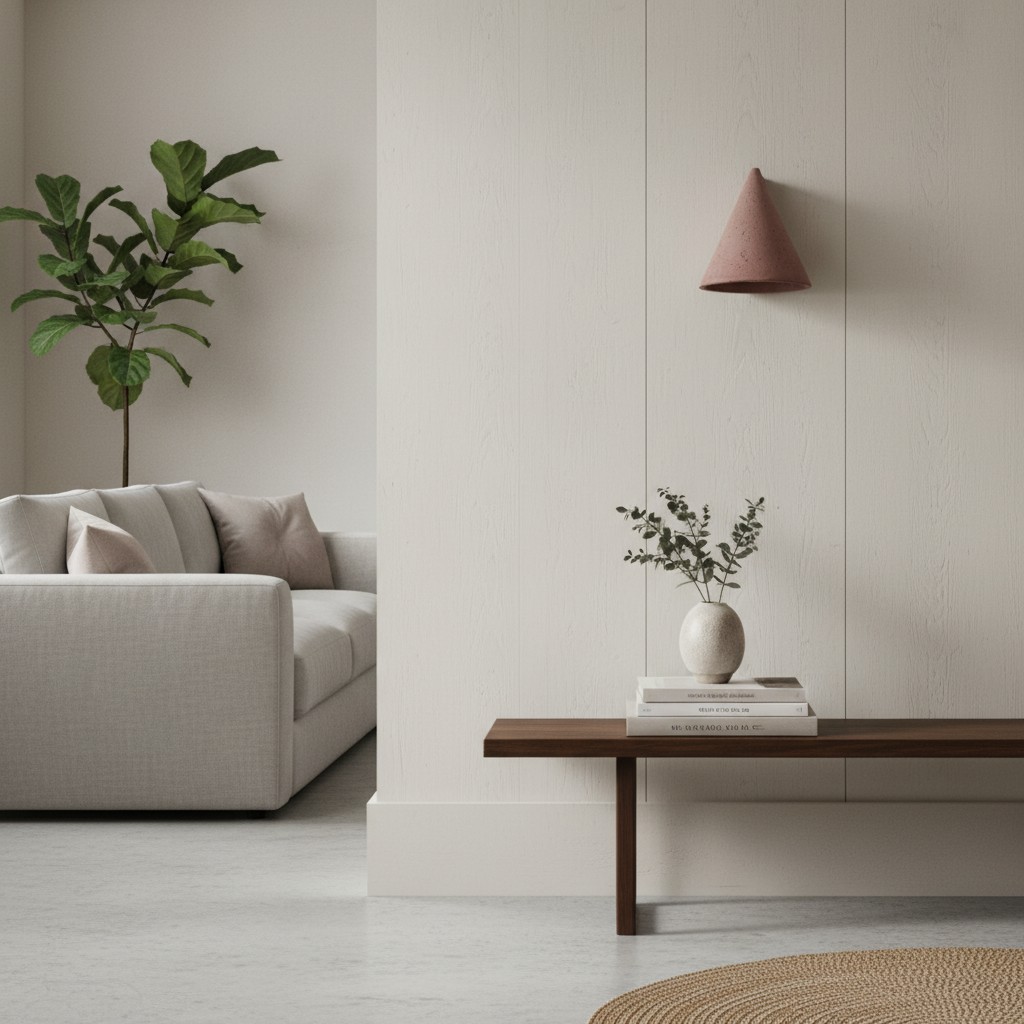
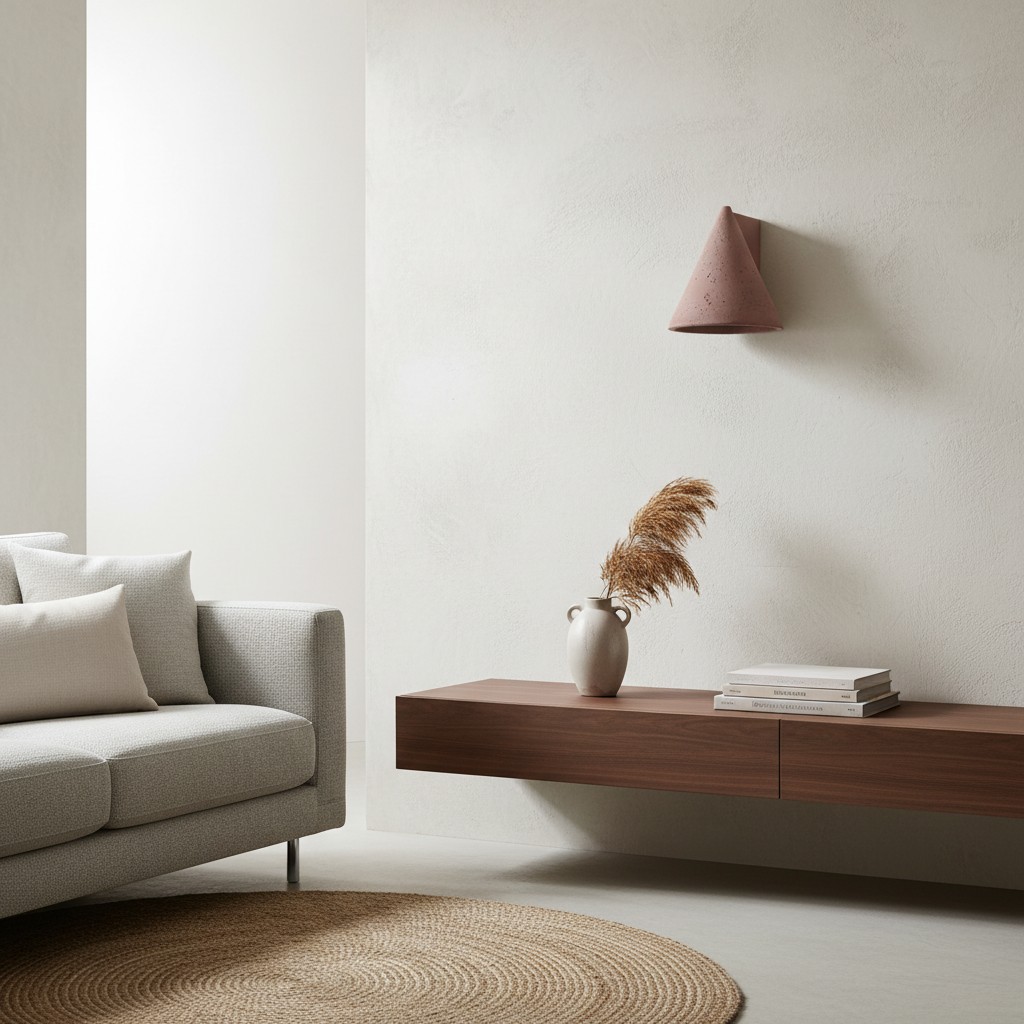
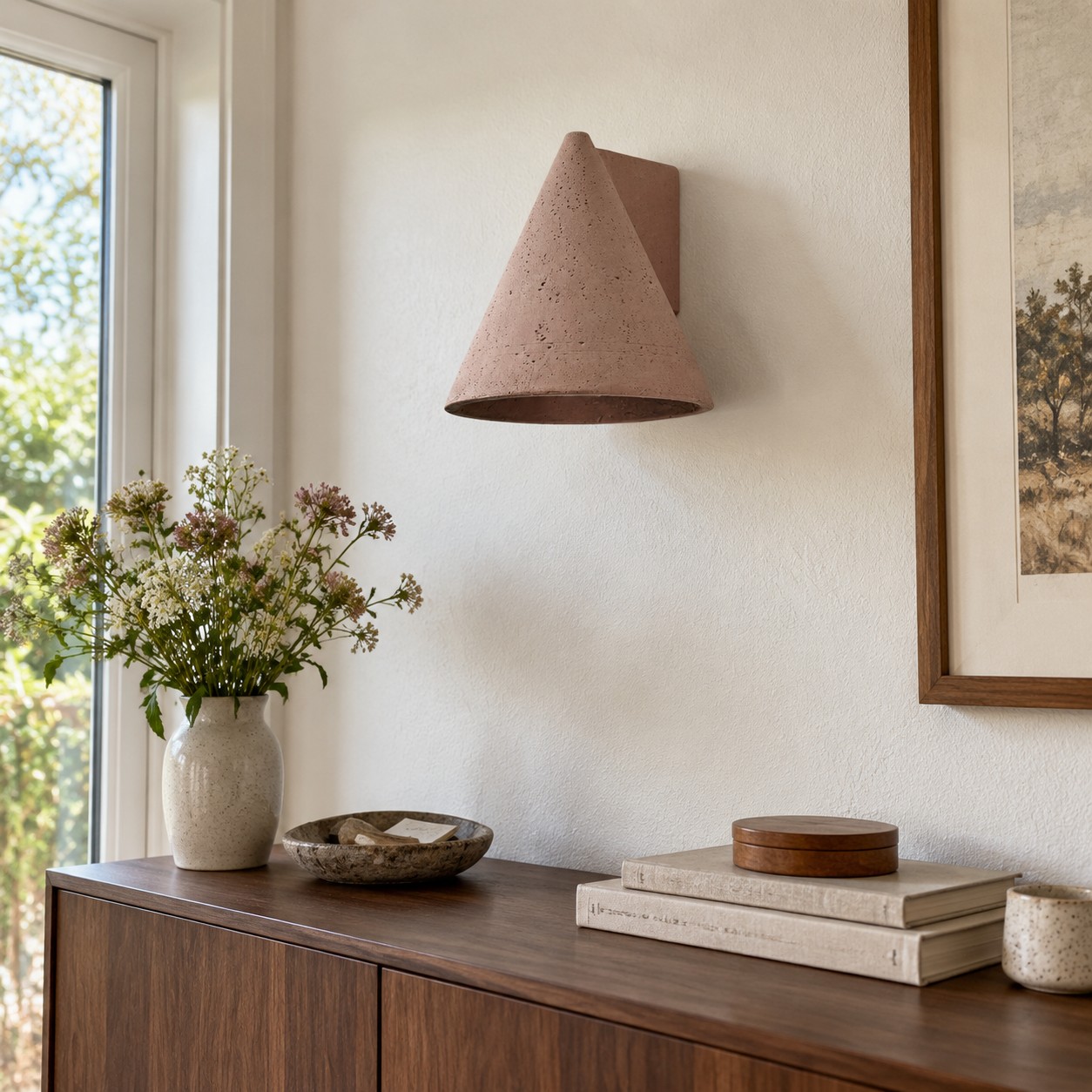
An anchor does not have to be large. It has to be legible. A distinctive silhouette on a quiet wall often carries more visual weight than a larger object surrounded by clutter. The tapered concrete body of the Concrellia wall lamp reads as a small architectural form in daylight; after dark, its glow expands its presence beyond the fixture itself.
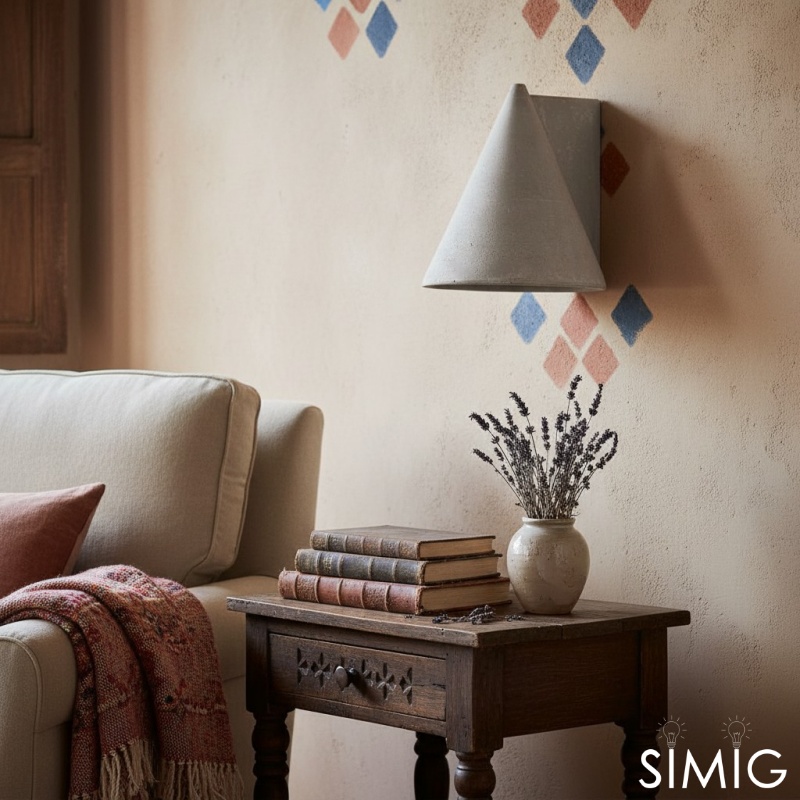
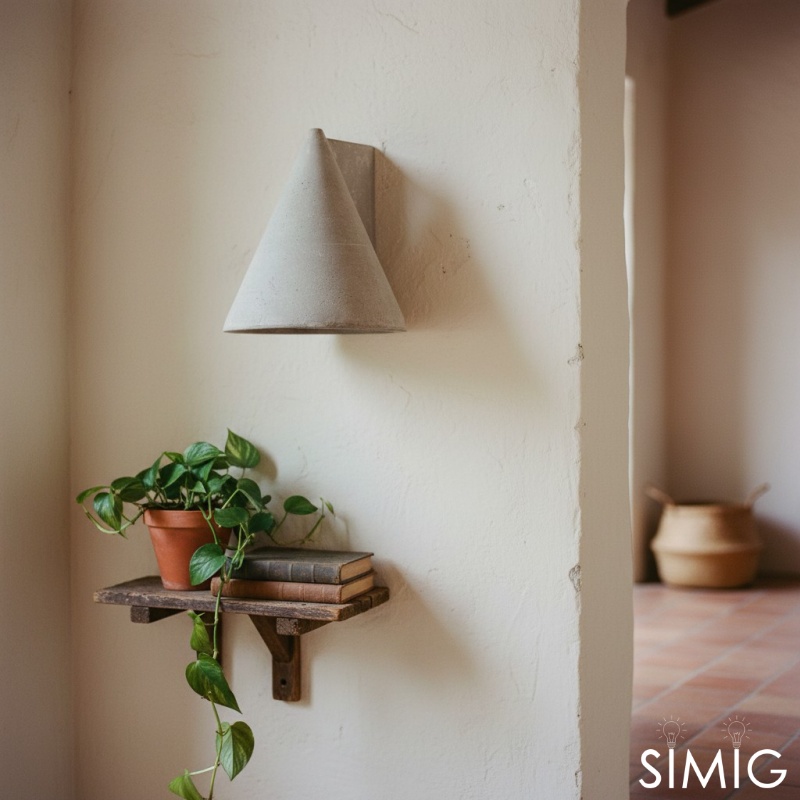
Choose a position with breathing room. Beside a low cabinet, above the end of a banquette or on the short wall beyond a sofa can work better than the exact centre of the broadest surface. Tape up a paper shape matching the lamp before drilling. Look from the doorway and from your usual seat. If it disappears behind a plant or competes with a television, move it.
Use contrast carefully
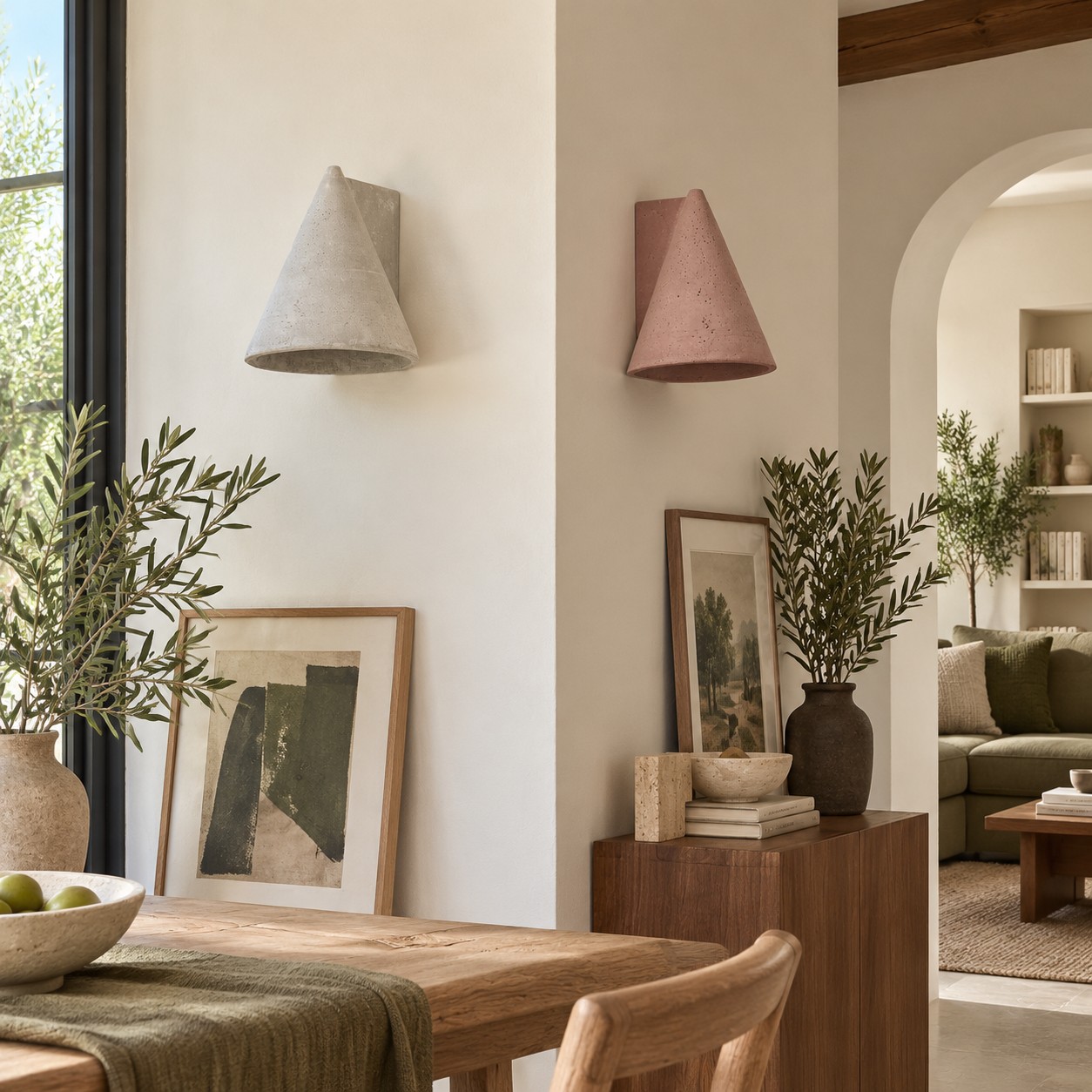
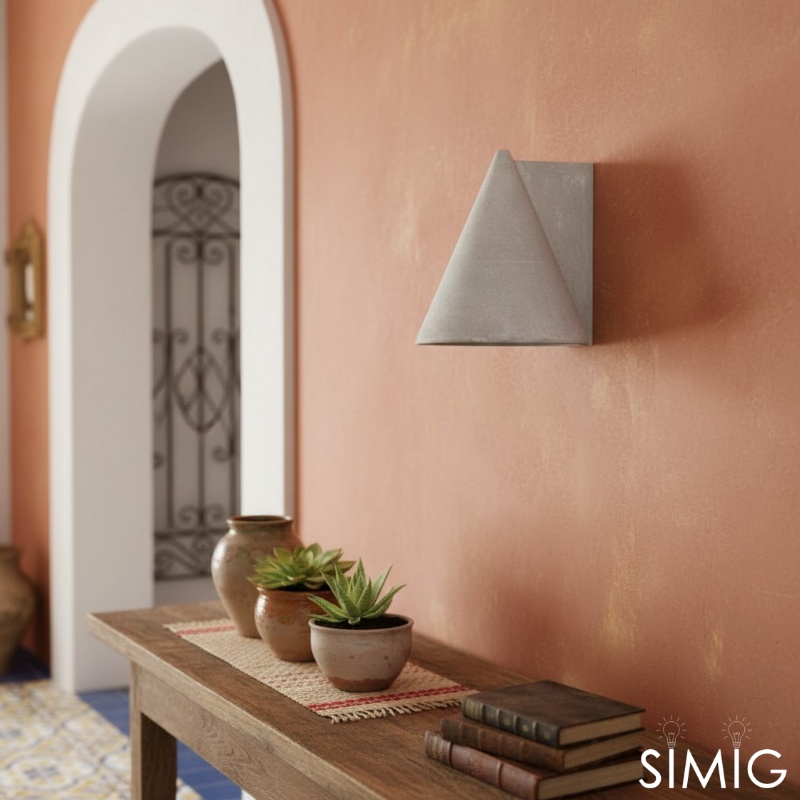
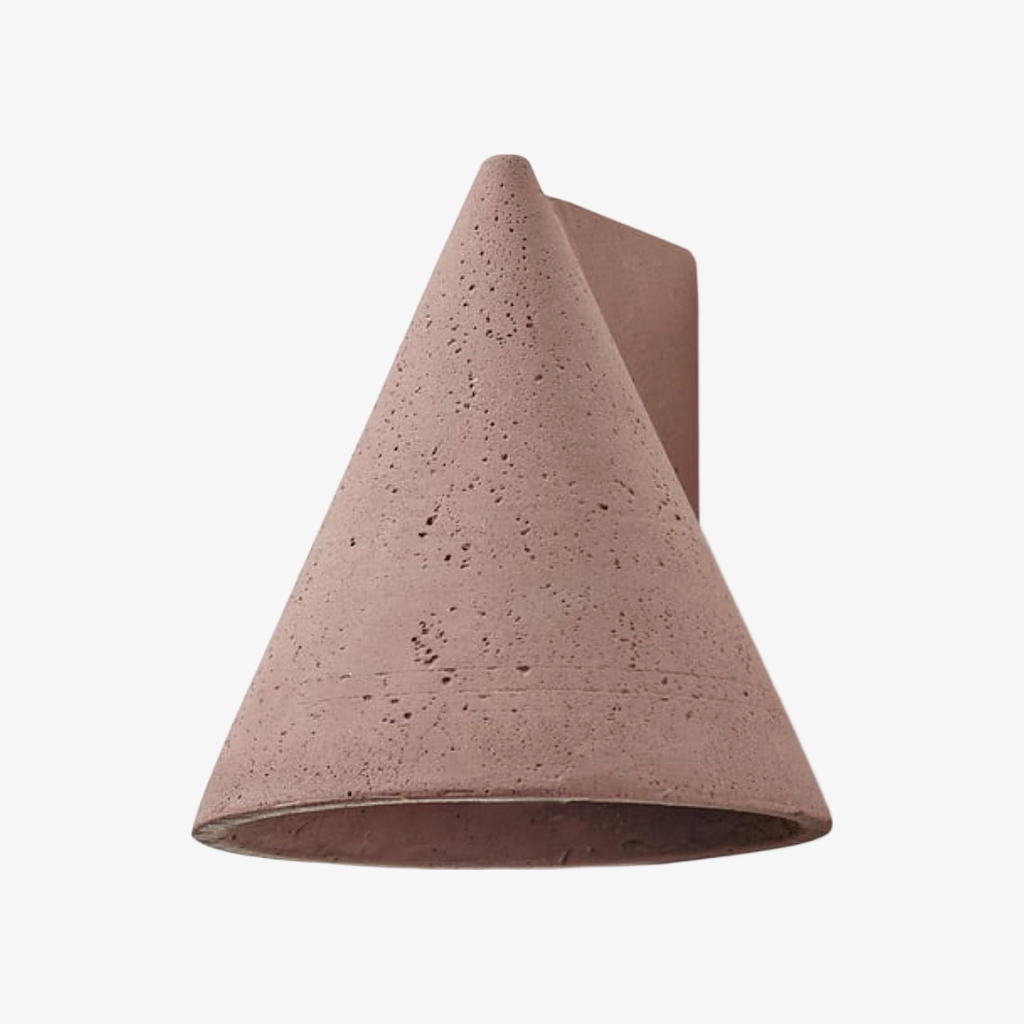
Contrast is what makes an anchor visible. On warm white plaster, grey concrete adds a restrained mineral note; brick red is more assertive and suits walnut, olive, rust and creamy textiles. The objective is not to match every finish. A room often wakes up when one material is deliberately rougher, darker or warmer than its neighbours.
Resist repeating the accent everywhere. One brick-red light can be memorable. A brick-red light, vase, cushion, rug stripe and candle begins to look like a colour-matching exercise. Let the material appear intentional without turning it into a uniform.
Light the wall, not the top of your head
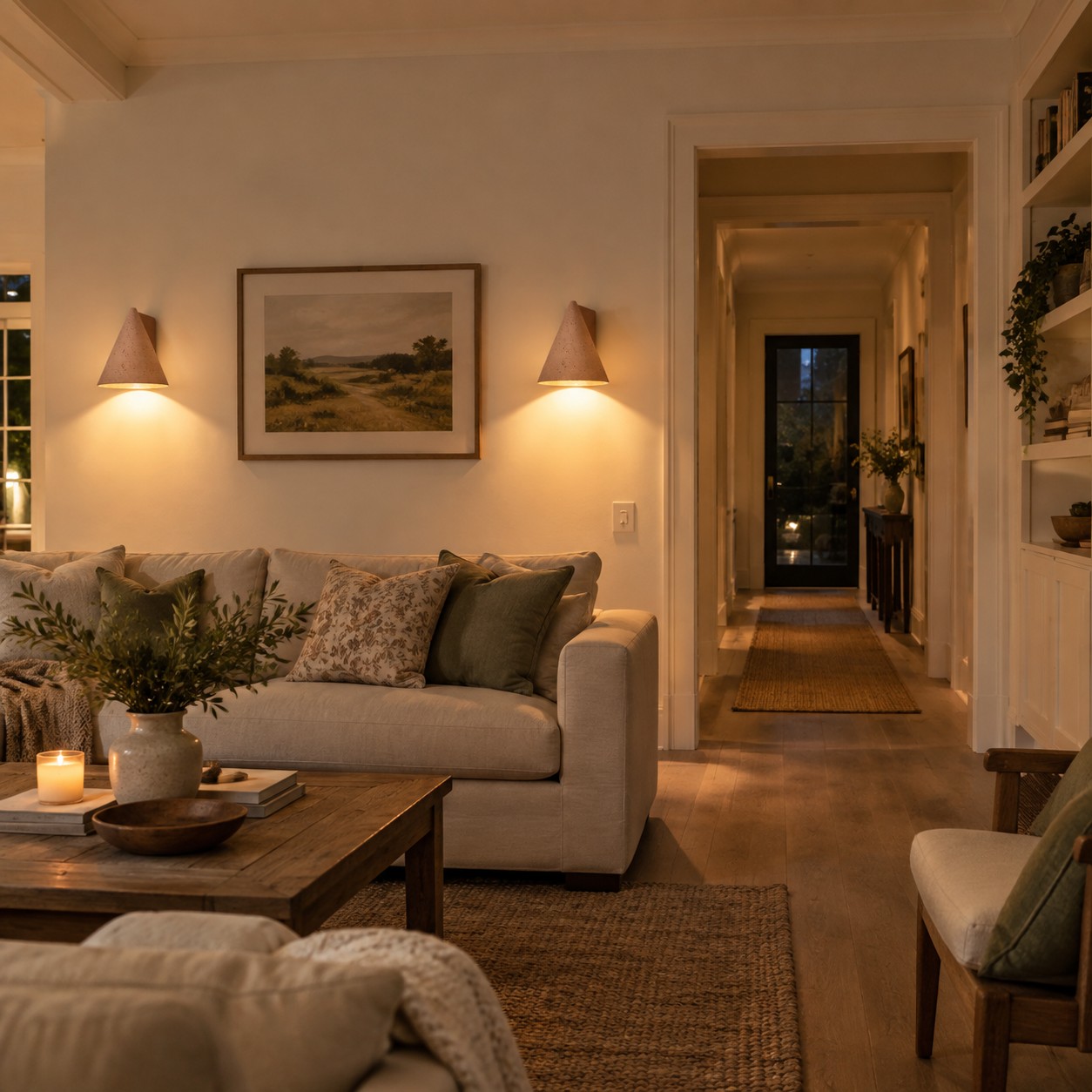
Wall lighting works because the surrounding surface becomes part of the effect. Leave enough open plaster for the halo to spread. A fixture squeezed beneath a shelf or hung immediately beside a tall cupboard loses that advantage. The light is present, but the visual depth vanishes.
The Concrellia Tapered Concrete Wall Lamp is compact, so it is useful where a floor lamp would interrupt circulation. Its E14 light source is suited to a warm decorative layer rather than whole-room illumination. That distinction matters: ask it to make a wall interesting, not to turn midnight into lunchtime.
Know when this is not the fix
If the room is crowded, adding a focal light may simply give the clutter better publicity. Edit the surfaces first. If the problem is a reading chair with inadequate task light, choose an adjustable lamp aimed at the page. And if the walls feel empty because every piece of furniture is pushed around the perimeter, reconsider the layout before calling an electrician.
A wall light earns its place when the room already functions but lacks depth after dark. For a dining corner specifically, Wall-Lighting Ideas for a Dining Banquette or Breakfast Nook shows how to connect the fitting to the table, seat and sightlines rather than treating it as isolated decoration.
A ten-minute evening edit
- Turn off the ceiling lights and switch on every lower lamp you own.
- Stand in the doorway and identify the flattest visible wall.
- Remove one unnecessary object from that view.
- Mark a possible sconce position with painter’s tape.
- Check the mark while seated and while walking through the room.
This small exercise separates a lighting problem from a styling problem. Often it is both, but the order becomes clear: simplify the view, establish an anchor, then add the glow.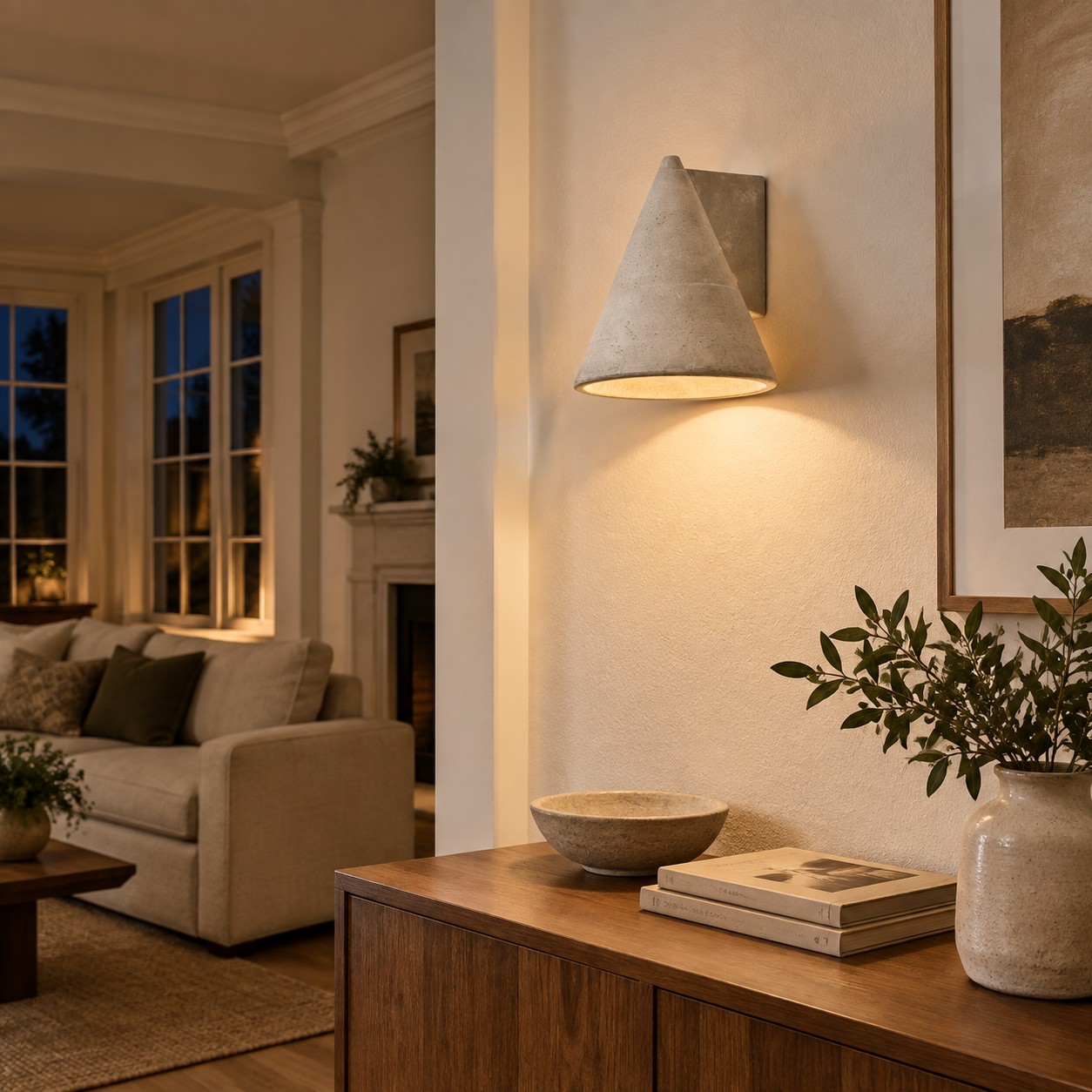
Frequently asked questions
Can a room be overlit and still look empty?
Yes. Uniform brightness removes shadows and hierarchy, leaving no visual focus.
What colour temperature feels comfortable at night?
A warm white bulb, usually around 2700K, is a reliable starting point for living and dining spaces.
Should a wall light match other fixtures?
No. Repeating one finish can help, but compatible shapes and colour temperatures matter more than an exact match.
Is one wall light enough?
It can create a focal point. Pair it with other low-level light when the whole room needs balanced ambience.
Make the room feel occupied, not merely illuminated
The missing ingredient in a bright but empty room is usually intention. Decide where attention should rest, give that area texture and a warm pool of light, then allow quieter walls to stay quiet. If a compact mineral form suits the space, explore the Concrellia wall lamp in grey or brick red. It will not furnish the entire room, which is precisely why it can finish one important view so well.