
The Lights Are Off. Does Your Wall Still Have Something to Say?
The most interesting wall lights are no longer waiting politely for sunset. Their shape, material, and shadow give the room something to look at all day—provided the fixture was chosen for the wall, not merely attached to it.
For years, the sensible way to judge a lamp was to switch it on. Fair enough: light is rather central to the job. But homes are lived in during daylight too, and a wall fitting may spend most of that time unlit. If it becomes a small piece of visual clutter at noon, an attractive glow at eight o’clock does not entirely rescue it.
This is why sculptural wall lighting feels current. It answers two needs at once. Rooms need softer, layered light in the evening, but they also need objects with enough physical presence to stop pale, minimally furnished walls from feeling unfinished. The trend is not about disguising a lamp as gallery art. It is about choosing a useful object whose form earns its place before the bulb does anything.
The trend in one sentence: light has become a daytime object
A sculptural wall light is a fitting designed to contribute through silhouette, depth, texture, and the shadows cast by ordinary daylight. When switched on, it adds ambient light. When switched off, it behaves more like a small architectural element.
That distinction matters. A decorative fitting can simply be ornate. A sculptural one usually has a clear idea: a taper, a folded plane, an unexpected material, or a strong relationship between solid and empty space. It does not need curls, crystals, or a speech about craftsmanship. In fact, the quieter examples are often easier to live with.
Why solid-looking lights feel right now
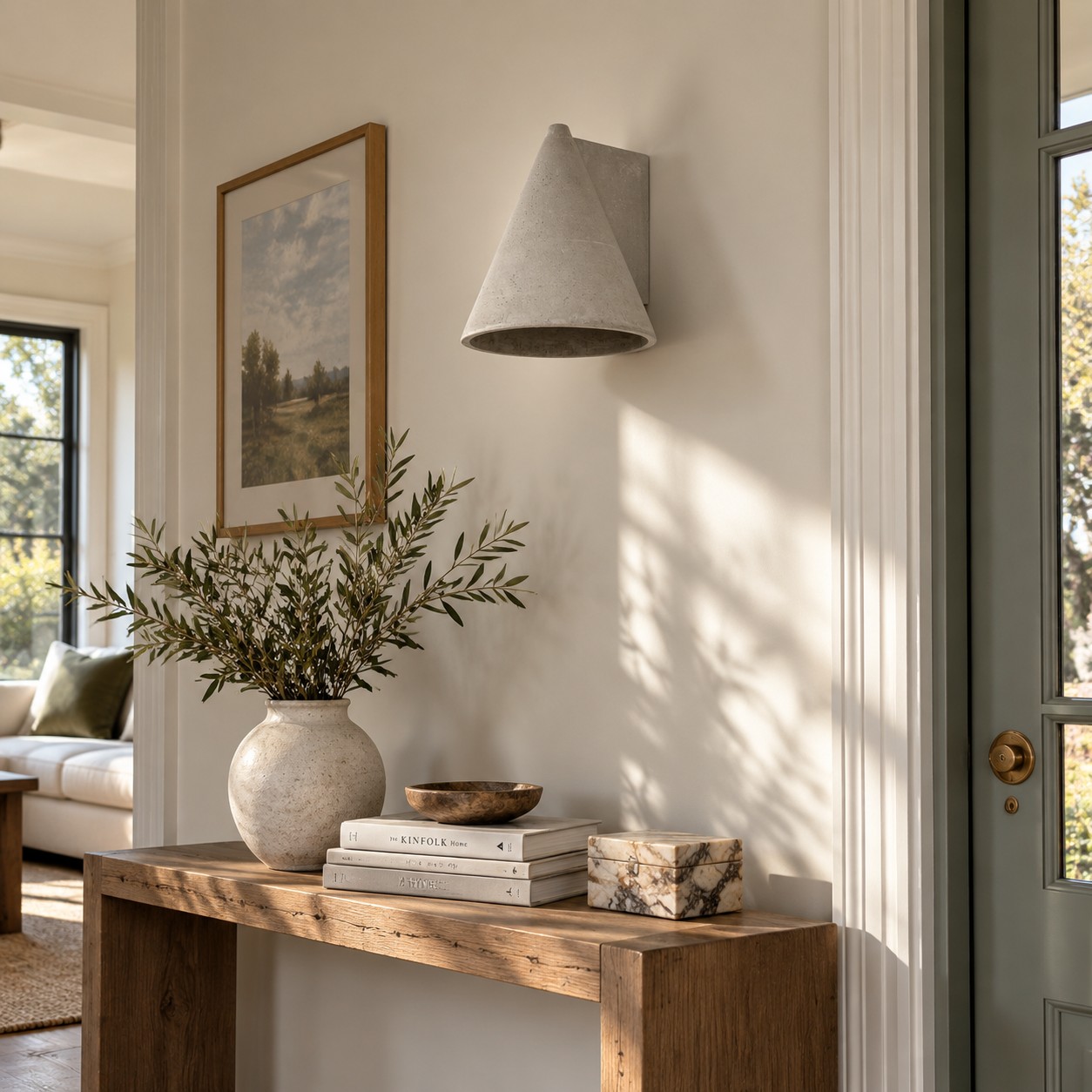
Contemporary rooms have become visually lighter. Furniture is often raised on legs, storage is concealed, curtains are simpler, and color schemes are restrained. The result can be calm, but it can also leave the walls doing an impression of an unfurnished rental. A compact object with visible mass gives the eye an anchor without asking for another framed print.
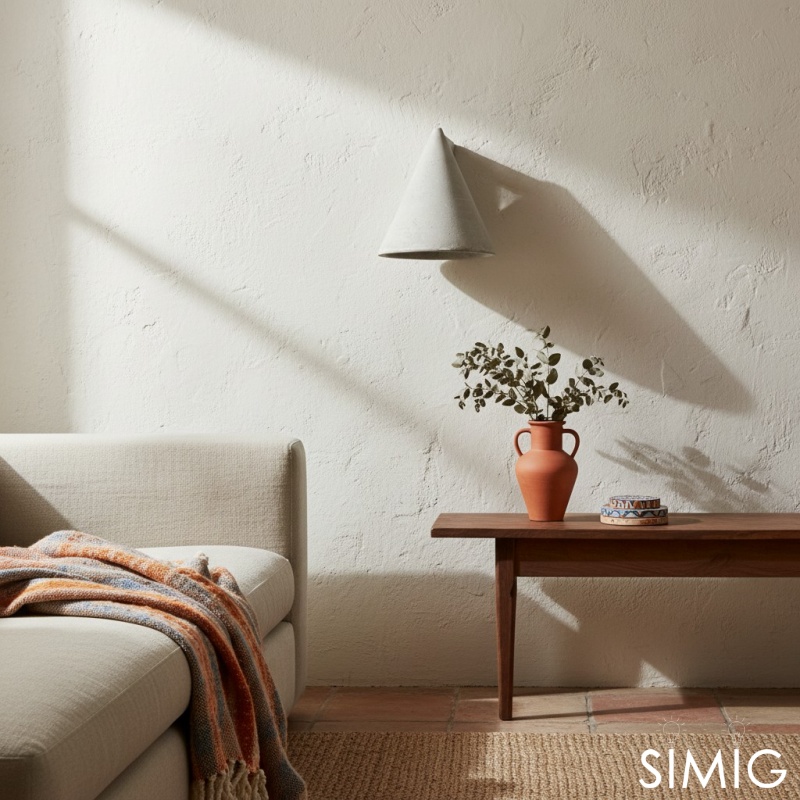
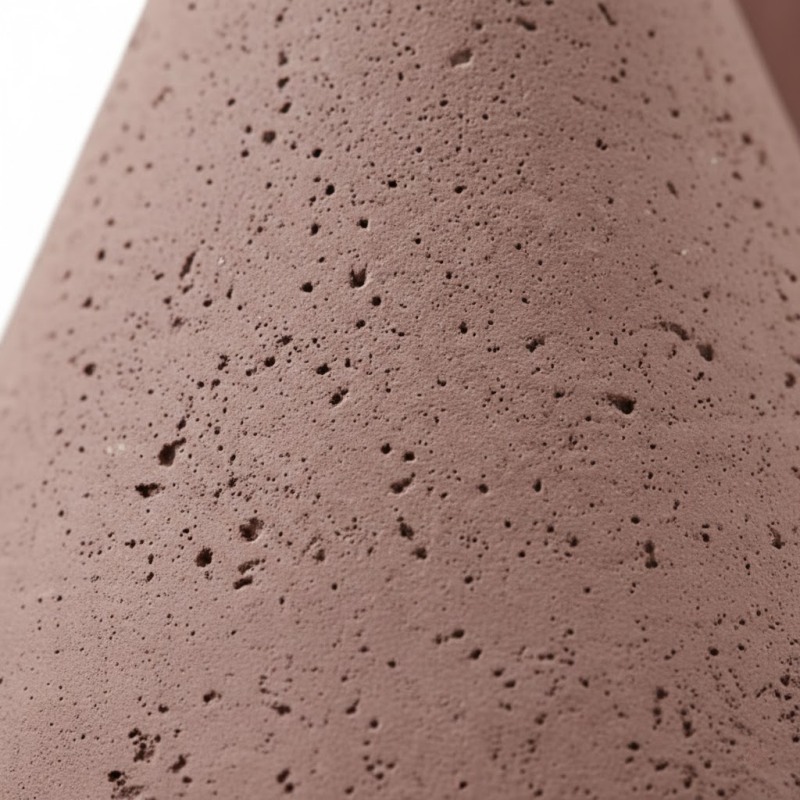
Materials are part of the appeal. Concrete, plaster, ceramic, stone, and softly finished metal respond to daylight in ways a flat glossy fitting cannot. Tiny changes in surface create small shadows. Edges become clearer in the morning and softer later in the day. This is a modest pleasure, but interiors are largely made of modest pleasures arranged well.
The practical version of this idea appears in How to Give a Blank Wall a Focal Point Without Hanging More Art. A wall does not always need a larger object; sometimes it needs one object with enough depth to interrupt the flatness.
The three-second switched-off test
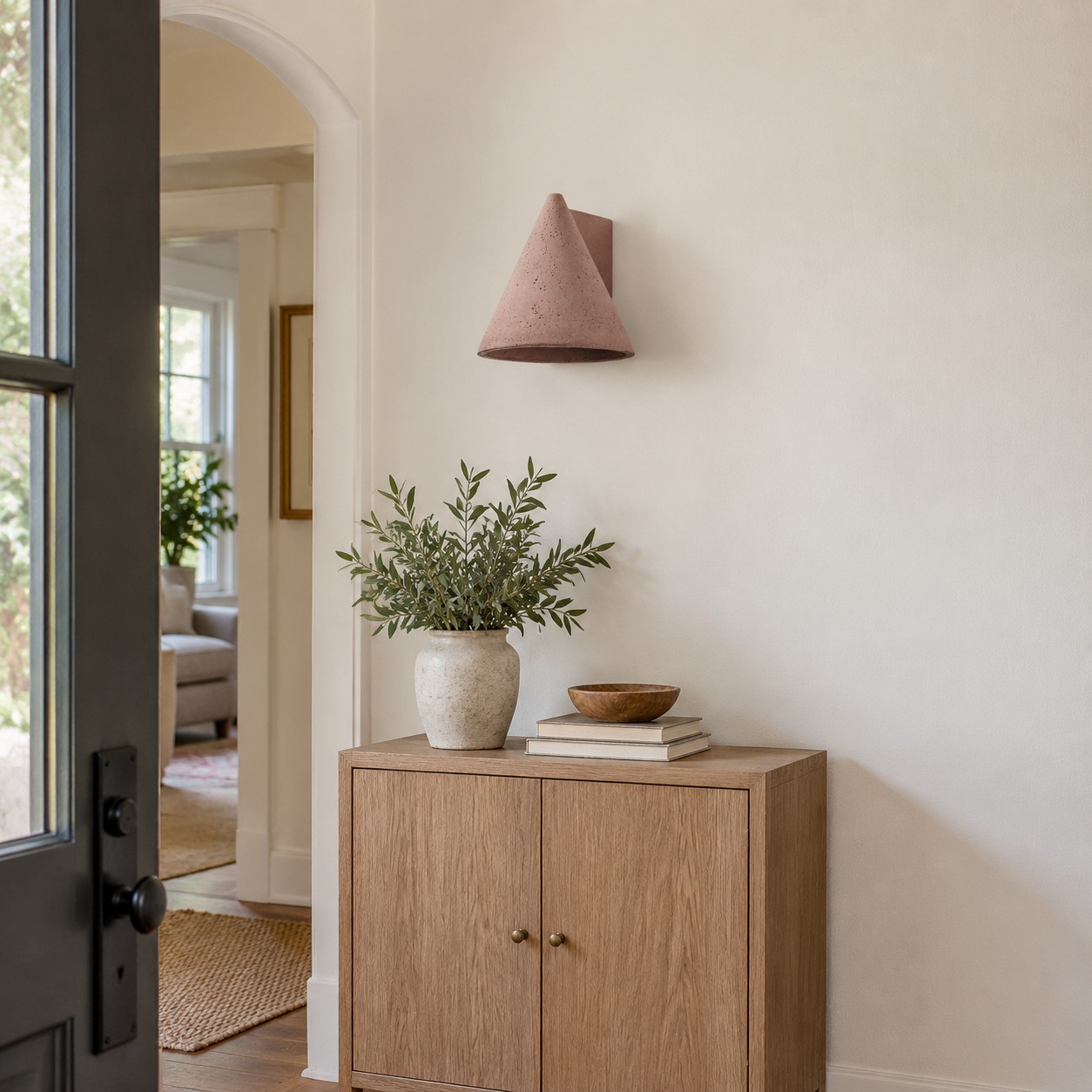
Stand where you normally enter the room and look at the fitting with every lamp off. Can you understand its outline immediately? Does it relate to something nearby—a console, bed, doorway, chair, or change in wall color? Does it cast a pleasant natural shadow rather than resembling a bracket awaiting installation?
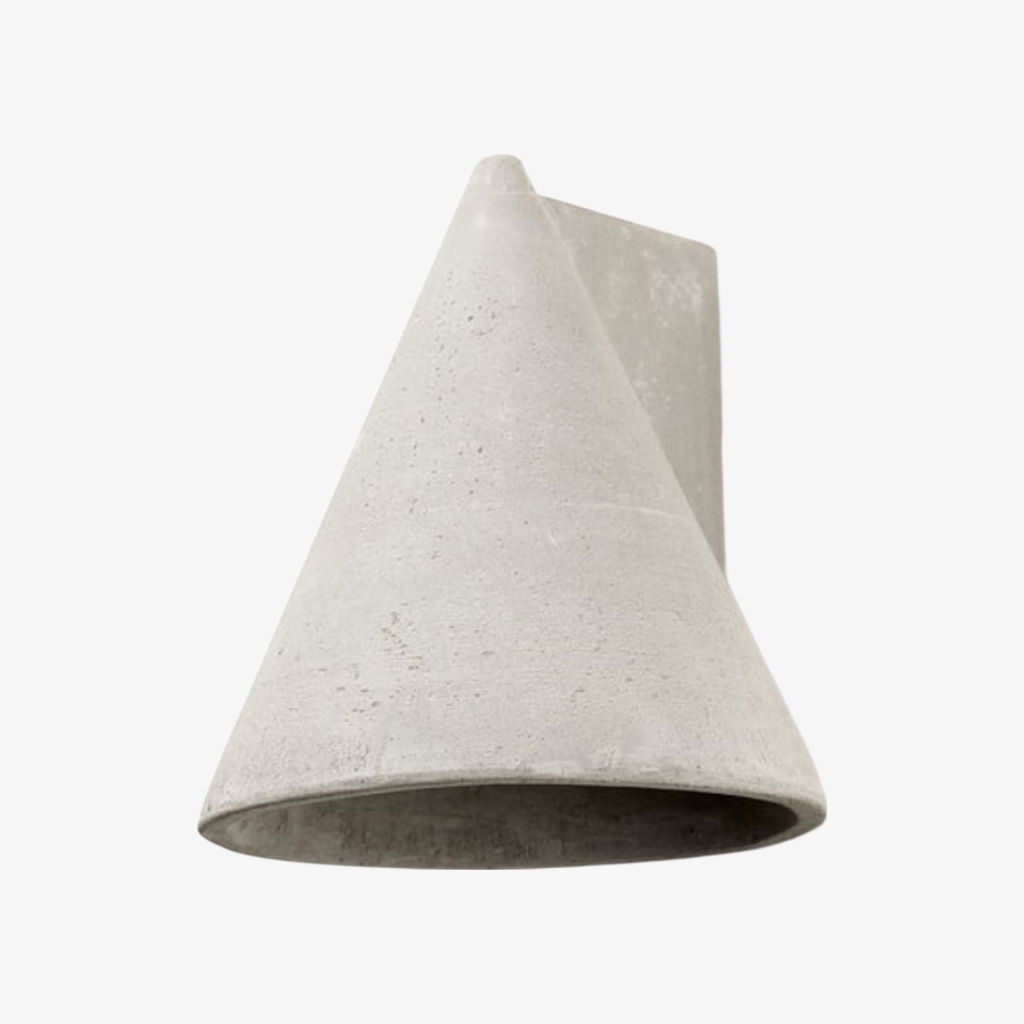
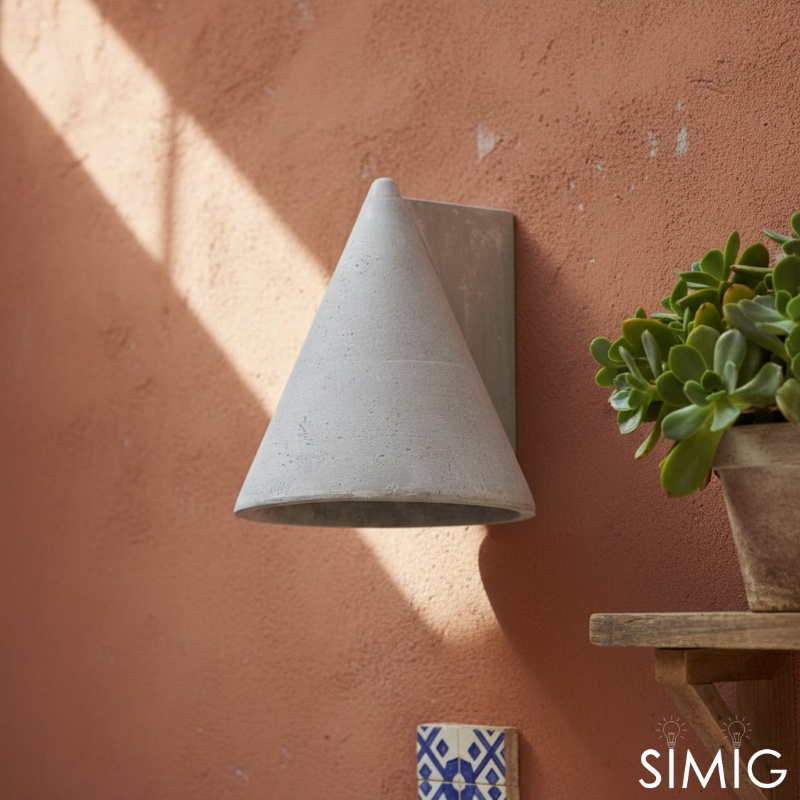
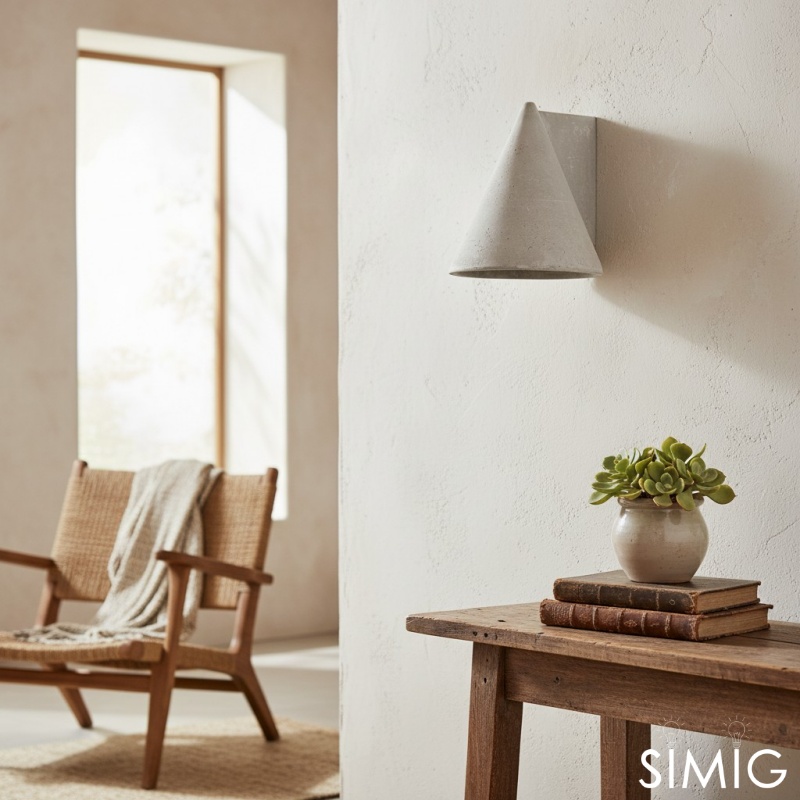
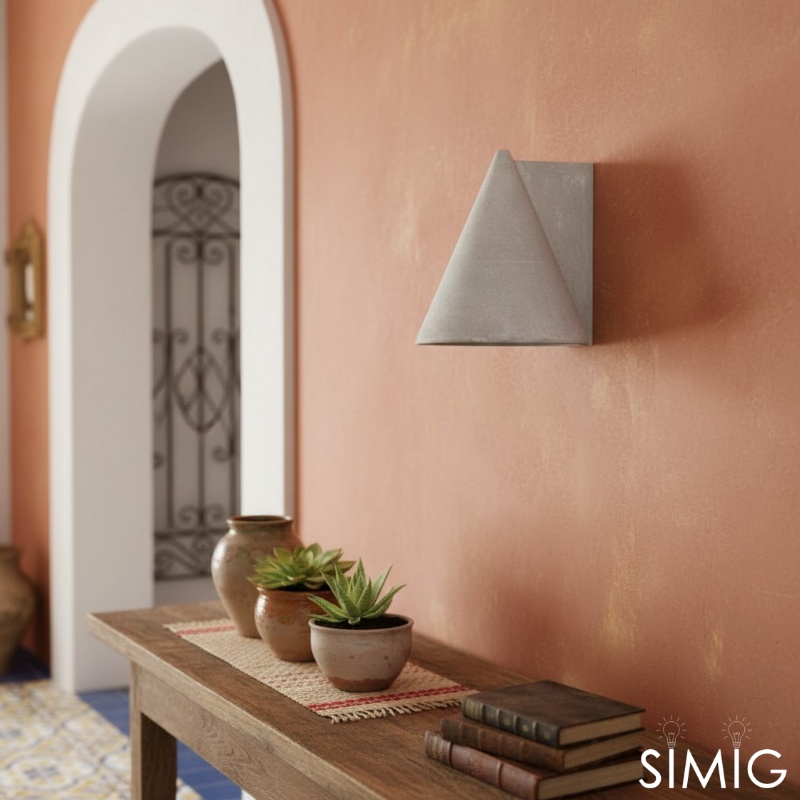
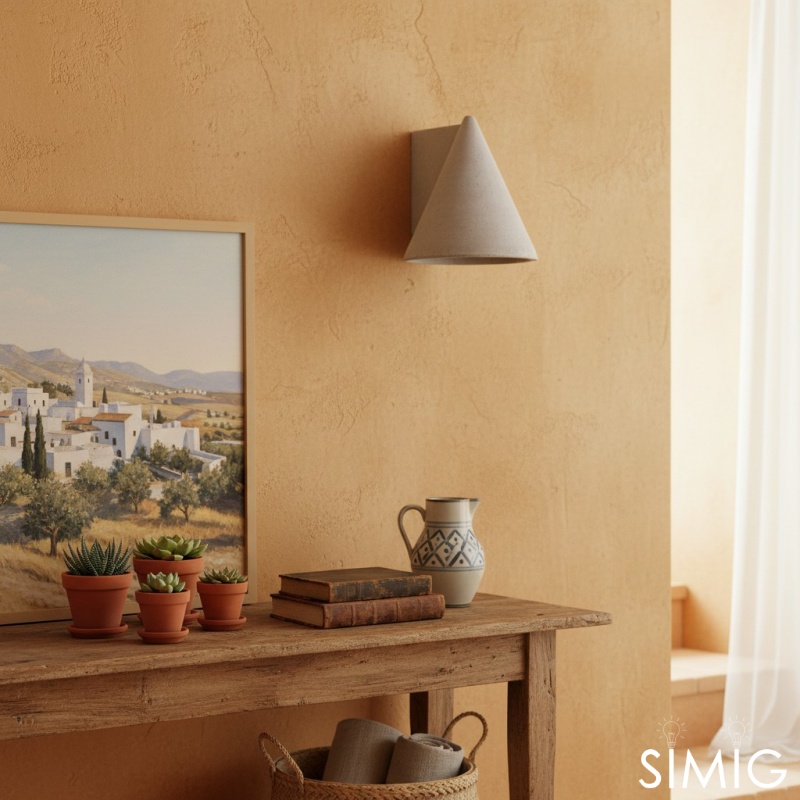
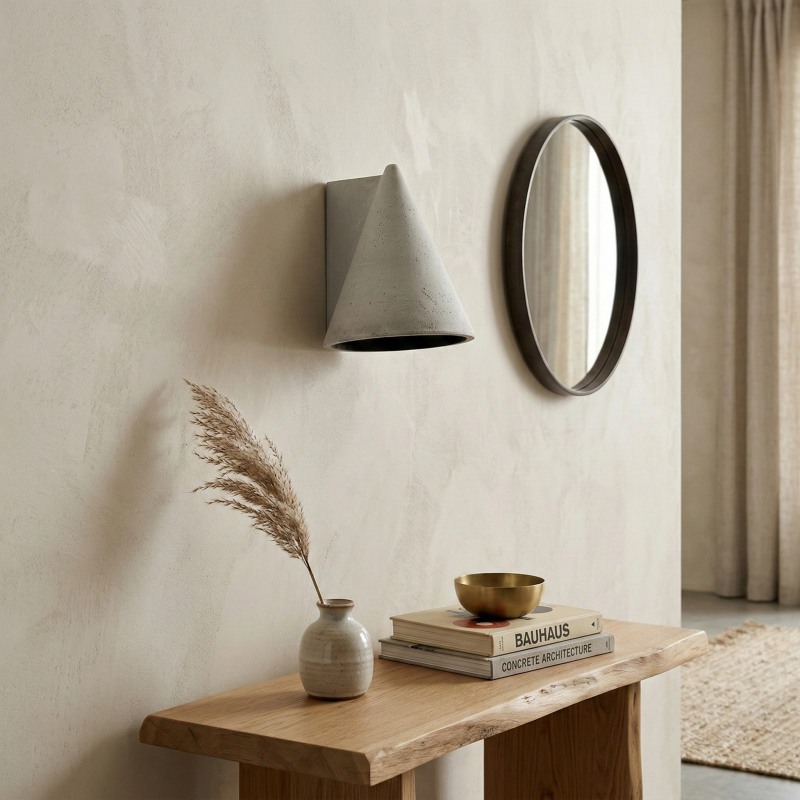
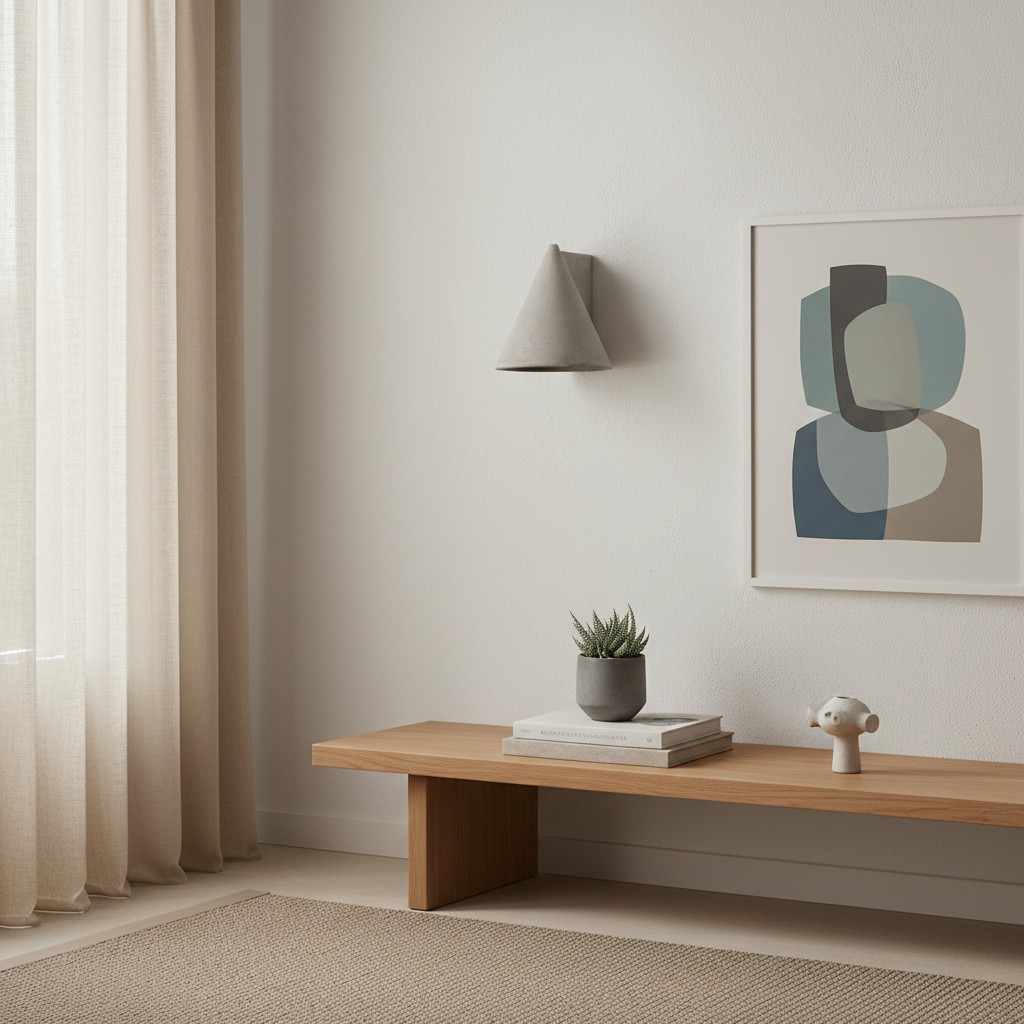
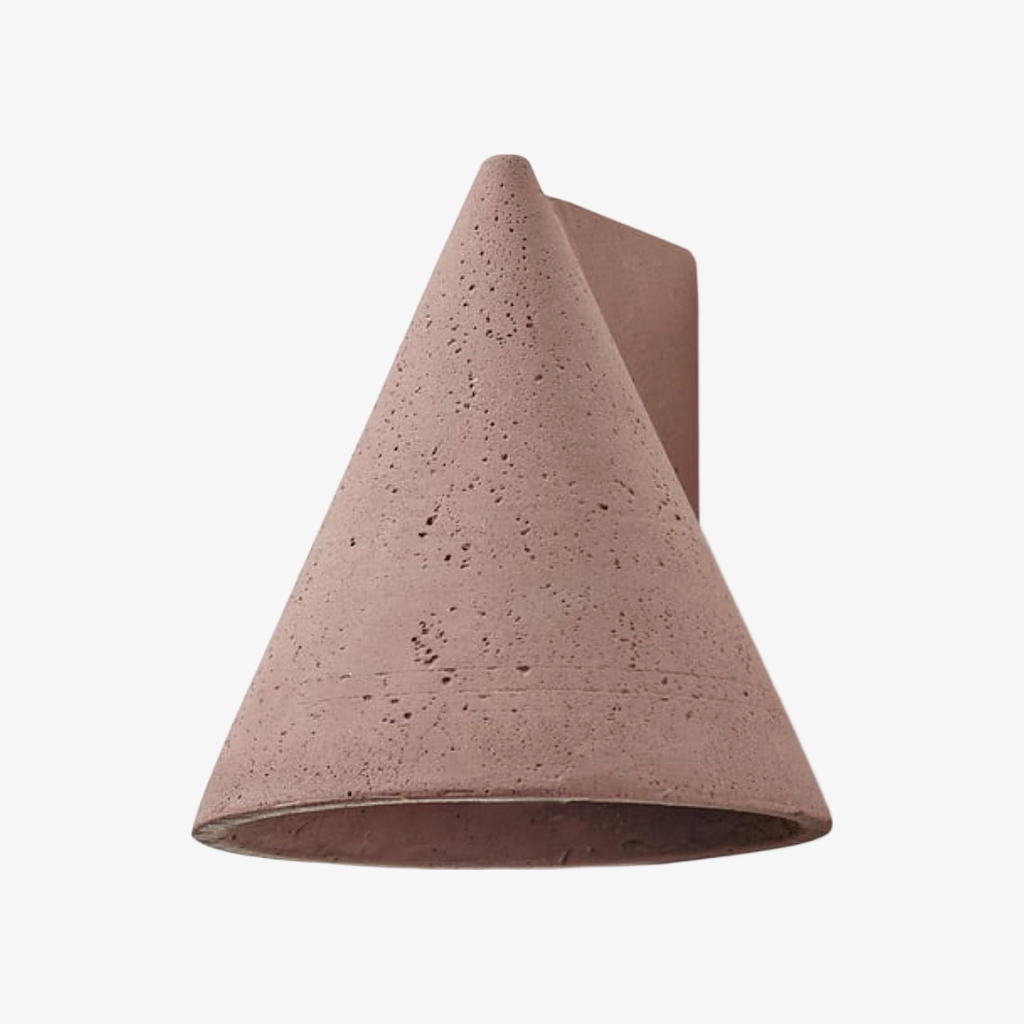
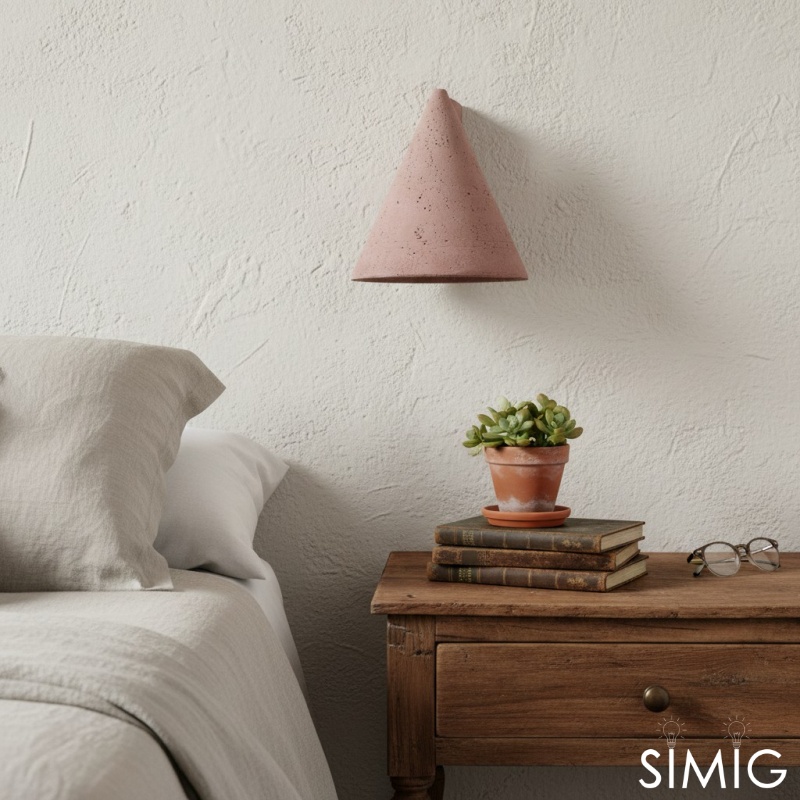
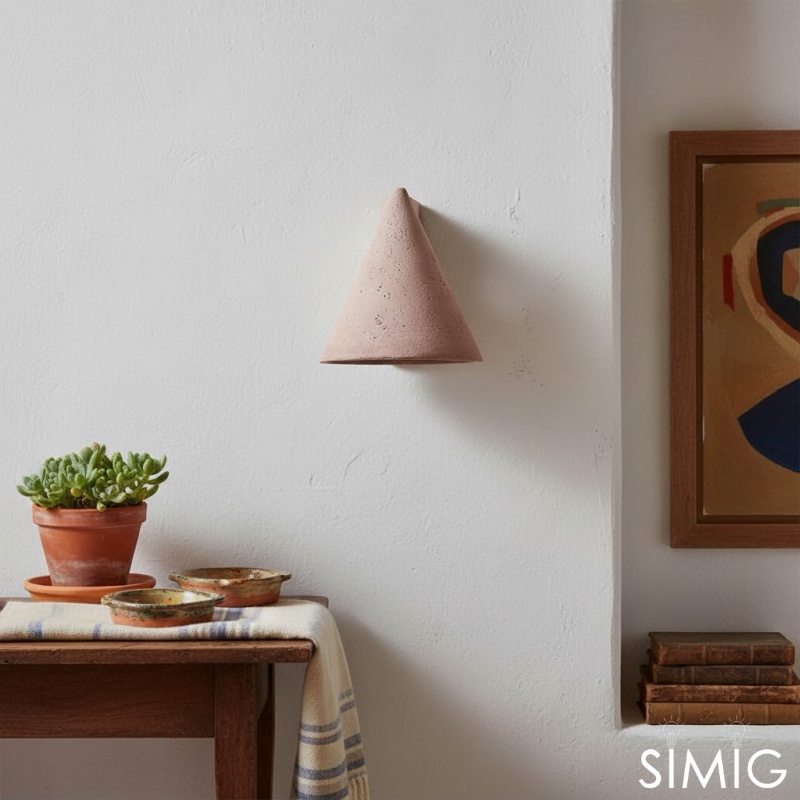
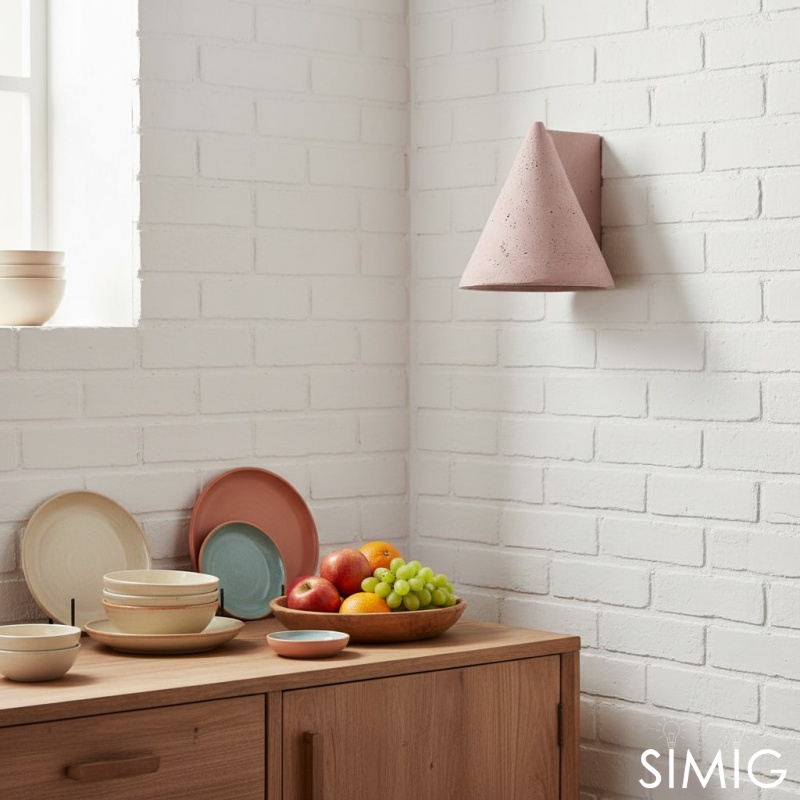
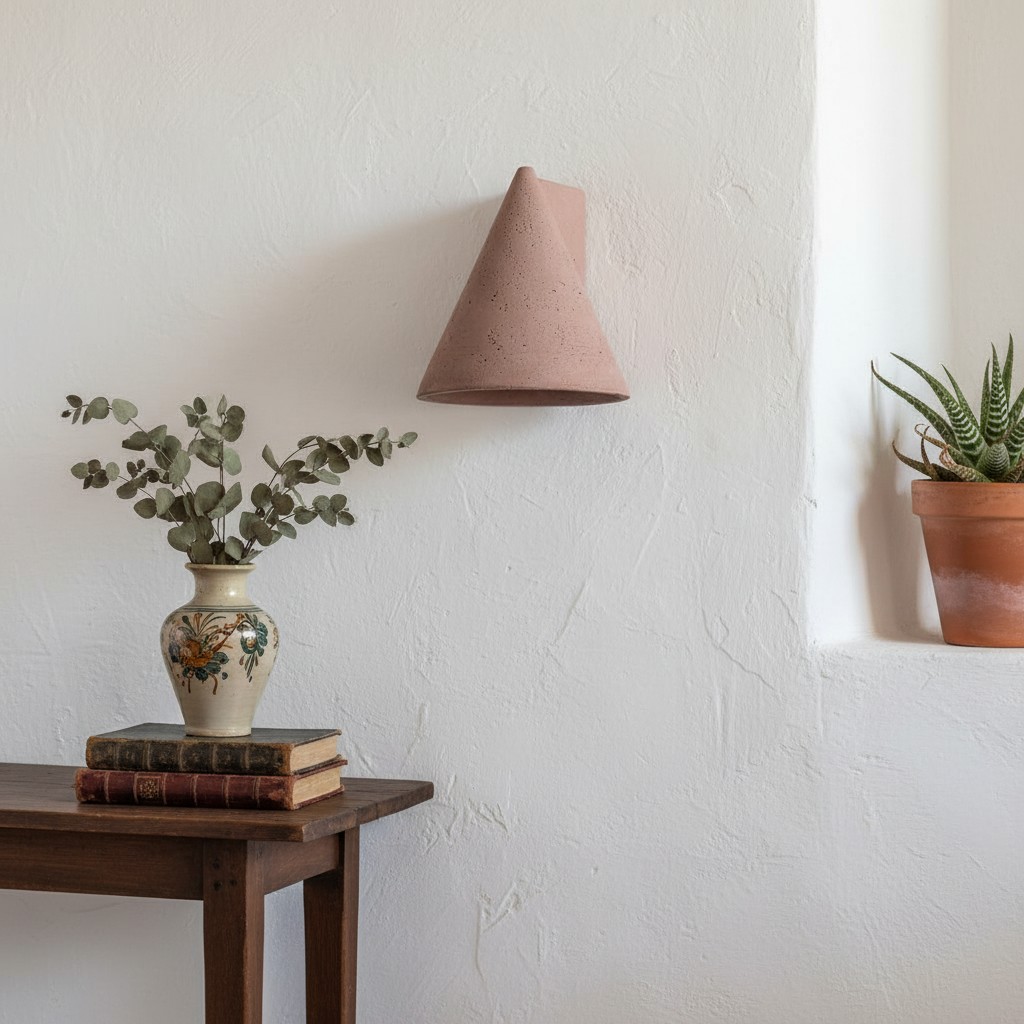
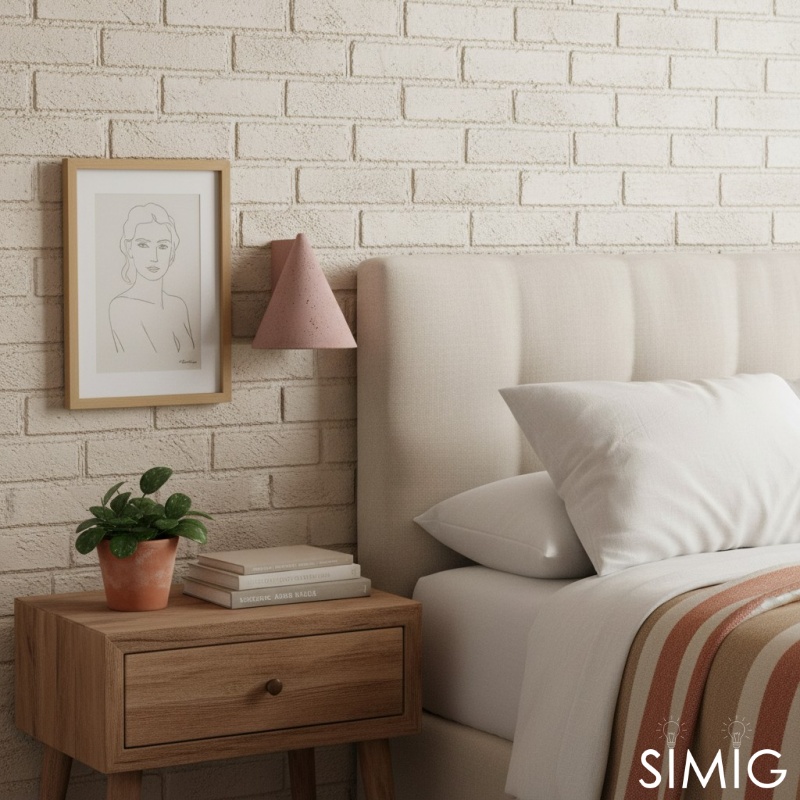
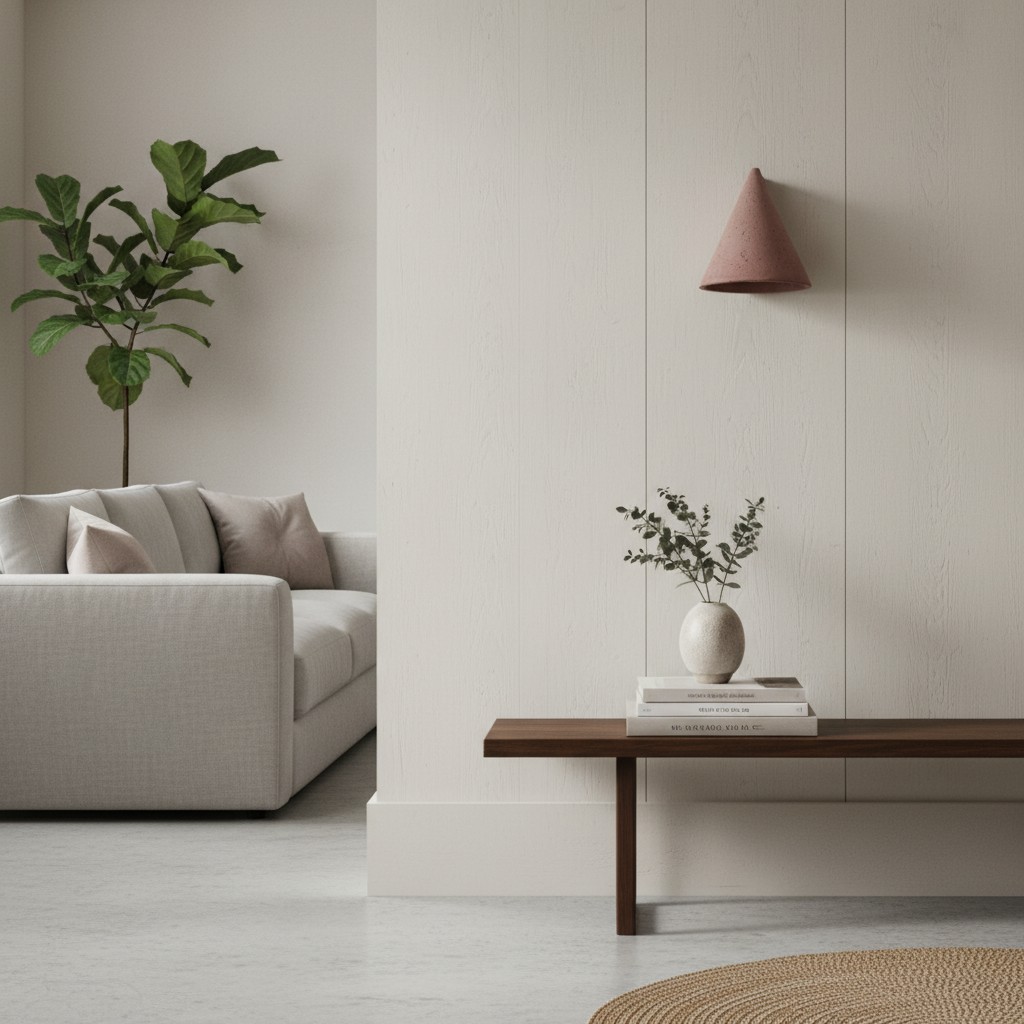
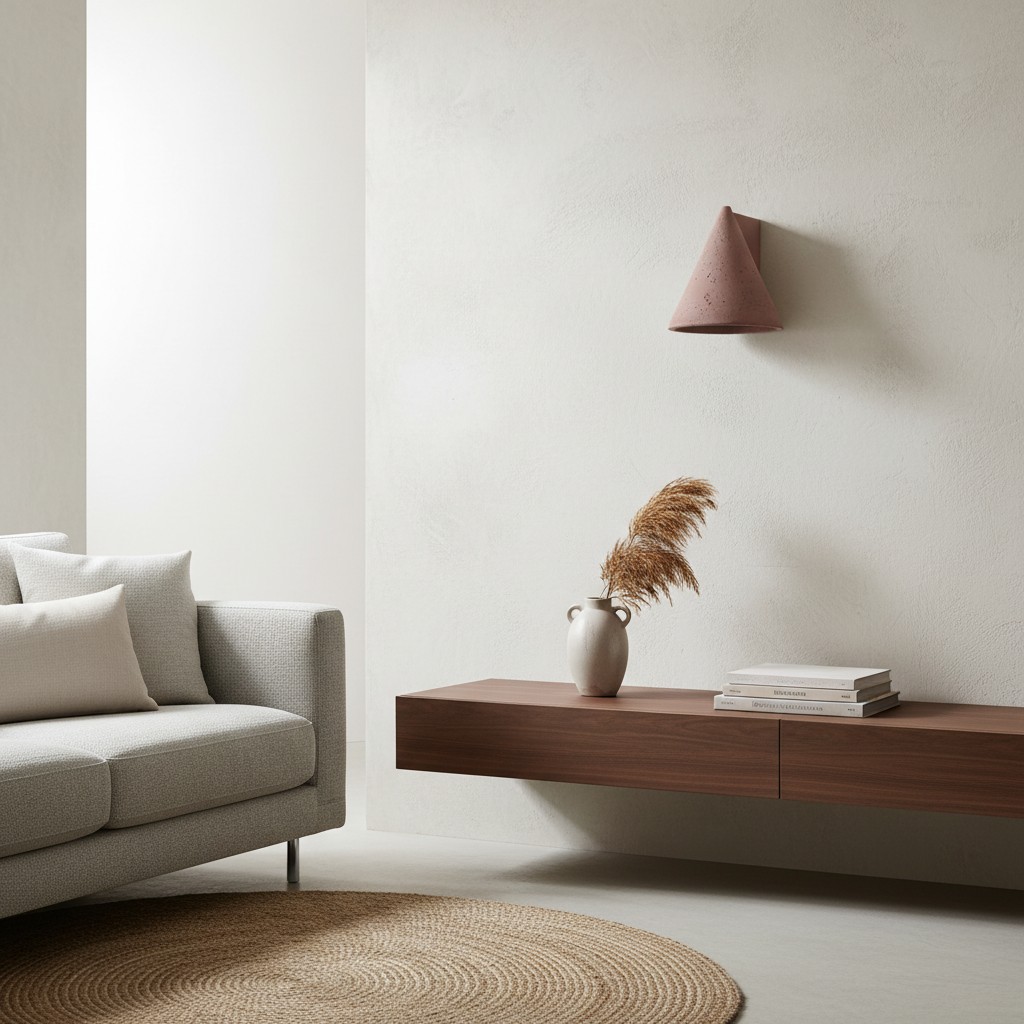
The Concrellia Tapered Concrete Wall Lamp passes this test through a simple tapered body. At 15 × 15 × 16 cm, it is compact enough for a narrow wall but deep enough to register from across a room. The gray finish reads as a quiet mineral form; brick red acts more like a punctuation mark.
Choose the wall before choosing the object
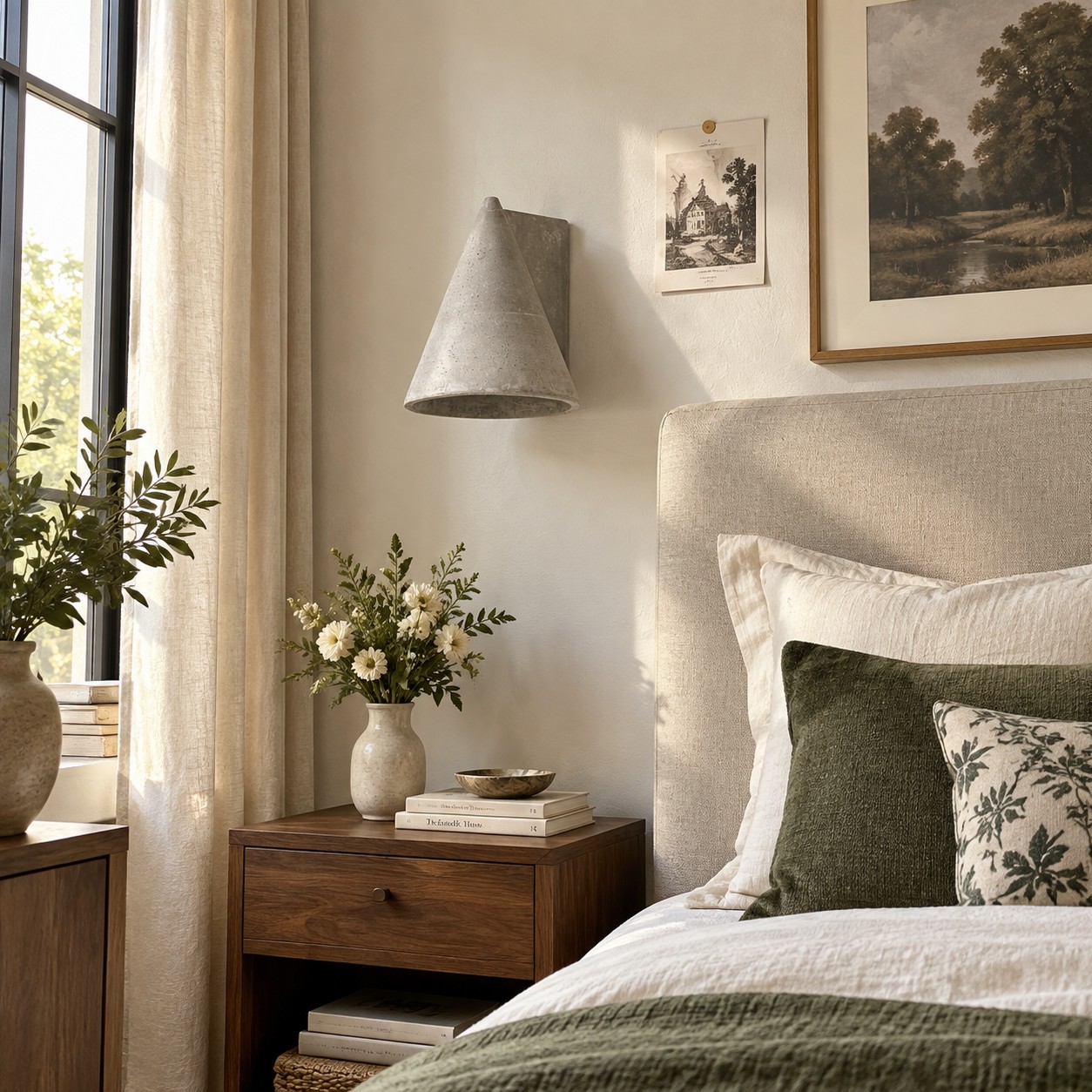
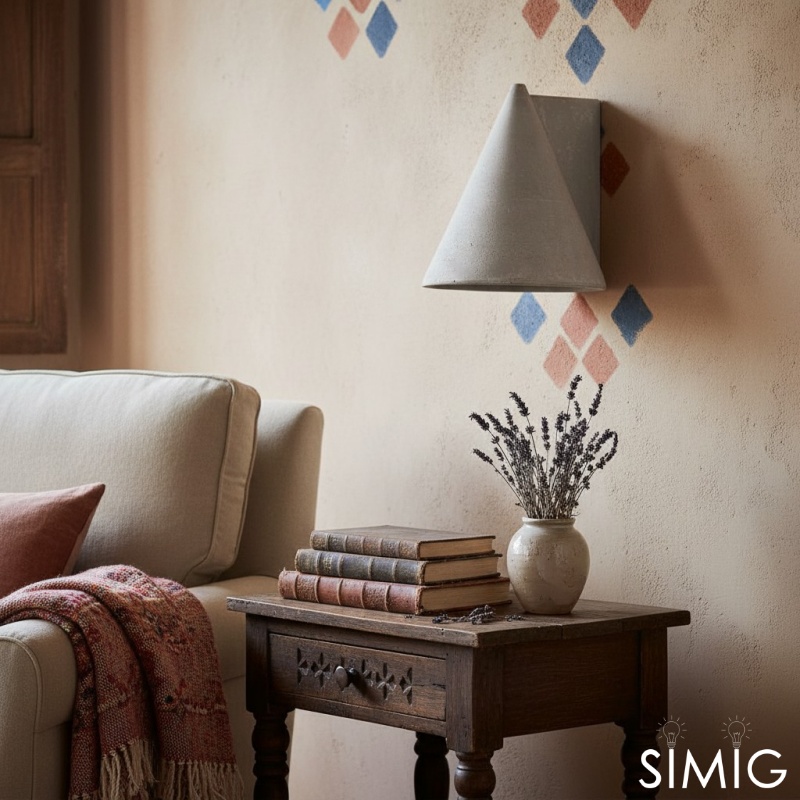
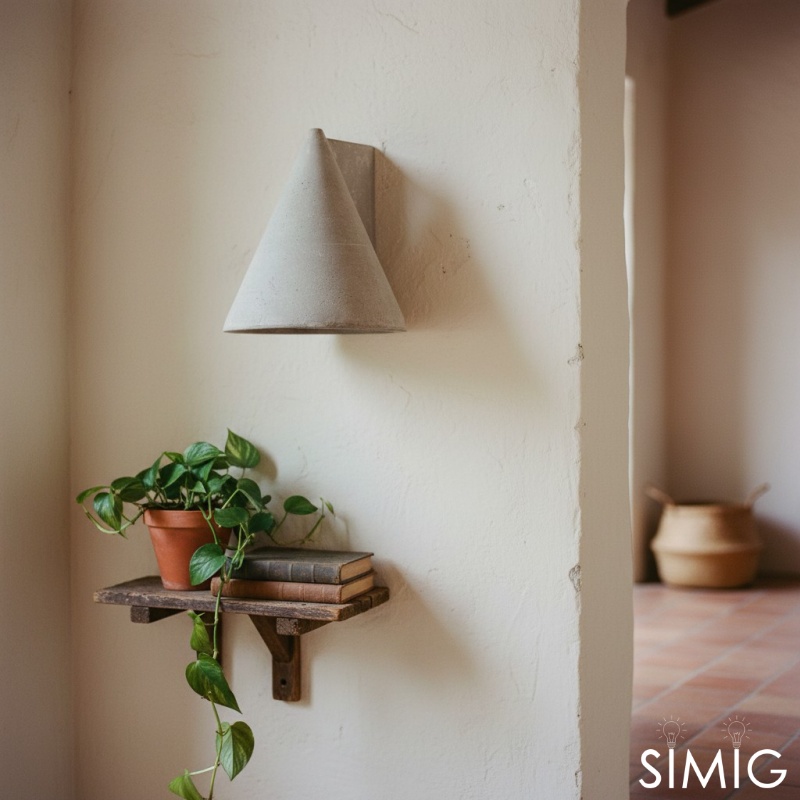
Sculptural lighting works best where the fixture can complete a small composition. Beside a bed, it can balance the headboard. Above a low console, it can hold the upper half of the wall. Near a doorway, it can turn a transition into a deliberate pause. On a short return wall—the awkward strip people often ignore—it may be all the decoration required.
What it should not do is compete with everything. A textured wall, bold artwork, patterned upholstery, and a strongly shaped light can coexist, but not all of them need to deliver a monologue. If the wall already has a large painting, let the fitting be quieter. If the room is restrained, the lamp can carry more personality.
Hospitality interiors use the same logic at a larger scale. How Boutique Hotels Use Wall Lighting to Create a More Memorable Stay explores why one recognisable fitting can become part of a guest’s memory, while more anonymous lights handle the practical work.
Let daylight pick the finish
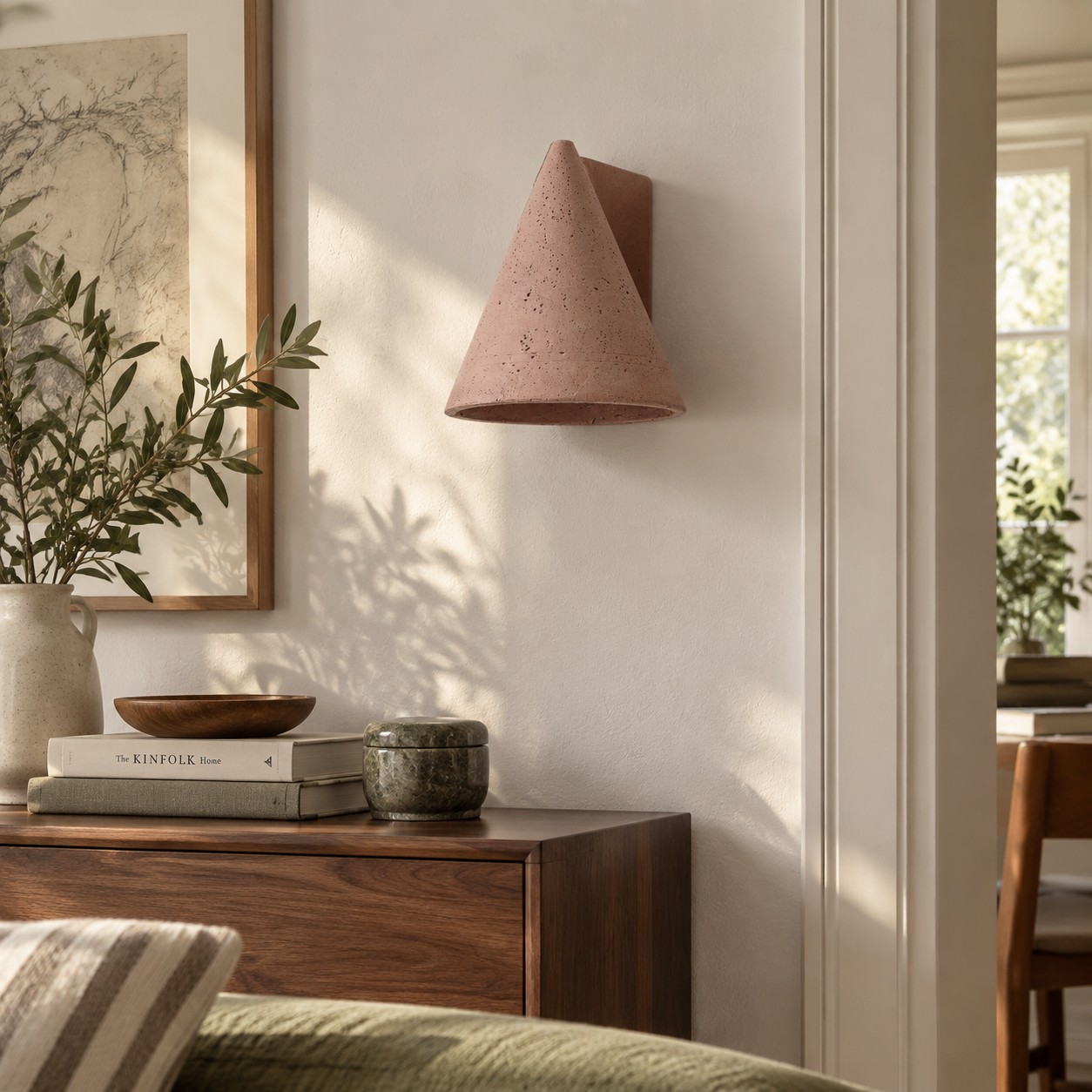
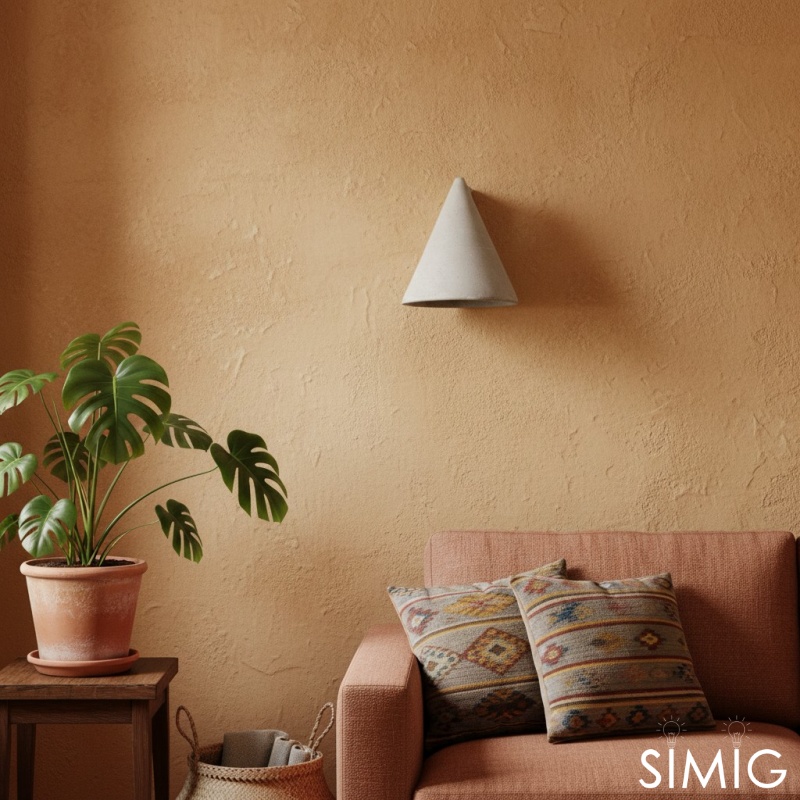
Gray concrete is at its best where there is already warmth elsewhere: oak, walnut, rust-colored fabric, or a creamy wall. Against cool gray paint with cool flooring, it can disappear into a rather determined fog. Brick red needs less encouragement. It works well with off-white, olive, tobacco leather, dark timber, and muted blue, but it benefits from a little empty wall around it.
Before buying, look at the wall at three times of day. Strong side light exaggerates texture. Flat northern light makes color more important. A dim hallway relies on silhouette. The fixture should survive all three conditions, not just the evening scene you had in mind while browsing.
Keep the lighting job honest
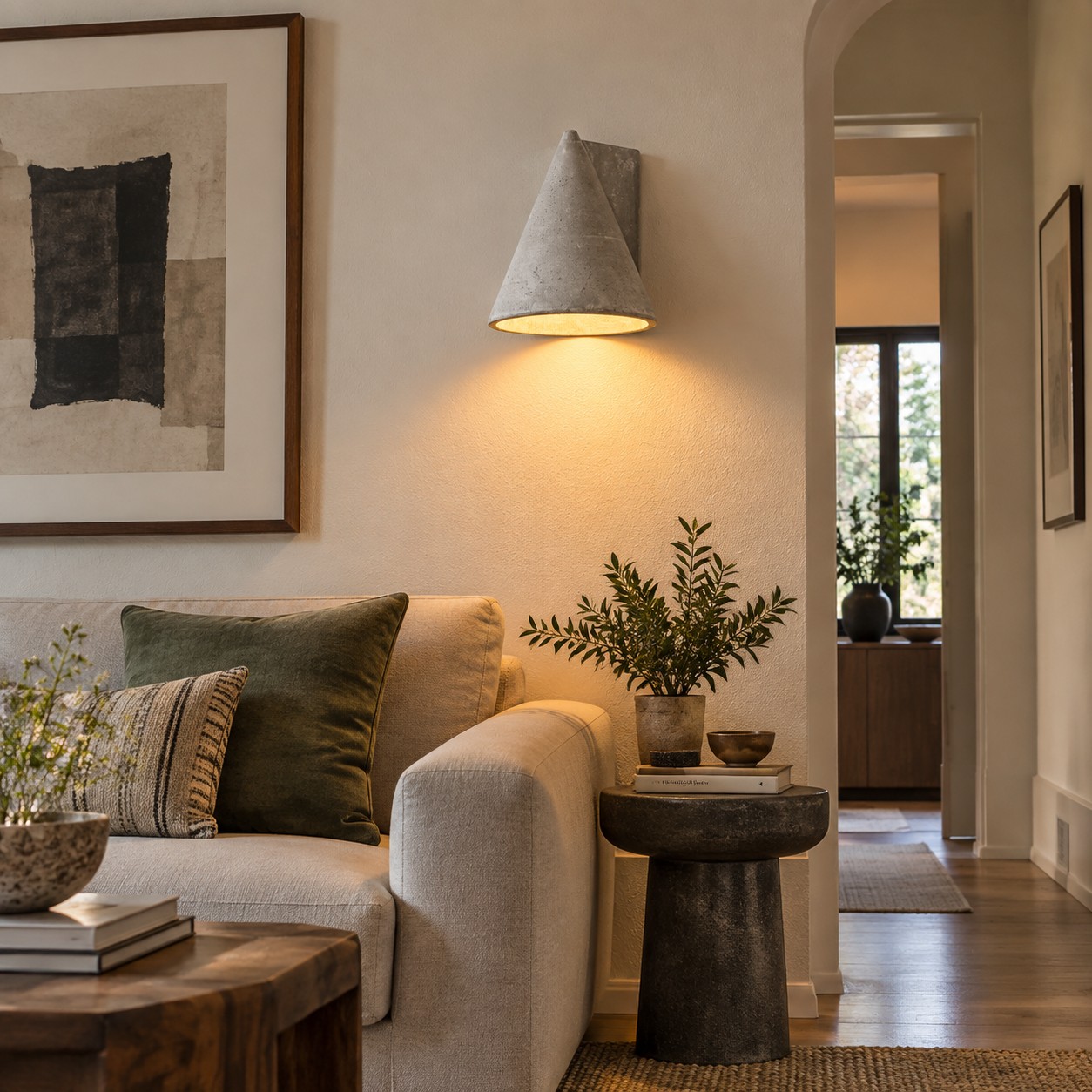
An artful shape does not turn ambient light into task light. Concrellia uses an E14 source rated at 5 W, and the bulb is not included. Treat it as a decorative or atmospheric layer, then provide proper reading, mirror, desk, and general lighting separately. This is especially important beside beds, where a handsome glow is no substitute for seeing the page.
Bulb choice still changes the mood. A warm source supports the concrete’s softer side and suits bedrooms, lounges, and calm hallways. Avoid a glaring bulb or a color temperature that makes the wall feel clinical. The fitting should reveal its form, not interrogate the furniture.
How to use the look without dating the room
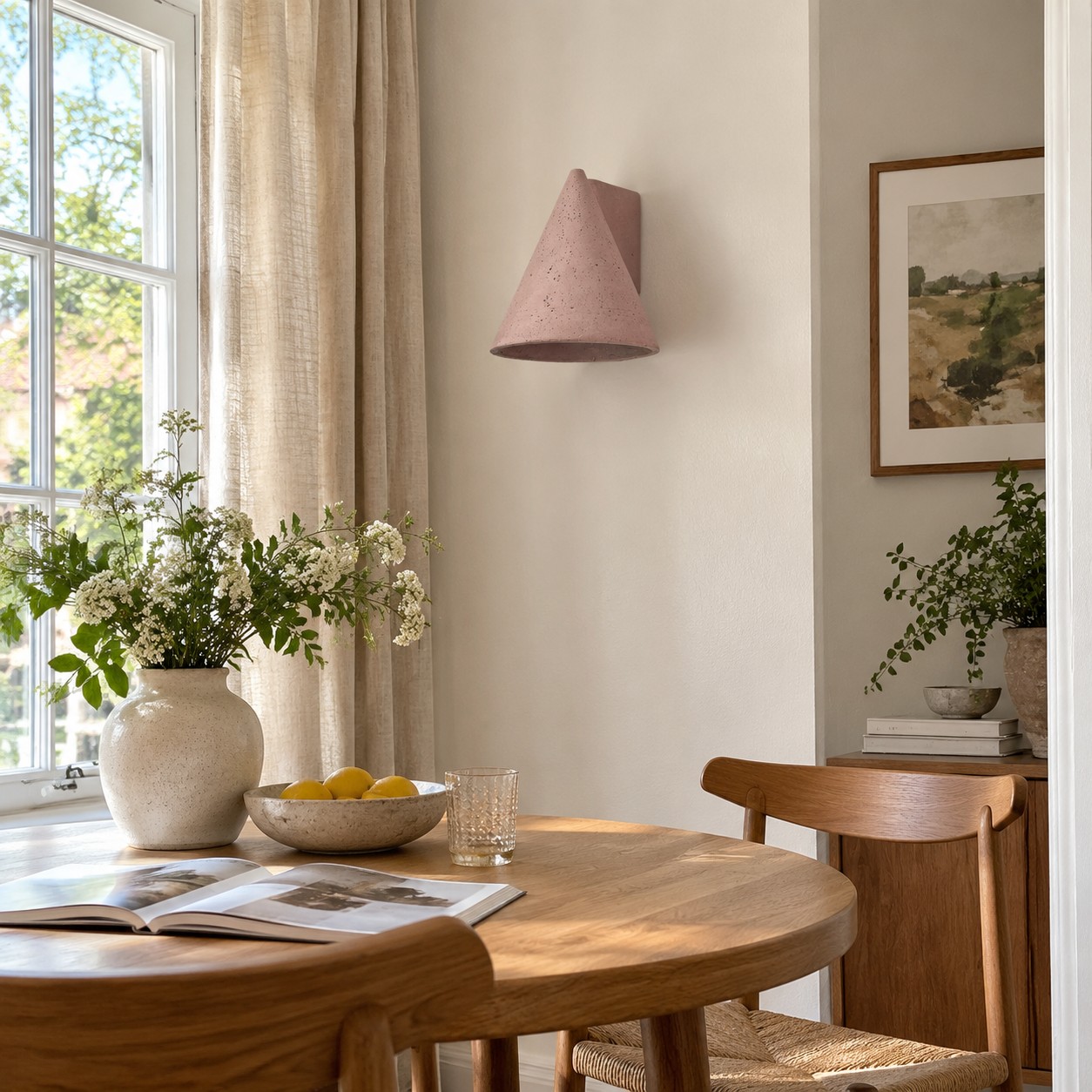
Trends age fastest when they are repeated. One sculptural light feels considered; five different sculptural lights feel like a showroom has developed opinions. Pick one recurring material or shape and let the rest of the lighting be simpler. This creates hierarchy and makes replacement easier later.
Also avoid treating the fitting as a badge of “organic” or “brutalist” style. Concrete can sit comfortably in a soft bedroom, a traditional hallway with painted paneling, or a compact modern dining corner. The surrounding proportions matter more than the label. A good object should loosen the room’s style, not trap it inside a trend report.
If the wall needs a compact anchor rather than another picture, explore the Concrellia Tapered Concrete Wall Lamp. Choose gray when you want texture to whisper and brick red when the composition needs a firmer beat.
Frequently asked questions
Does every sculptural wall light count as art?
No. The useful question is whether its form improves the wall when unlit, not whether it deserves a gallery label.
Can I use one on a small wall?
Yes. A compact fitting often suits a narrow return wall better than artwork, provided there is clear space around it.
Should two wall lights always match?
Matching pairs create order around beds and consoles. Elsewhere, one strong fitting may be enough.
Is concrete too cold for a bedroom?
Not when it is balanced with warm light, timber, textiles, and an off-white or colored wall.
Can a 5 W wall lamp light the whole room?
No. Use it for atmosphere and combine it with brighter general and task lighting.
The room should still work at noon
The switched-off test is not an excuse to buy a stranger object. It is a reminder that lighting occupies real space all day. The best choice has a readable outline, a material that responds to daylight, and a scale that makes sense beside the furniture.
For a small wall that needs shape as well as evening glow, the Concrellia Tapered Concrete Wall Lamp offers both without demanding the entire room reorganise itself around a lamp. That is usually the difference between a trend and a fixture you will still enjoy after the trend has moved on.