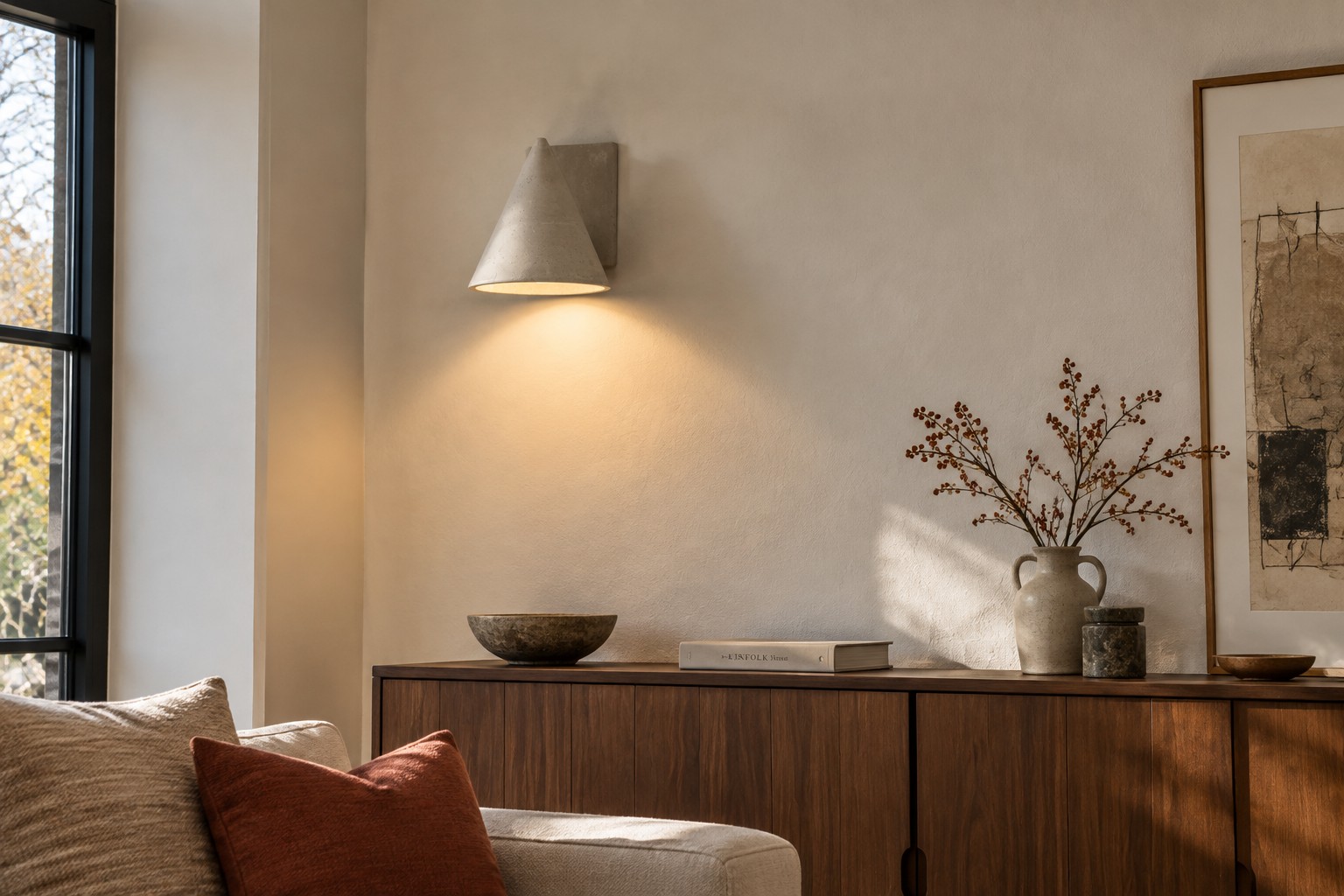
How to Create a Focal Point on a Blank Wall Without Hanging More Art
Before you buy a print simply because the wall looks lonely, stop. A sculptural wall light can give that space shape, shadow, and a reason to exist—without turning your home into a branch of the local framing shop.
We all know this wall. It is too noticeable to ignore, yet every obvious solution feels slightly wrong. One small picture floats in the middle like a postage stamp. Three pictures become a project. A giant abstract canvas might solve the scale problem, but only if you genuinely want the art—not because you panicked on a Sunday afternoon and ordered something called “Muted Shapes No. 4.”
A focal point does not have to be a picture. It can be a change in material, a strong silhouette, or a pool of light that makes the wall feel deeper than it is. A sculptural sconce does all three. During the day, it behaves like a small architectural object. In the evening, the shadow becomes part of the room. That double life is what makes wall lighting so useful on a surface that needs character, not more clutter.
First, find the wall you actually look at
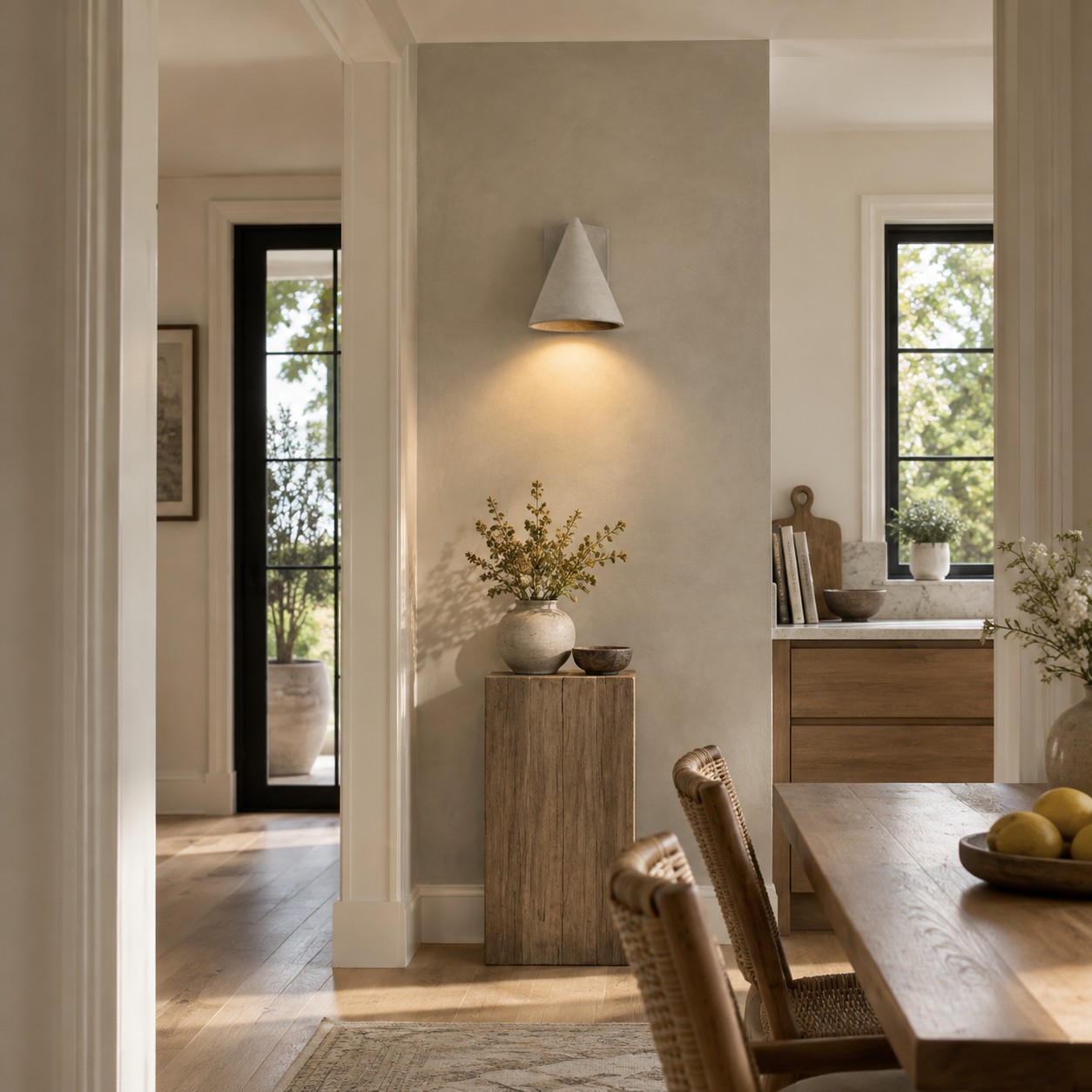
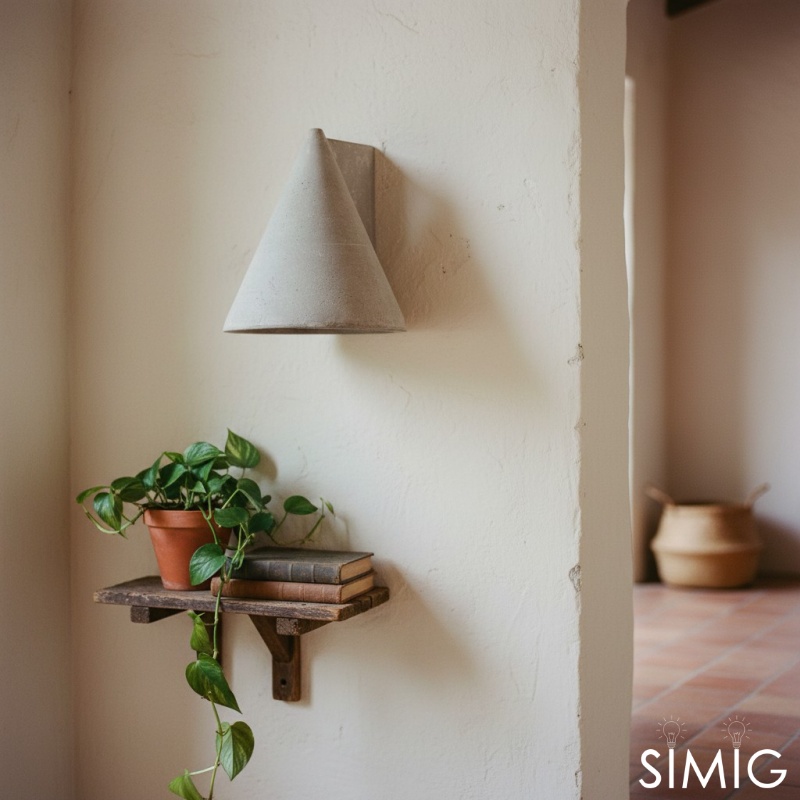
Do not begin by measuring the biggest empty wall. Begin at the doorway. Walk into the room the way you normally do, then notice where your eye lands before you start consciously inspecting the furniture. It may be the narrow return wall beside a bookcase, the end of a hallway, or the strip of plaster beyond the dining table. Those awkward little surfaces often make better focal points than the broad wall behind a sofa because they sit directly in a sightline.
Now repeat the exercise from the place where you spend time. Sit on the sofa. Pull out a dining chair. Stand at the kitchen counter with the kettle on. If the same wall is visible from two or three of those positions, it is doing more work than its square footage suggests. That is the wall worth addressing.
Before anyone reaches for a drill, cut a paper template to the fixture’s actual size and tape it up. Leave the room, come back in, and look again. This is not glamorous design work, but it prevents the classic mistake of mounting a compact light near the ceiling simply because there was plenty of wall available. A focal point should meet the room, not wave at it from above.
Give the wall texture, not a collection
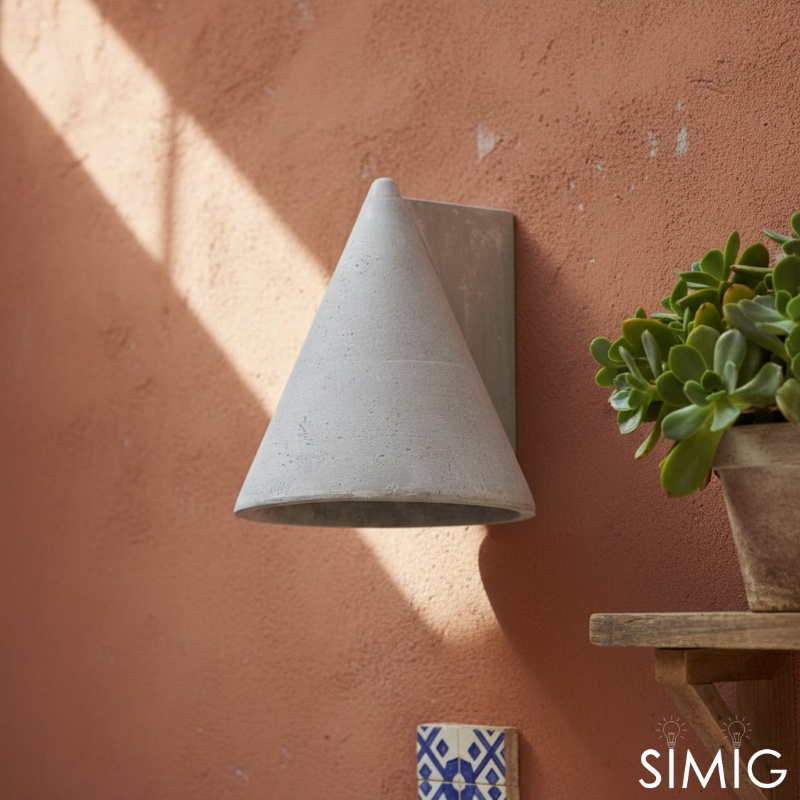
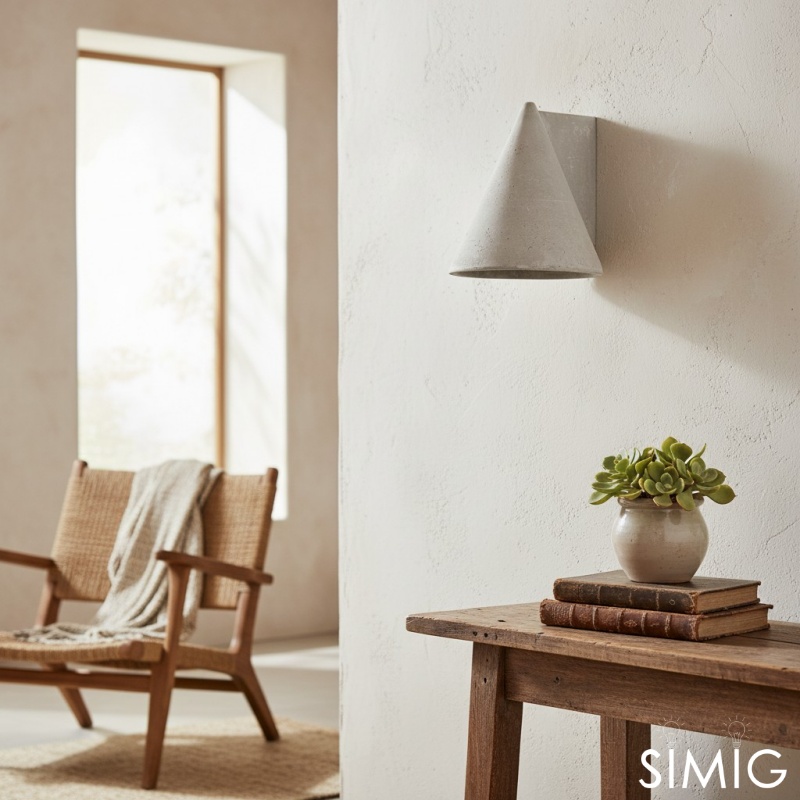
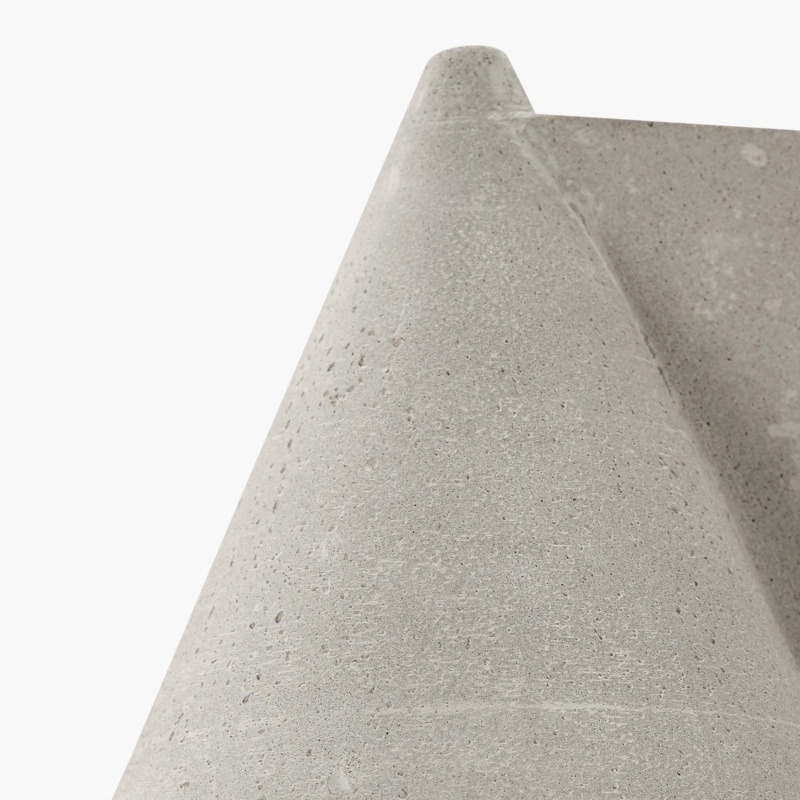
A blank wall often feels flat rather than empty. That distinction matters. Adding five objects fixes the emptiness but may leave you with a different problem: visual admin. One material with a strong surface can do more. Concrete is particularly good at this because it is matte, slightly irregular, and never looks as slick as painted metal or glass. In morning light, the tiny shifts in tone are visible. At night, the surface softens the glow.
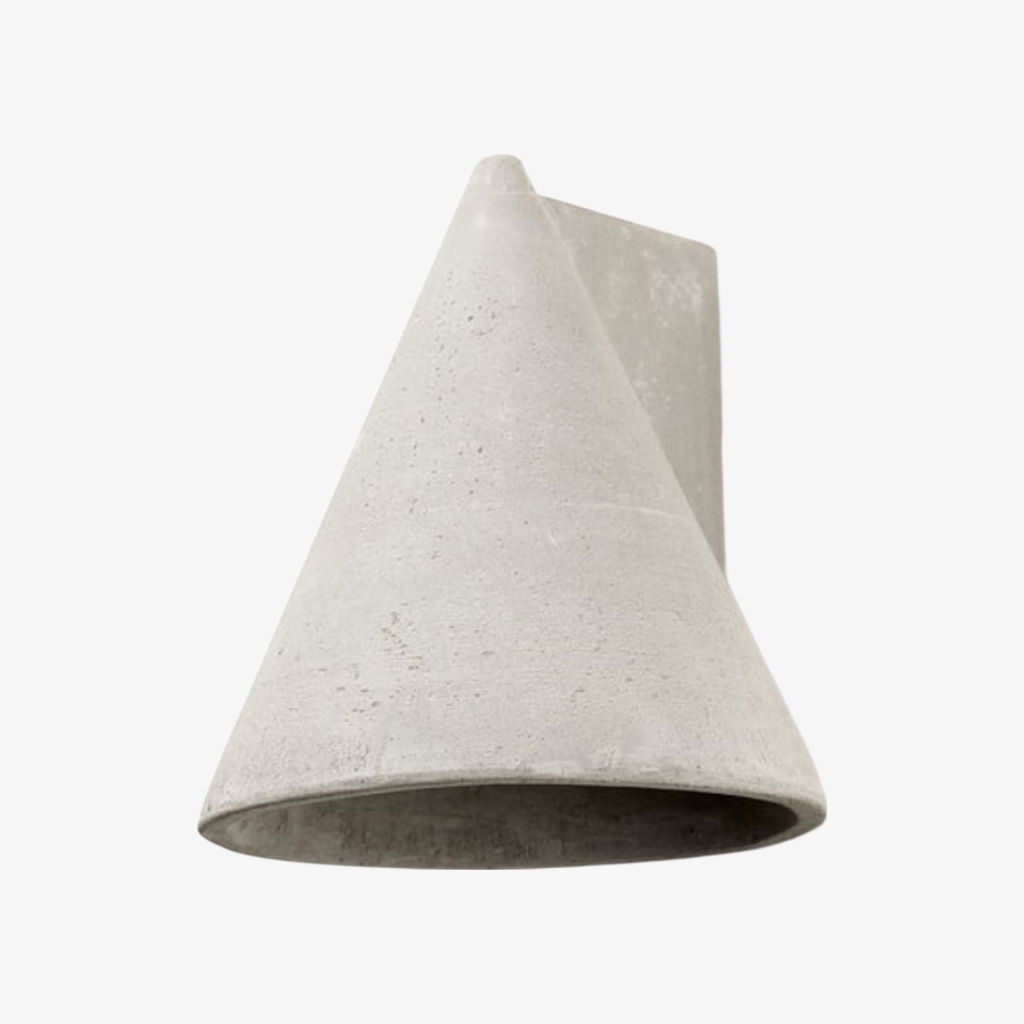
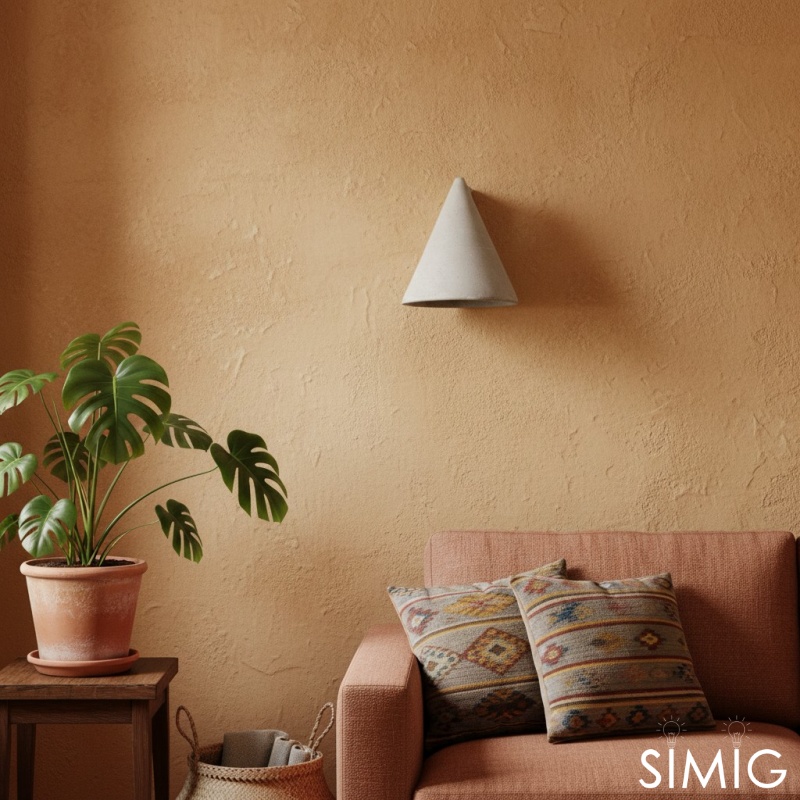
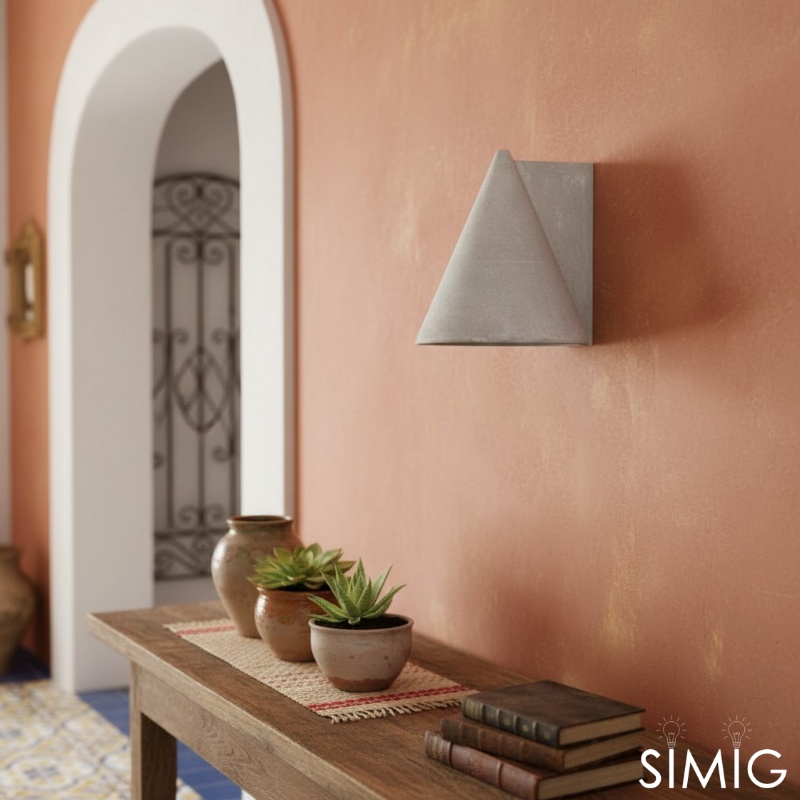
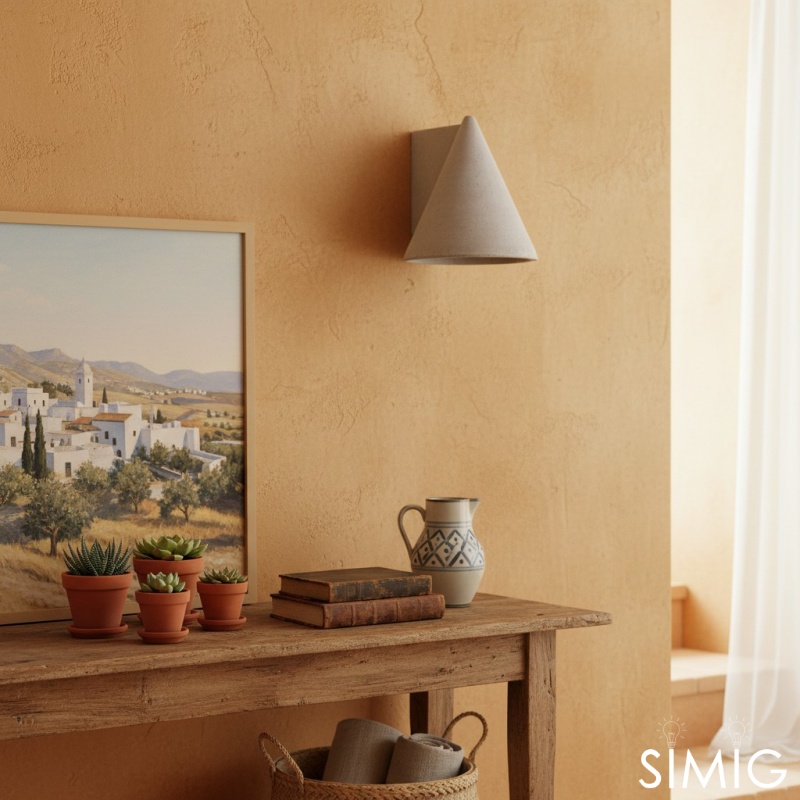
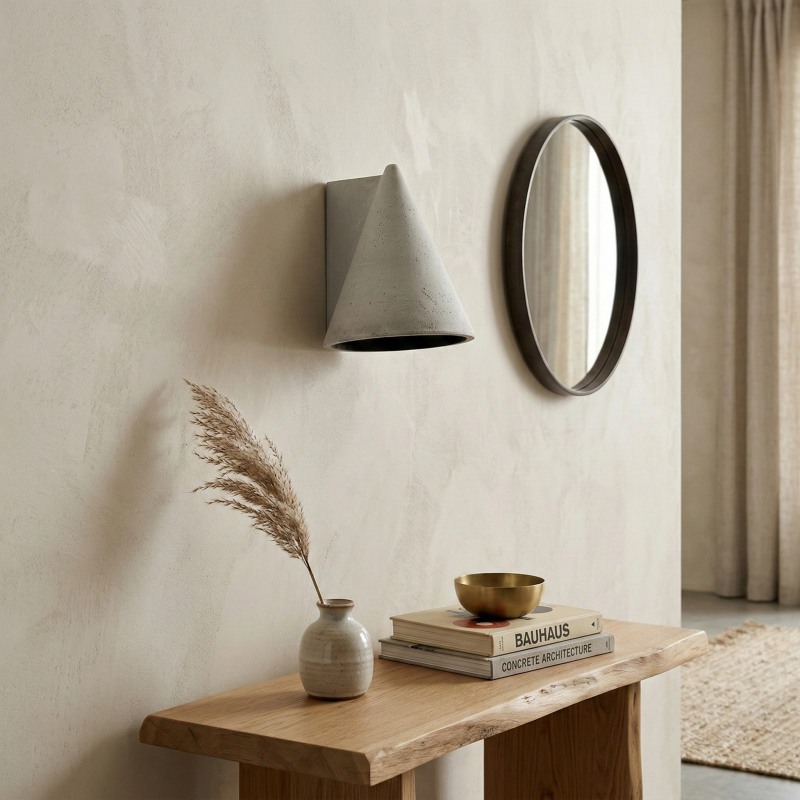
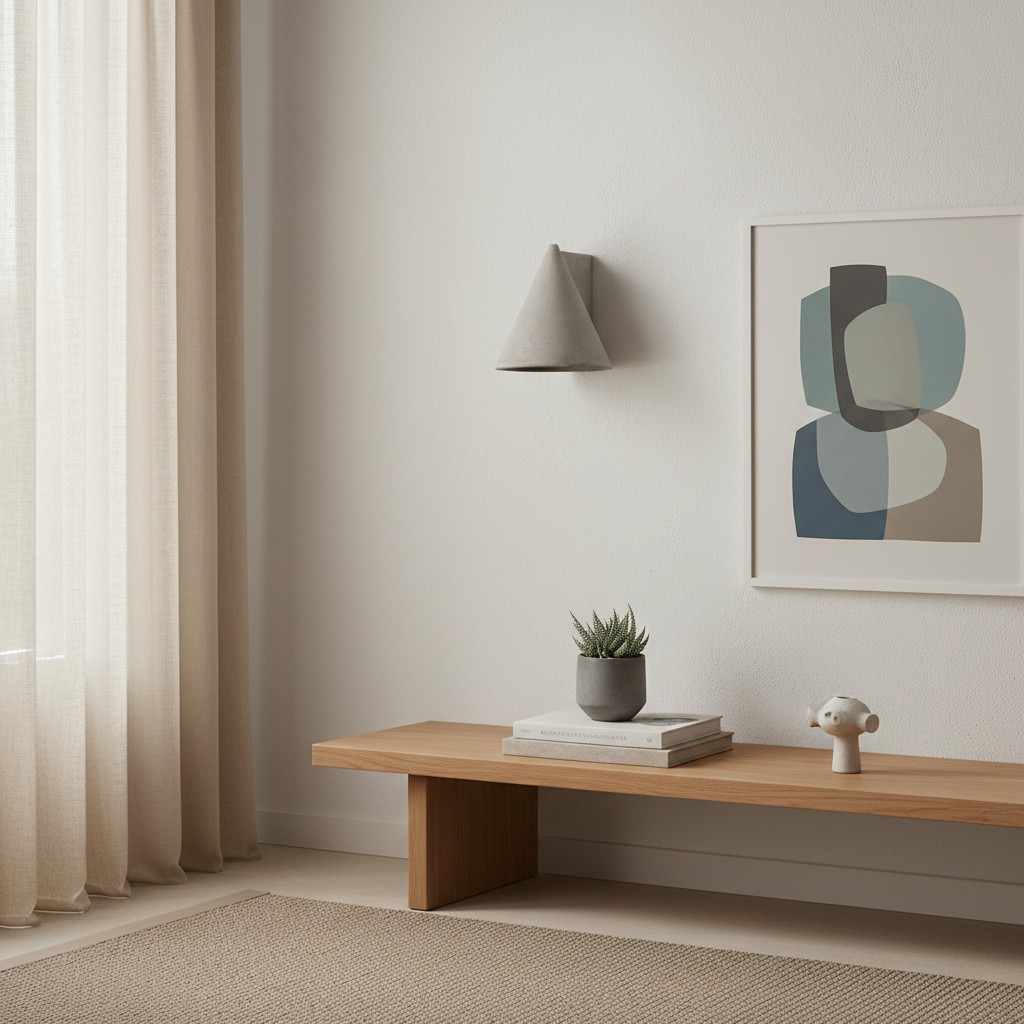
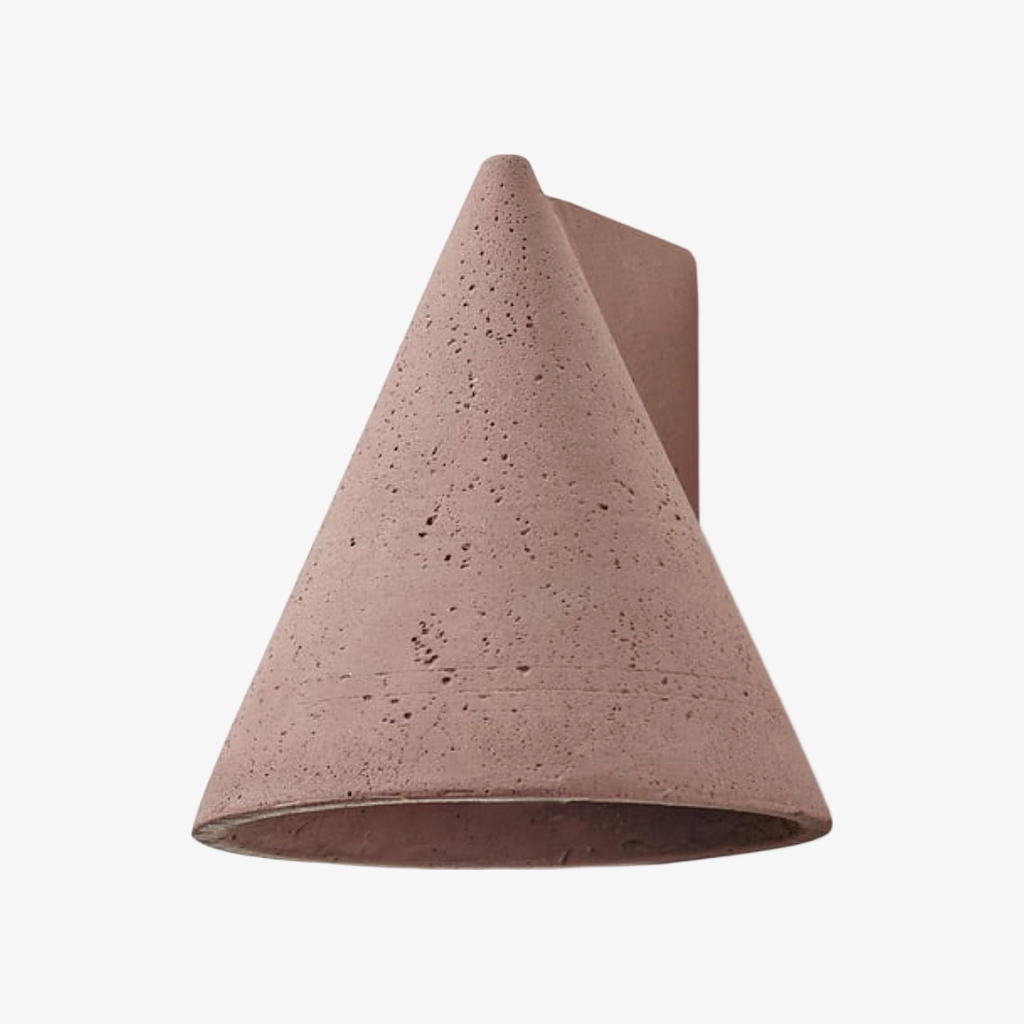
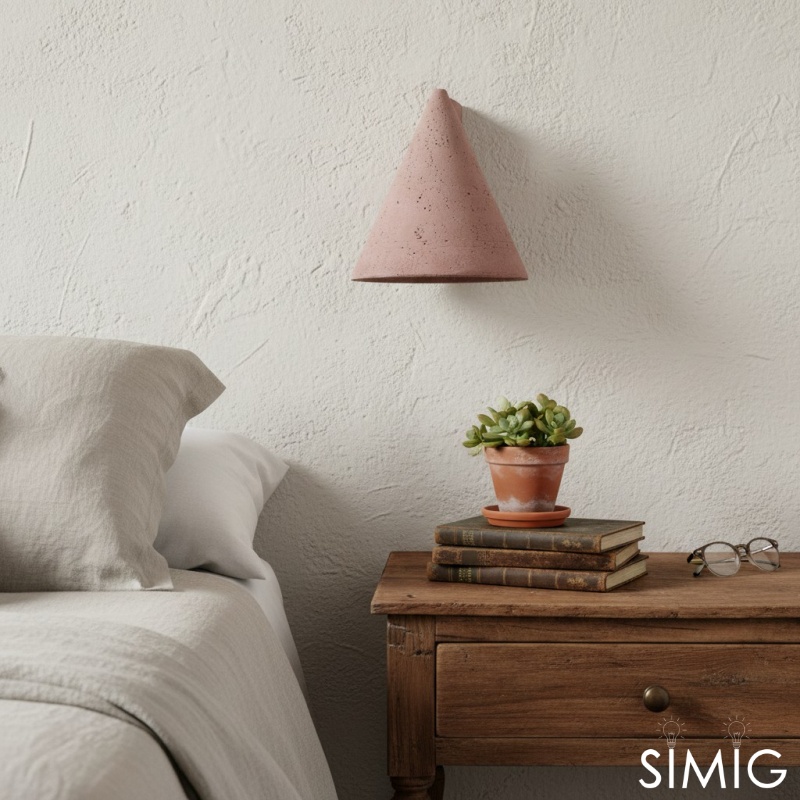
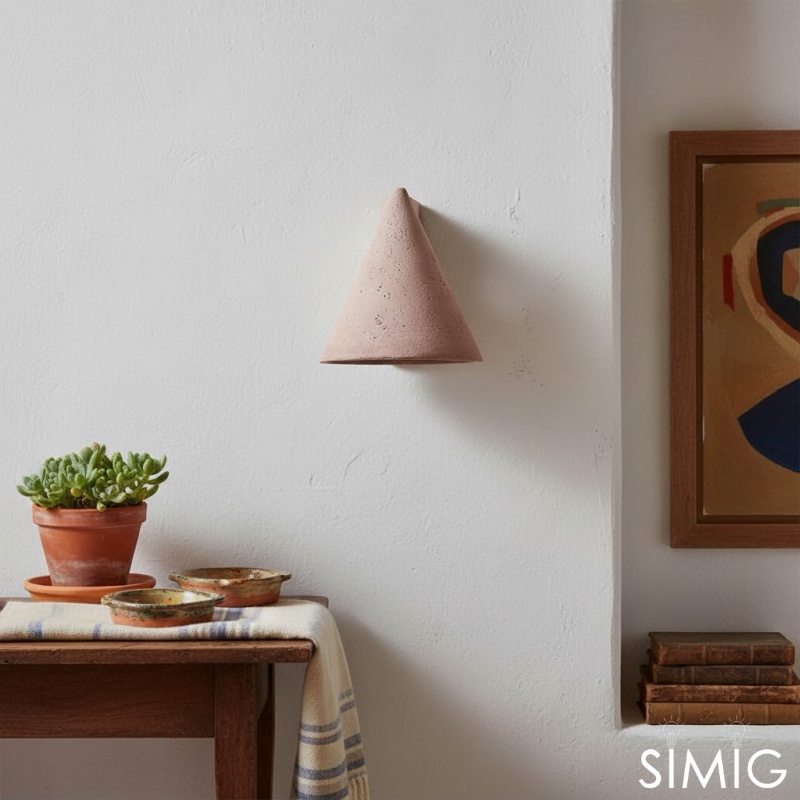
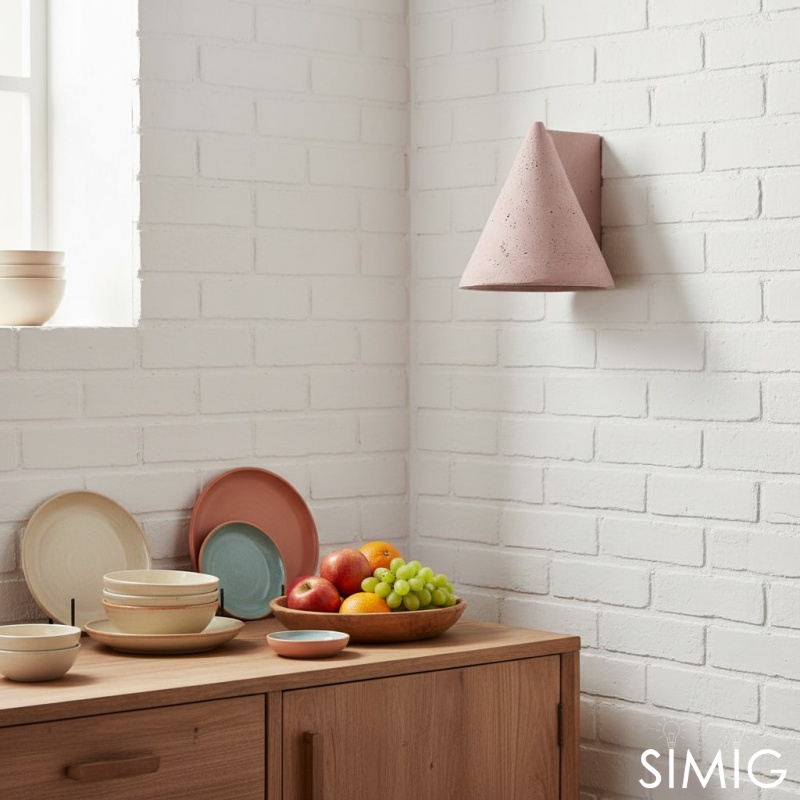
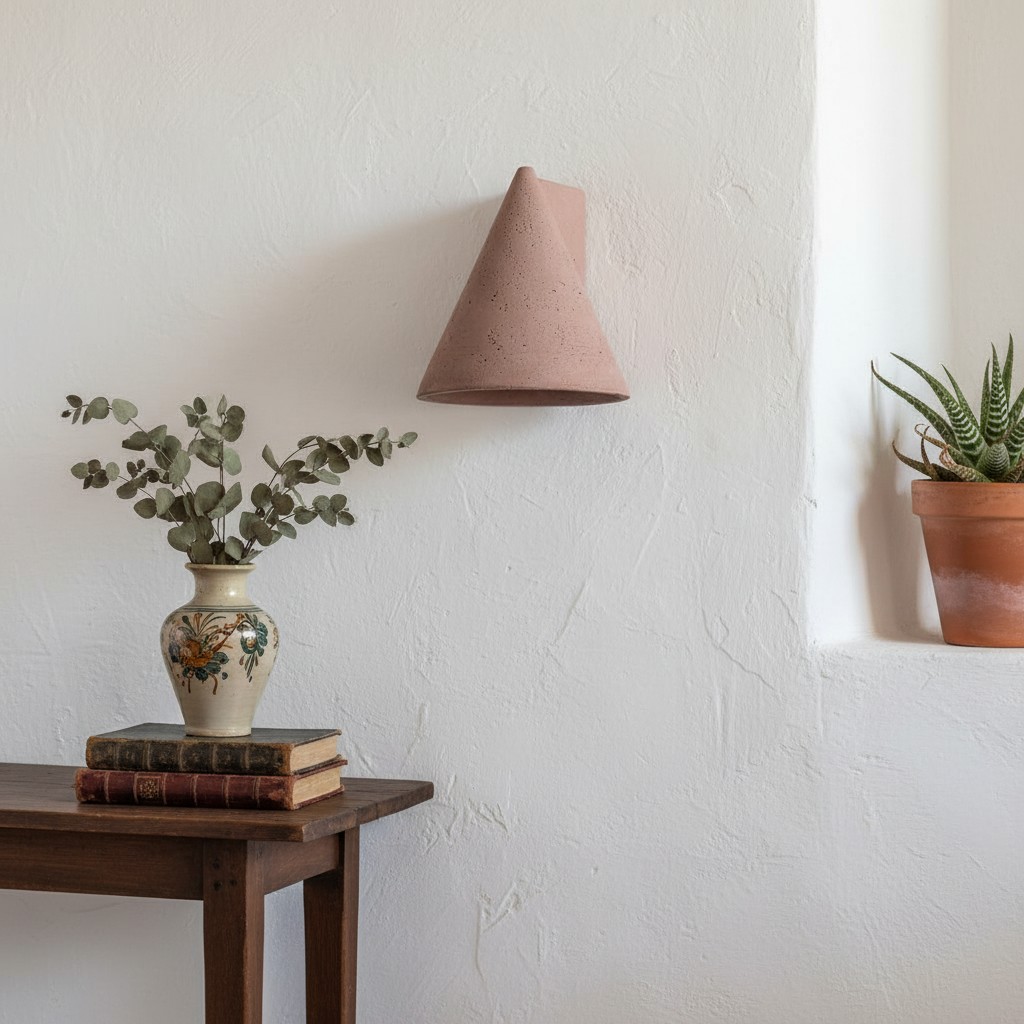
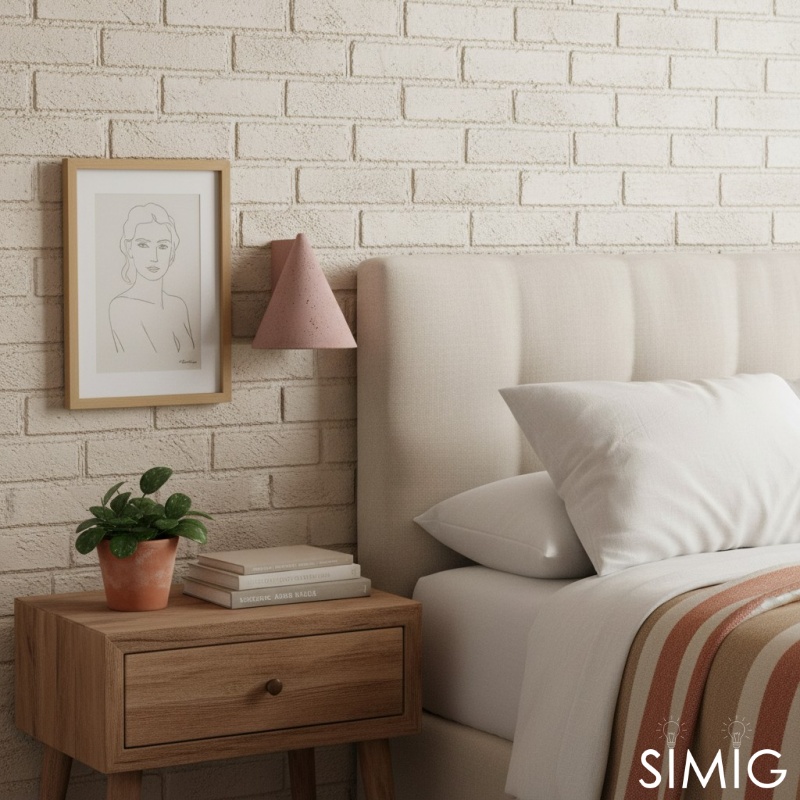
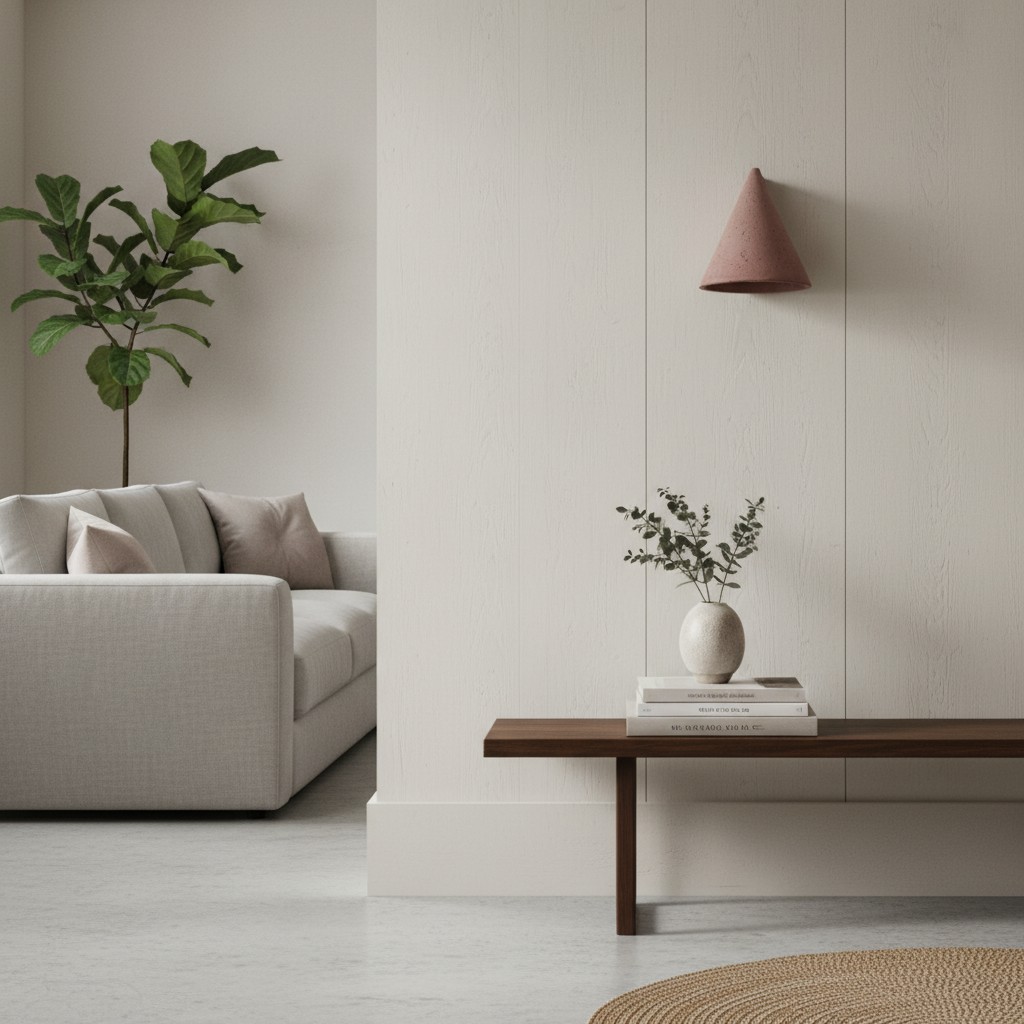
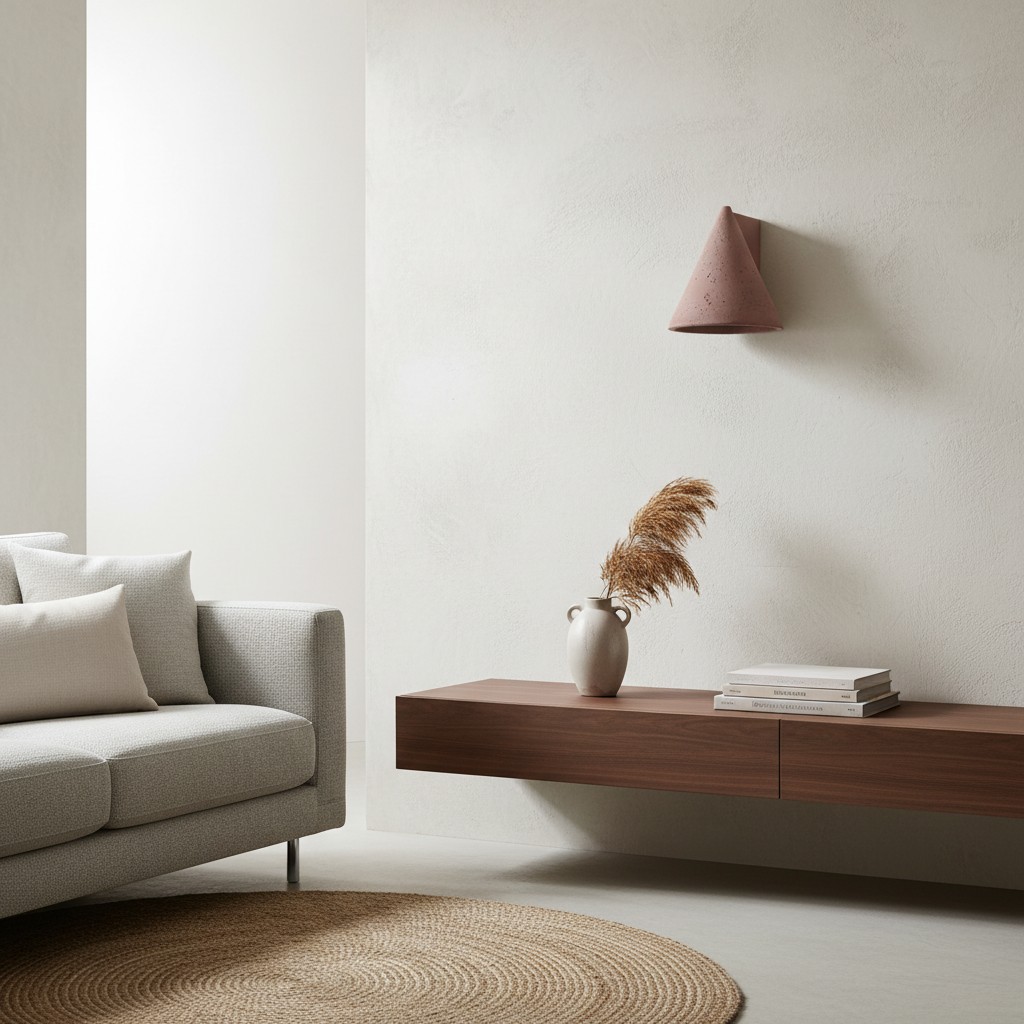
The Concrellia Tapered Concrete Wall Lamp measures 15 × 15 × 16 cm. On paper, that is compact. On a wall, the tapered body and the light around it make the footprint feel larger. Gray settles easily into cool plaster, stone, black metal, and pale timber. Brick red is less shy; it works well when the room already has walnut, olive, rust, or warm white in the mix.
There is no need to echo the concrete five more times around the room. Matching is useful up to a point, and then it starts to look like evidence. Let the sconce be the one rough, mineral object on an otherwise smooth wall.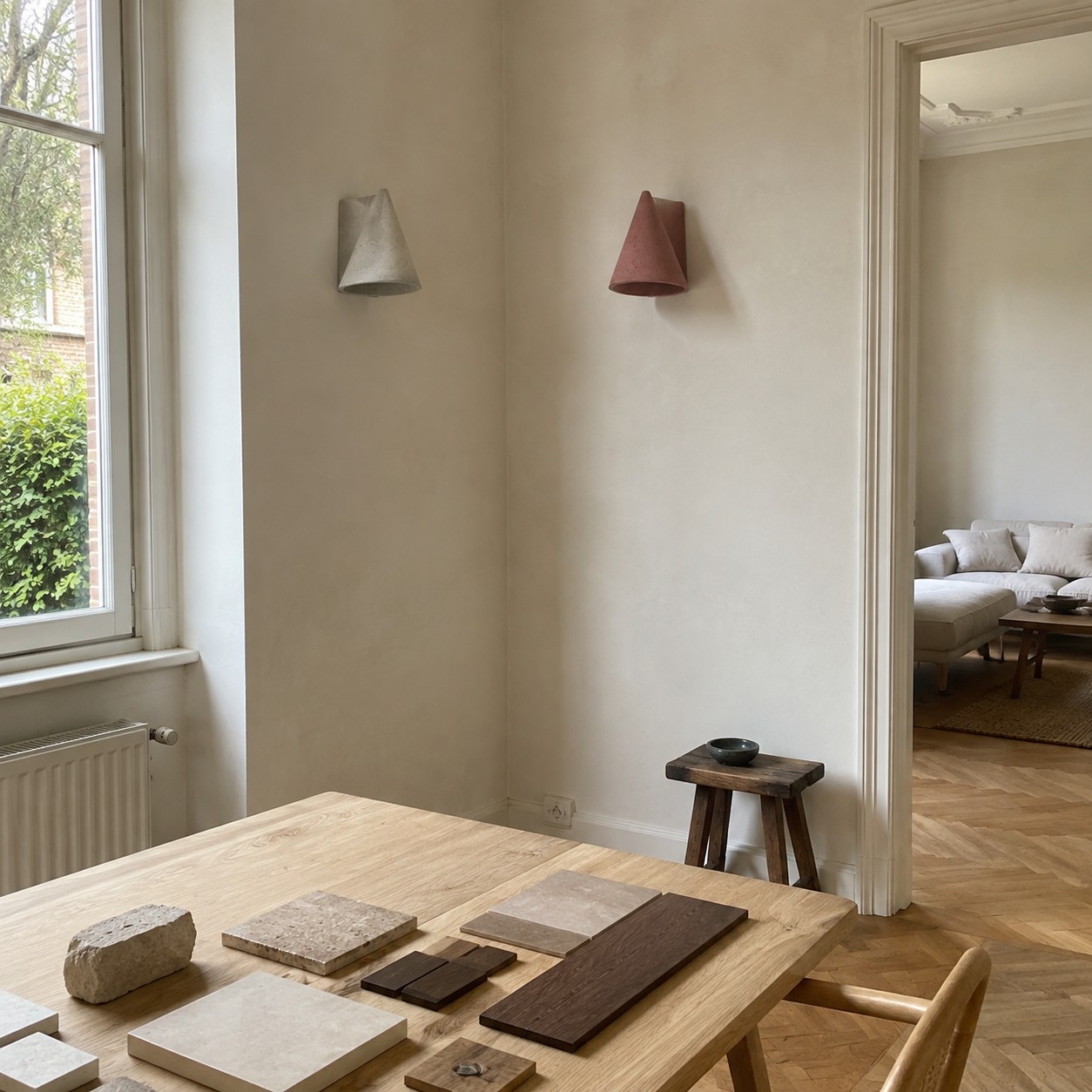
Judge the light by what happens around it
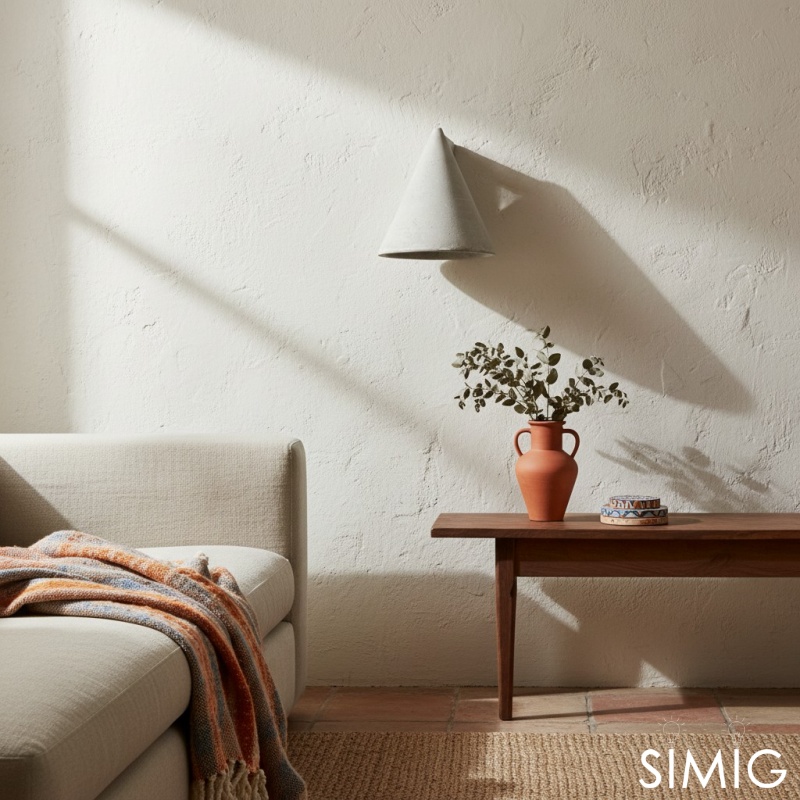
When a sconce is switched on, the object itself is only half the composition. The rest is the illuminated wall: the brighter center, the softer edge, and whatever shadow the fixture throws. This is why a small wall light can hold a surprisingly generous patch of space. You are designing with the halo as much as with the hardware.
Give that halo somewhere to go. If a tall cabinet ends on the left, shift the light a little toward the open wall rather than forcing it into mathematical center. If a doorway already creates a strong vertical line, let the sconce sit beside it with breathing room. Symmetry is lovely when the architecture asks for it. When it does not, symmetry can look like someone measured carefully and still missed the point.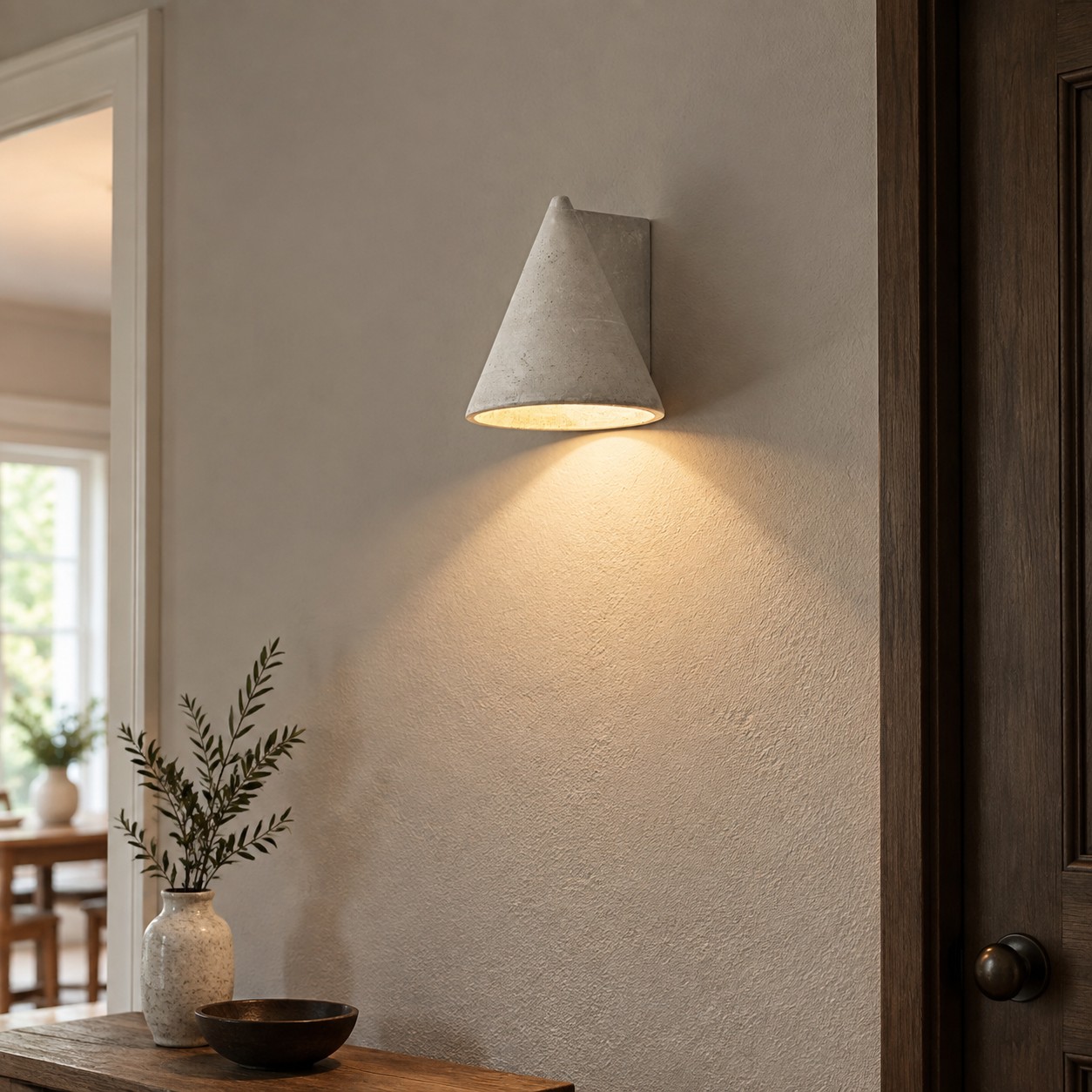
Do not leave the light floating in mid-air
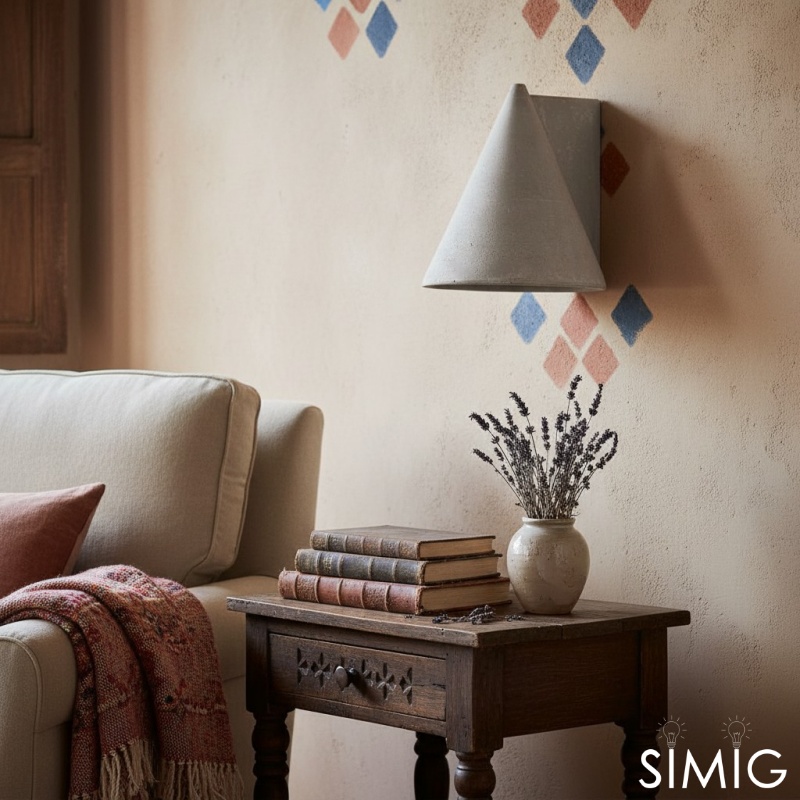
A wall light usually looks more settled when something low gives it a visual base. That could be a slim console, a bench, the end of a banquette, or the edge of a bedside table. It does not need a parade of candles and decorative books. One useful bowl in an entry is enough. The furniture says “this belongs here”; the light gives the arrangement height.
Use the furniture, not the ceiling, as your placement reference. Beside a dining nook, the light should feel connected to the table and the people sitting there. Above a console, it can align with the center or sit slightly toward the object you actually use—the tray where keys land, for example. A good arrangement feels composed, but not so composed that you are afraid to set down the post.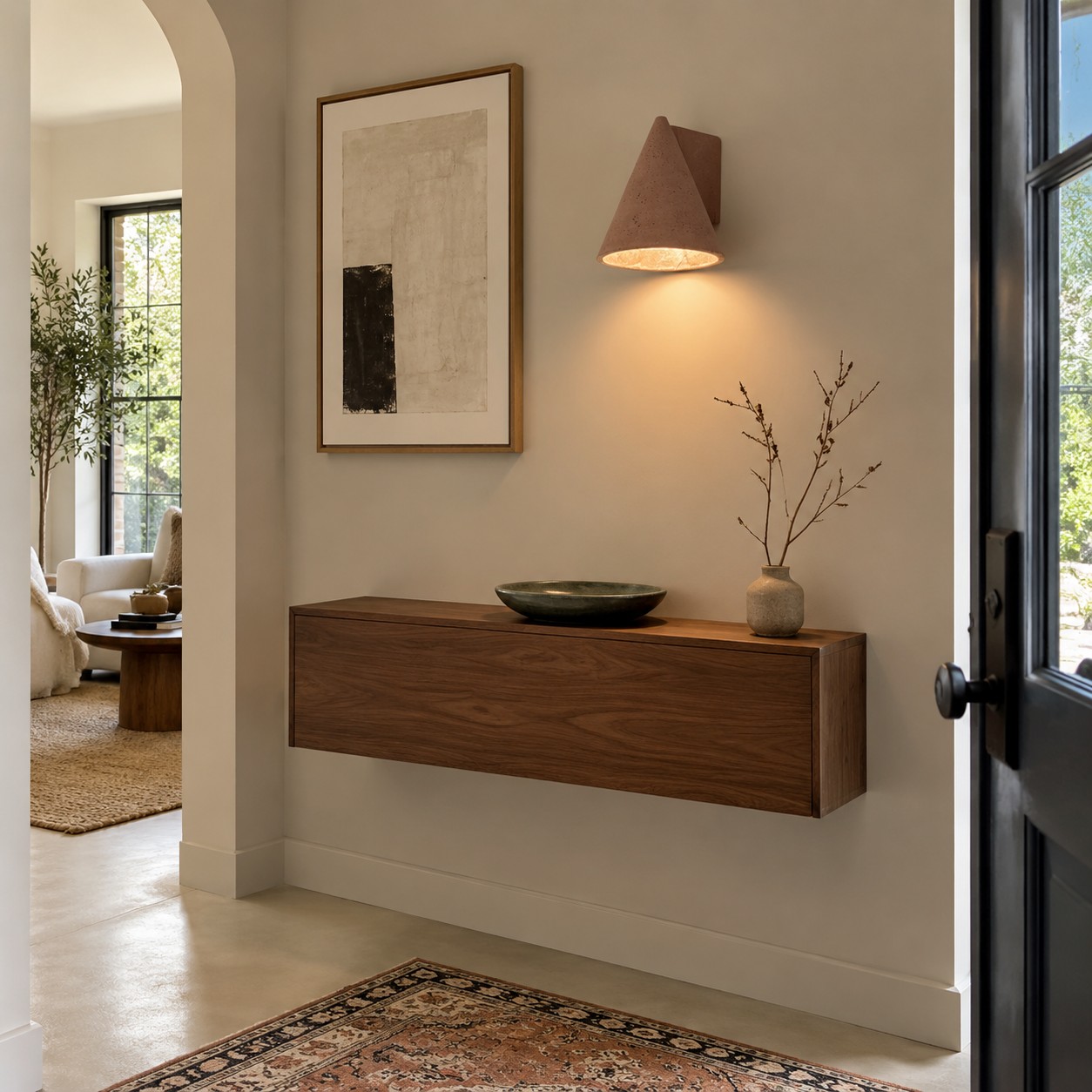
Be honest about the job this light can do
This is mood lighting, not a substitute for the main light and not the lamp to choose for threading a needle. Concrellia uses an E14 light source at 5 W, and the bulb is not included. That lets you choose the warmth, but the purpose remains ambient and decorative: it makes a corner feel considered and gives the wall depth after dark.
The most convincing evening rooms rarely rely on one bright source. Pair the concrete wall lamp with a low table lamp or a floor lamp across the room, then leave the big ceiling light off when you do not need it. How Boutique Hotels Use Wall Lighting to Make Every Stay More Memorable explores the same trick: several modest pools of light make a room feel layered; one overhead blaze makes it look ready for cleaning.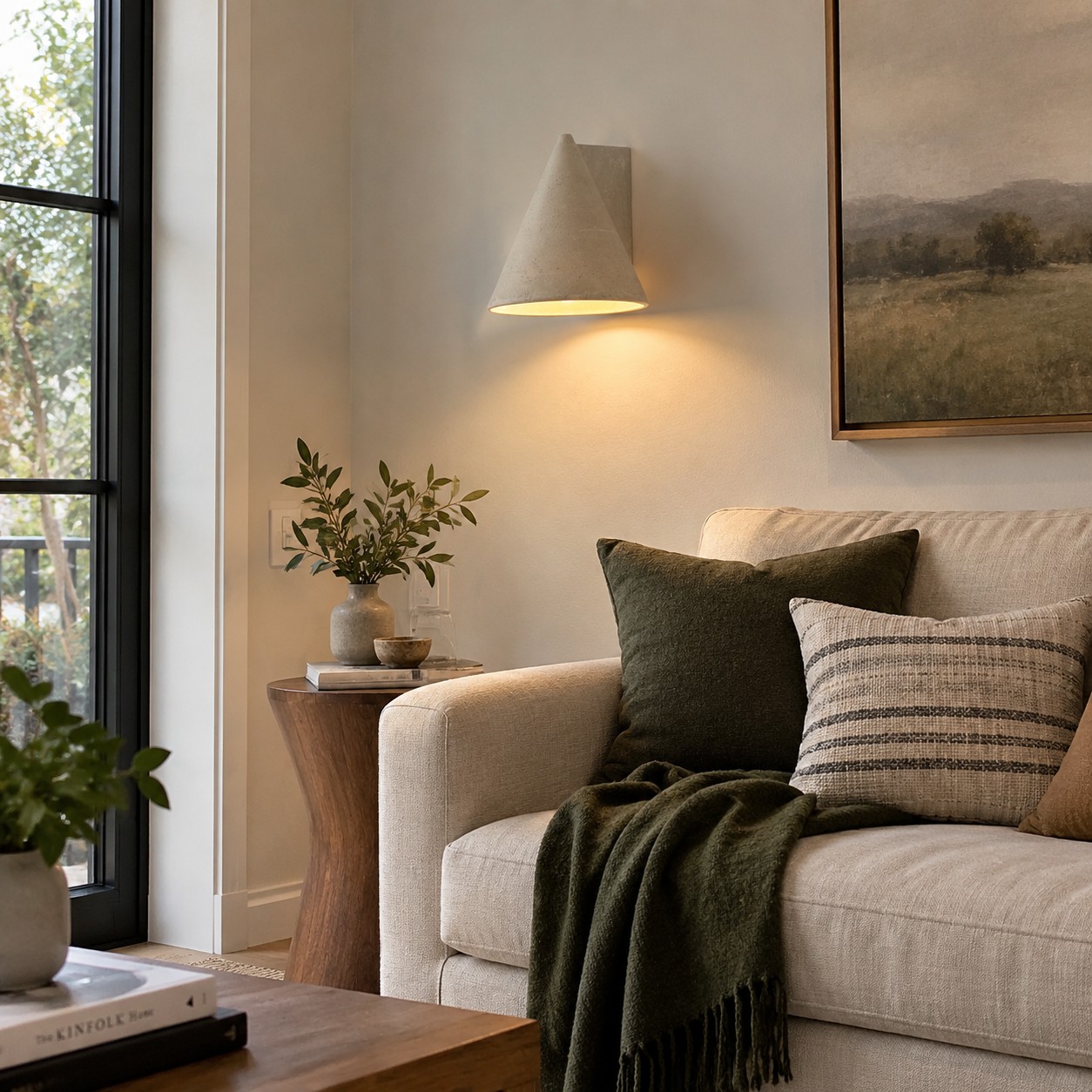
Look at it with the switch off
Most wall lights spend more hours off than on, especially in summer. So inspect the fixture in daylight. Walk past it from the side. Does the silhouette still feel deliberate? Does the material catch natural light, or does it read as a random electrical box wearing a hat?
This is the question behind Can Your Wall Light Still Feel Like Art When It’s Switched Off? A tapered concrete form has an advantage because its outline is clear and its surface changes gently through the day. It does not need to impersonate a sculpture. It simply needs to look worth seeing before sunset as well as after it.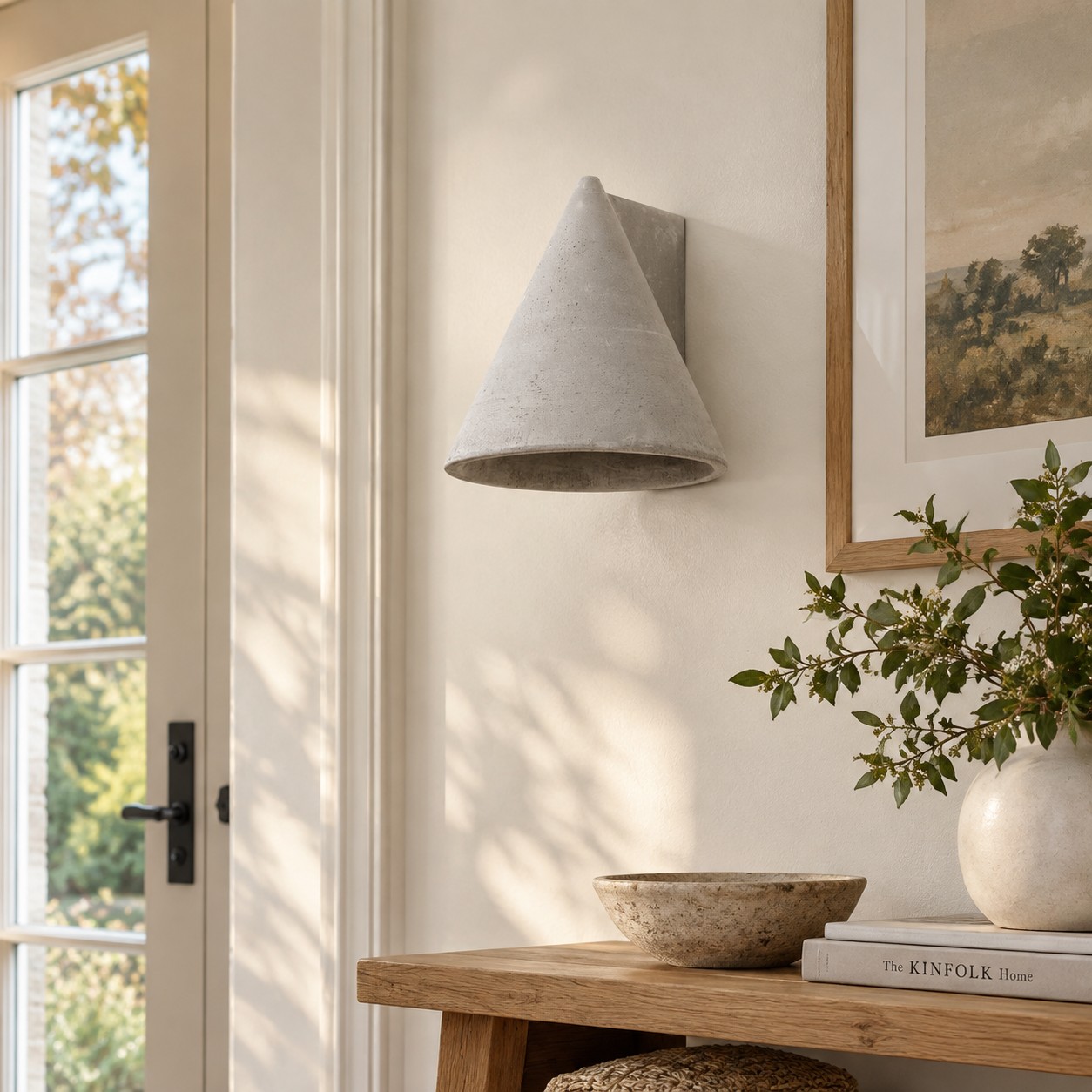
Tape first, drill later
There is no universal mounting height that works beside a bed, over a dining banquette, and at the end of a corridor. Start with the object below the light and the sightline across the room. Tape up the paper template, then mark a second, larger shape to represent the glow. Live with those outlines for a day. Check them while standing and sitting, with curtains open and after dark.
If the template looks timid, do not automatically add a second fixture. Move the first one, lower it, or give it clearer space. Two lights solve a lighting problem; they do not always solve a composition problem. Once the position feels right, confirm the cable route and electrical connection with a qualified installer before making it permanent.
Frequently asked questions
Can one small wall light really become a focal point?
Yes. The visible glow makes its footprint much larger than the fixture itself. Space around it matters more than adding extra objects.
Should a focal wall light be centered?
Not automatically. Center it when the furniture or architecture is centered; offset it when a doorway, cabinet, or sightline makes that feel more natural.
Which concrete finish is easiest to style?
Gray is quieter and easy with cool neutrals. Brick red has more presence and suits warm white, olive, walnut, rust, and terracotta.
Is this enough light for the whole room?
No. At 5 W, it is a decorative layer. Use brighter ambient light when needed and separate task lighting where you read or work.
Let the wall do one thing well
The room does not need every wall to tell a story. Sometimes one good object, a little empty space, and flattering evening light are enough. The result feels intentional because you resisted filling every available centimetre—not because you found more things to hang.
If that sounds like the right answer for your stubborn blank wall, see the Concrellia Tapered Concrete Wall Lamp in gray or brick red. Choose the finish that belongs with the room you already have, then give it enough space to be noticed.